



While nobody may want another meeting in an office setting, intentionally setting aside time to connect with our little ones for a ‘family meeting’ and to problem-solve issues as a team can be enormously beneficial. It’s a moment for bonding, open communication, and lays the groundwork for a more peaceful environment for everyone to live in.
Sure, setting up a standing weekly meeting for your family can initially feel a bit stilted and awkward. But start when your children are very small, and the benefits are two-fold: 1. They’re less likely to resist your time together, and 2. they’re so used to these meetings that, by the teenage years, when you really need that connection, no one bats an eye at them.
You May Also Like:
- Is the Skylight Calendar Making My Life Easier? Here Is My Honest Review
- My Husband and I Tried the ‘Fair Play’ Cards—And Here’s What Happened
- 35+ Age-Appropriate Chores for Kids—and Why It’s Beneficial to Do Them
Why family meetings matter
When you hold meetings on a regular basis, you reinforce the idea that your family operates as a team. Everything in your home runs on your support of one another—and meetings give you the perfect opportunity to make that messaging stick. If parenting with a partner, it also offers the opportunity to talk through the weekly domestic responsibilities (and potentially lighten your mental load).
But perhaps even more importantly, by involving your young children in this way, you’re also showing them that they have important thoughts and ideas. A family meeting that encourages contributions can not only open channels of communication but also empower kids to use the power of their voice to elicit change.
How to get started
The setting and cadence
To set a collaborative tone for your meetings, decide on the specifics together, whether you gather in the backyard after school or around the dining table before your day truly begins. Perhaps your family chooses to have a weekly Sunday meeting to prep for the week ahead—and then shorter family check-ins at breakfast each day.
The prep work
While you are the parent and still make the rules, you want everyone to have equal buy-in on your time together. Encourage kids to come to the first meeting prepared with issues, questions, or suggestions to discuss. Let them know that while no idea is too silly or outrageous to share, your family won’t be able to implement everything you dream up. The hope here is that you preemptively temper their disappointment while still asking for input.
The vibe
To make your discussions meaningful, your kids need to feel free to share what’s on their minds. So, how do you create a safe space? You can start by establishing a simple ground rule that what’s said within your meetings is meant for your family’s ears only. Additionally, you’ll want to validate any feelings of upset right at the start so that everyone feels heard rather than dismissed or judged.
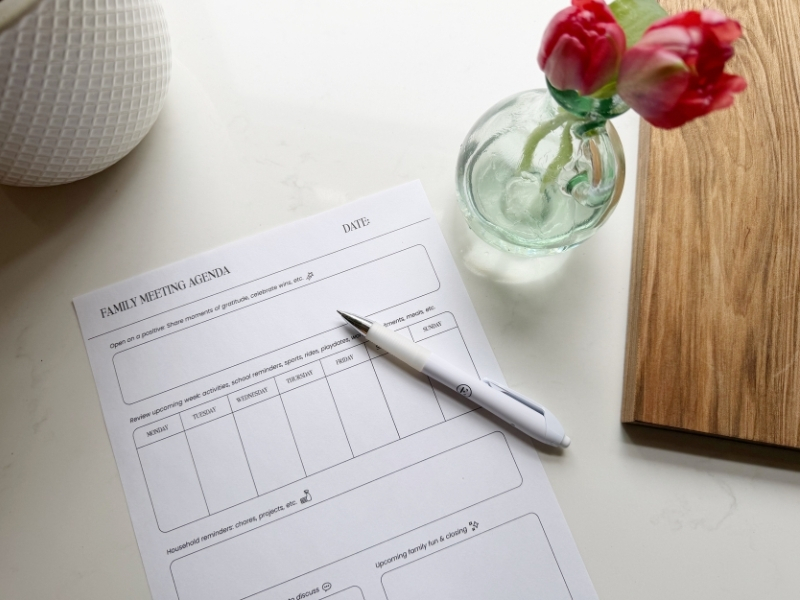
Family meeting agenda ideas
There’s no right way to hold a family meeting, but there are plenty of ways to help ensure it’s meaningful time you’re spending together. Consider including some of these items on your weekly family meeting agenda—and download our free agenda template below!
Start each meeting off on the right foot by setting a grateful and happy vibe. Throughout the week, task your kids with the following: observing one another in play or work and jotting down something that made you feel grateful for them. Kick off each meeting by sharing all of your joyful moments, even if they’re as small as someone picking up toys without being asked. If your kids are too young to participate in this activity, then make it something only the grown-ups share.
Review your calendar
Ease into each get-together with something light: reviewing important dates on the horizon. Use this time to remind everybody about Grandma’s birthday, the first day of school, etc. Then drill down into logistics for the week:
- Sports/activities/appointments/social outings
- Upcoming tests/school projects/homework assignments
- Parents’ work schedules to coordinate childcare coverage/rides/etc.
- Meal requests/meal planning/school lunches
This helps ensure no surprises are lurking for anyone and keeps everyone organized and on track.
Review household responsibilities and chores
Use this time as a reminder or rotation of regular chores like emptying the dishwasher or feeding the dog. Additionally, you can discuss any upcoming projects or bigger to-dos, like purging closets or spring cleaning.
Airing grievances and problem-solving
There’s a fine line between bringing up pain points for group discussion and harping on an individual’s poor behavior. Use this time to bring up issues that affect the collective instead of singling out one child’s poor behavior. This is your opportunity to review expectations (e.g., books belong on the bookshelf, not the floor) and chat over anything not working.
Closing and planning ahead
Have children share what they’re most looking forward to in the week ahead to end the meeting on a positive note.

Tips for family meeting success
- Keep it short: Aim for about 15-20 minutes, especially for younger children.
- Follow up: Review action items from the previous meeting.
- Focus on solutions: Rather than blaming, work on problem-solving together.
- Encourage participation: Nudge your little ones to use their voice and bring up issues that are bothering them.

Lizzie Goodman, Contributing Writer
Lizzie is an editor and writer specializing in pregnancy, child development, and parenting. She lives in Chicago with her husband and two young daughters in a funny old house filled with books.

Kathy Sisson, Senior Editor
Kathy Sisson has been a key contributor in the editorial parenting space for eight years, not only as a full-time editor at The Everymom but previously as a freelance writer for top parenting sites, including Scary Mommy, Motherly, Parent Co., and more. As an editor at The Everymom, she has produced hundreds of articles on a range of parenting topics, reviewed dozens of family-focused products, interviewed leading experts in the children and parenting world, and created viral parenting social media content. A mom of two, she is committed to sharing the honest, helpful, and often humorous stories of motherhood.
