


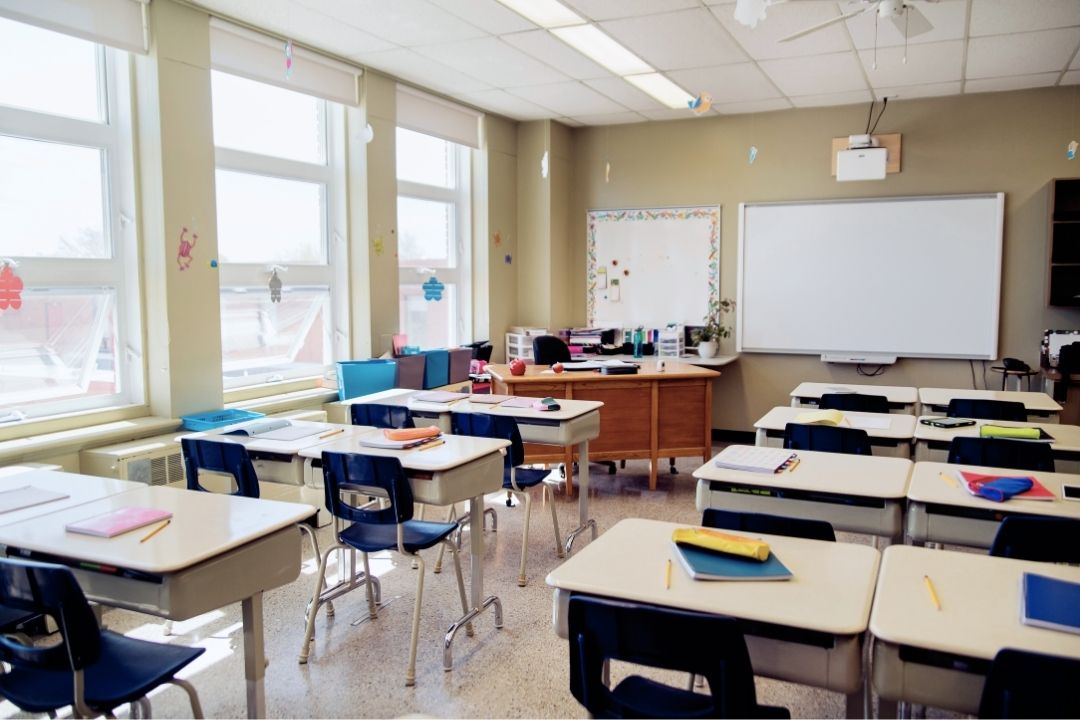
Believe it or not, I feel like the school year is flying by. With some schools throughout the country already a few months into school, it’s time for parents to sit down with their child’s teacher for a parent-teacher conference. Whether you are a school rookie or a veteran, at any stage, it can be jarring to hear critical feedback about your child from a teacher early on in the year. But as a mom, licensed psychologist, and school strategist, I have some helpful tools to help parents navigate this 15-minute conference. No performance anxiety here!
It’s understandable why parent-teacher conferences have to move quickly. With so many students, 15 minutes has to be spent productively. Luckily, discussing your child’s education and progress within this short time frame is definitely possible, and I’m sharing how—with a parent-teacher conference playbook. Here, I’m breaking everything down to keep you successfully on track. Conferences vary from teacher to teacher and within and among schools, so this playbook can be altered if needed. This playbook walks you through what to do before, during, and after your conference with copy-paste scripts you can use right away and feel less stressed in the moment.
You May Also Like:
- 5 Ways to Develop a Good Relationship With Your Child’s Teacher
- Kindergarten Teachers Share What They Wish Parents Knew About School Today
Key takeaways
- What to expect at a parent-teacher conference
- A quick preparation checklist for before, during, and after the parent-teacher conference
- Email templates to make communication with your child’s teacher easier
- Tips for tension and tough moments that can come up during a parent-teacher conference
Before your parent-teacher conference
Doing some prep work is the first step to keep everyone on track. And it’s important to go in with the mindset of “clarity beats volume.” Realistically, you may not be able to cover 10 different topics, but it’s still beneficial to prioritize at least two things to talk about. I recommend doing this quick prep so the meeting starts focused.
Pick your top two topics you would like to discuss first
Sit down and think about what matters to you most as a parent and for your child. Is it their reading confidence, friendships, or homework routines? Having a priority list can ensure that you and your child’s teacher have time to come up with a game plan on how to tackle your concerns. Everything else can wait.
Pro Tip: Type your top two examples into your phone so you can stay on track.
Gather some concrete examples
If you have any concerns, having some examples can be helpful in giving your child’s teacher some context for any situation. Jot down two real moments. This can look like, “He starts to tear up after attempting math problems,” or “I’ve noticed he reads longer if I sit with him.” Giving specific examples can help teachers spot any patterns that happen during the school day.
Choose a curious tone
Sometimes, as parents, we feel nervous walking into our child’s parent-teacher conference. While we know this meeting is meant to focus on our child, we still have to remind ourselves that it’s not a performance review of our parenting. Meeting with your child’s teacher is meant to form a partnership on how both sides can work together to make the school year successful for your child. And structuring that “team tone” can look like, “I’m noticing X at home. What are you seeing at school?” With your priorities and examples ready, you’re set to make the most of the next 15 minutes.
In a hurry? Save this quick parent-teacher conference checklist to your phone:
- My child’s strengths
- Where we are vs. class expectations
- One concrete example
- 1 – 2 goals by winter break
- What helps my child
- What shuts my child down
- One actionable step to do at school
- One actionable step to do at home
- How/when my child’s teacher and I will check in

How to make a parent-teacher conference productive
I can’t speak for all teachers, but for the most part, your child’s teacher may have this 15-minute meeting already structured. But here is an idea of what it may look like:
Minutes 0 – 4
In the first four minutes, be open-minded, listen, and understand what “on track” looks like. Conferences are also for highlighting your child’s accomplishments—from you or their teacher. If you’ve noticed anything positive at home, let the teacher know that, too! Plus, opening up with a positive observation sets a warm tone and builds a connection. This can sound like, “We have noticed that Zoe lights up when she talks about science class.” From there, you can then ask the teacher to walk you through any learning goals and what “meeting expectations” means.
Minutes 4 – 9
The next four minutes are what I call the “heart of the meeting.” During this time, you can ask the teacher specific questions about what you, as a parent can do at home. These are examples of questions that can move the needle and help a child improve throughout the year.
- “What would ‘on track’ look like by winter break?”
- “What helps my child engage? What makes my child shut down?”
- “What can I do at home to support them in class?”
This also goes the other way. If there’s something you want the teacher to know about what helps your child at home, let them know that as well during this time.
Minutes 9 – 15
The last third of the meeting is the time to close the loop and drive home the win in this parent-teacher conference playbook. Here, recap what you have heard and confirm forward communication. This means summarizing what you have heard, identifying an actionable change you could try, and putting a potential check-in date on the calendar. This one example is for a student who is having trouble starting writing assignments:
- Teacher’s action: “Offer a sentence starter in the writing prompt.”
- Parent’s action: “Walk the child through the writing assignment checklist.”
- Identify how to update both parties: “What’s the best way to share a quick update in two weeks—by email or the student online portal?”
Pro Tip: Add the check-in date to your phone before you leave.
My advice on what to ask and what to skip
I can truthfully say that I can easily talk about my kids for longer than 15 minutes. But with this set time, defining what topics are worth skipping is important.
Skip ranking your child in areas of their academics
I recommend skipping any topic that ranks a child in any area of their academics. Instead, try asking their teacher what your child’s strengths are and any areas for growth. Framing it this way gives room for an actionable plan.
Skip comparisons to siblings and classmates
It can be easy to compare a child to their siblings and classmates, but every child is different. In order to see your child’s personal improvement or positives about school, I recommend skipping the comparisons.
Only focus on your child
Unless another child’s behavior is affecting your child directly, I would not focus on any details about another child at school. Generally speaking, teachers aren’t allowed to share private information about another student.
What to do if there’s tension during the conversation
It doesn’t always happen, but if there is tension during your conversation with your child’s teacher, it’s good to be prepared for it. Reset the conversation without derailing it. Some examples can sound like, “I might be off, can I run something by you?” and “Can we define ‘meeting expectations’ using the learning goals or rubric?” And if you’re feeling flustered, define what topics you want to refocus on by saying something like, “Our top two topics we want to focus on are X and Y. Can we come back to those?”

After your child’s parent-teacher conference
Now that you have a set plan, there are a few things you can do at home. The meeting may have ended, but the real planning starts afterwards.
Speak with your child about the plan
Once you get home, it’s time to discuss with your child about any actionable plans. It’s important to keep it simple. Name one strength you discussed during the conference, one goal, and one step to take if it’s needed. For example, “You’re thoughtful in discussions. Our goal is smoother homework time. We’ll try a 5-minute checklist before you do homework so you know where to start.” Keep in mind that this can look different depending on your child’s age and development.
Send a quick recap
After all is said and done, write a short email at some point after the conclusion of the conference. A short email confirms who is doing what, and it gives you and your child’s teacher a record.
Pro Tip: Use your plan’s short name in the subject (i.e., “Update on 5-Minute Start”).
Email templates for a parent-teacher conference
I’m sharing templates to make communication before and after a parent-teacher conference a little easier.
Pre-conference email template
Sending a pre-conference email with the topics you would like to cover may help your child’s teacher work through addressing any concerns during your meeting beforehand. I recommend sending this email three to five days before your scheduled date.
Subject: Nov. [Date] Conference – [Child’s First Name]
Hi [Teacher Name],
I’m looking forward to our conference on [day/date]. My Top Two priorities are:
- [Priority #1, e.g., reading confidence]
- [Priority #2, e.g., smoother homework routines]
At home, I’m noticing [brief example]. I’d love one small step we can both try for two weeks.
Thank you!
Warmly,
[Your Name]
Post-Conference recap email template
A post-conference recap can be sent the same day or the next morning.
Subject: Thank you + quick recap for [Child’s Name]
Hi [Teacher Name],
Thank you for today’s conversation. I appreciated your insight about [specific strength/observation]. To confirm, our plan is:
• School: [teacher action]
• Home: [parent action]
• Check-in: I’ll email on [date] with an update.
If I missed anything, please let me know. Grateful for your partnership!
Best,
[Your Name]
“I Think My Child Needs Support” email template to the teacher
If you feel that your child needs some support from your teacher, here is a template email outlining your concerns and how you can work together to tackle them.
Subject: Support options for [Child’s Name]
Hi [Teacher Name],
I’m noticing ongoing challenges with [area-examples, reading fluency, attention], despite our routines. Could we explore next step supports: classroom strategies, a brief check-in with the learning specialist, or other resources? I want to catch this early and support what you’re doing in class. Thank you.
Warmly,
[Your Name]
Quick fixes for common snags during parent-teacher conferences
If there’s one thing about parenthood, I know that not everything goes according to plan. You may run out of time, or you may even disagree with what you’ve been told. Here are some scenarios and some suggestions on how to navigate these scenarios.
- If you ran out of time: Send the recap with your top two topics you wanted to discuss, and request the learning goals or class expectations.
- If you disagree with the feedback: It’s OK to disagree with feedback. Wording or phrasing your discussion can sound like, “Can we define ‘meeting expectations’ together using the learning goals, rubric, or a short descriptor?”
- If your child is anxious about school: “What does calm participation look like in your class? Is there one strategy we can mirror at home?”
- If you think there’s more going on: Use the support email template above, address your concern early on, and be collaborative.
You’re not ‘that parent’ for asking for clarity, you’re a teammate. During this time of year, progress means momentum, not perfection. Lead with your child’s strengths, share what you’re noticing, and commit to one tiny two-week test. That’s how kids grow and how school partnerships do, too.

Sarah Lebovitz Suria, Contributing Writer
Dr. Sarah Lebovitz Suria is a licensed psychologist and school admissions strategist who translates psychology into everyday parenting language. She helps families align their child with the right school or schools and teaches simple, rehearsed tools for interviews and playdates to overcome jitters. Her background includes a Ph.D from Fordham and an MA from Teachers College, Columbia, plus years of consulting with families across NYC, NJ, CT, GA, CA, and beyond. She lives outside of Philadelphia with her husband and two sons.
