


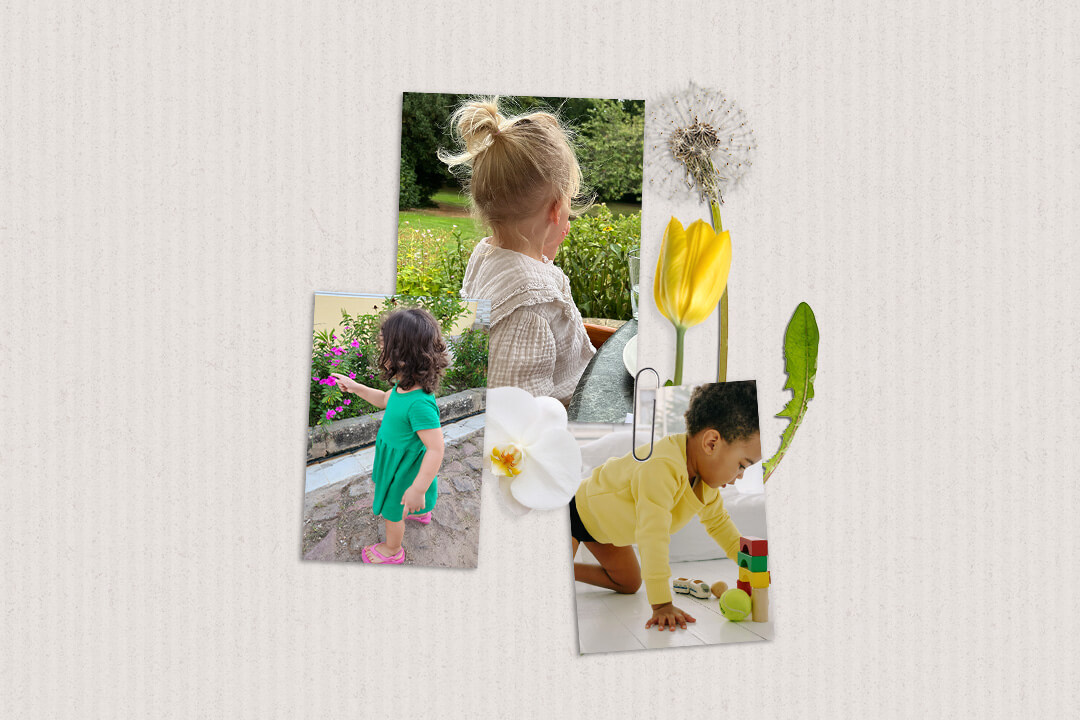
When my son was around 8 months old, I took a sleep course out of a bit of desperation. My son’s naps were all over the place. Transitions threw him off. I could never transfer him from a car nap to the house to extend it. Through the course, I was introduced to a section on temperament that described children as orchids, tulips, or dandelions. I had never heard the analogy before, but it stuck with me.
Around that same time, I remember someone describing my son as “a sensitive boy,” and I felt oddly protective hearing it. Sensitive? Was he? The more I sat with it, the more I realized the word didn’t have to mean fragile or dramatic or too much. It could simply mean perceptive. Thoughtful. Intuitive. A child who feels things deeply.
What drew me to the orchid, dandelion, and tulip terms was that they gave me language for the things I was already noticing. And as a mom, sometimes gaining a little understanding around why your child reacts a certain way changes the entire tone of your parenting.
If you’ve been seeing these flower personality types all over parenting TikTok or Instagram lately and wondering what they mean, here’s a breakdown of orchid, tulip, and dandelion children, along with signs you may recognize in your own child and parenting tips that can help support each one.
You May Also Like:
- How Birth Order Can Influence Kids’ Personalities—Plus, Helpful Parenting Tips for Each
- Decoding Your Child’s Love Language: A New Way to Say ‘I Love You’
What are the flower personality types?
The orchid and dandelion terms came from research by developmental psychologists who were studying how children respond differently to stress, sensitivity, and support in their lives. The addition of the tulip came later, as researchers and parenting experts recognized that many children don’t fit neatly into one category or another.
Orchid kids
Orchid children are often very sensitive, perceptive, and emotionally tuned in. They may struggle more with transitions, loud environments, or unpredictability, but they also tend to be incredibly thoughtful, intuitive, and empathetic.
Dandelion kids
Dandelion children tend to be adaptable, easygoing, and more comfortable with change. These are often the kids who can nap wherever, jump into new situations quickly, or recover fast after a hard moment.
Tulip kids
Tulip children usually land somewhere in the middle. They might be flexible in some situations and more sensitive in others. One day, they dive right into something new, and the next, they need extra reassurance.
How the analogy can help parents and caregivers
Of course, no one type is “better” than another. These terms aren’t meant to box children in or define their entire personality. They should be looked at as a helpful way to better understand and support the child right in front of you.
These comparisons can also help explain things you may already be noticing about your child, like:
- How they approach new situations or transitions
- Whether they need more preparation or reassurance
- How they interact socially with other kids
- What helps them settle, rest, or feel safe
- Why one sibling may “go with the flow” while another feels everything a little more intensely
Orchid children’s traits
Orchid children are often highly perceptive kids who experience the world a little more intensely. They may need more support around transitions, unpredictability, or overstimulation, but they also tend to be incredibly thoughtful and emotionally aware.
Signs your child might be an orchid
Your child may show more orchid-like tendencies if they:
- Get overwhelmed by loud places or busy days
- Need extra time to warm up in new situations
- React deeply to disappointment or change
- Seems especially tuned into other people’s moods
- Thrive with predictability and preparation
- Struggle more when overtired or off routine
- Ask thoughtful questions or seem unusually observant
- Need extra reassurance before trying something unfamiliar
Parenting tips for orchid children
One of the biggest shifts for me personally was realizing my son didn’t need me to push or rush him through hard moments faster. More often, he needed me to show up for him with preparation and patience and let him feel the things he was feeling.
“Our deeply feeling and sensitive orchid children thrive when they feel understood and supported,” says Brittni Mella Cepeda, Certified Infant and Toddler Sleep Specialist. “The more they can expect what’s coming next, the more relaxed they will feel.”
For orchid children, support can look like:
- Talking through new experiences ahead of time
- Giving transition warnings before leaving or changing activities
- Keeping routines relatively predictable when possible
- Allowing extra warm-up time socially
- Staying calm and connected during big emotions
I also noticed my son responded really well to things like social stories before swim lessons or role-playing and talking through what going to the dentist would be like beforehand. His nerves aren’t erased, but actions like these help him feel safer when he’s walking into something unfamiliar.
Dandelion children’s traits
Dandelion children are often the kids who seem able to thrive just about anywhere. The comparison comes from the flower itself, as this flower can grow in an open meadow, along the side of the road, or straight through a sidewalk crack. These children tend to move through changes, transitions, and everyday stressors with a little more flexibility.

Signs your child might be a dandelion
Your child may show more dandelion-like tendencies if they:
- Adjust quickly to new routines or environments
- Are comfortable around new people
- Can sleep or relax in different settings
- Tend to bounce back quickly after tough moments
- Usually go with the flow when plans change
- Don’t seem overly rattled by overstimulation or busy days
- Jump into activities without much hesitation
- Seems emotionally steady most of the time
Parenting tips for dandelion children
Because dandelion children can appear so flexible, it’s easy to assume they need less support emotionally. But resilient kids still need room for their feelings, too.
“Due to the easygoing and often resilient nature of our dandelion little ones, they can often move through their upset without expressing emotions,” says Cepeda. “It’s really important to give them opportunities to express their emotions and make room for all feelings so they don’t stay hidden inside.”
For dandelion children, you can offer support by:
- Checking in emotionally, even when they seem “fine”
- Giving them space to talk about hard moments
- Avoiding the assumption that just because they seem accepting of most situations, nothing is bothering them
- Prioritizing connection and one-on-one time
- Making room for all emotions, not just the obvious ones
Sometimes these are the kids everyone describes as “so easy.” But even-keeled children still deserve emotional support and the space to be fully seen.
Tulip children’s traits
Of the three flower personality types, tulip children tend to land somewhere in the middle. They may be adaptable and laid-back in some situations, then suddenly, they need extra reassurance or help in others. Their reactions can feel a little less predictable, which is why a lot of parents see their children as tulips.

Signs your child might be a tulip
Your child may show more tulip-like tendencies if they:
- Adjust easily in some situations but struggle in others
- Seems confident one day and clingy the next
- Warm up quickly sometimes, and slowly other times
- Get overwhelmed occasionally, but not consistently
- Need reassurance during certain transitions or changes
- Can be very emotional in specific situations
- Tend to do best with flexibility and support mixed together
- Surprise you with what does or doesn’t bother them
Parenting tips for tulip children
Tulip children can sometimes feel harder to “figure out” because their needs may shift depending on the situation, their energy levels, or what else is going on around them.
“Tulip children can feel a bit confusing because of their duality in nature,” shares Cepeda. “In some instances, they may react with dandelion tendencies and in others more like an orchid child.”
Cepeda says one of the most helpful things parents can do is avoid treating children like they should always react the same way.
“Don’t say things like, ‘You’re never shy, why are you being shy now?’” she explains. “Recognize that they are complex humans who can feel different things at different times and support them in all of it.”
For tulip children, support them by:
- Staying flexible with expectations
- Offering reassurance without overreacting
- Avoiding labels like “easy” or “shy”
- Letting them move at their own pace socially
- Recognizing that their needs may shift from day to day
Can a child be more than one flower personality type?
Absolutely. Temperament exists much more on a spectrum than in neat and tidy categories, and children can show different tendencies depending on the situation, age, or stage they’re in.
I’d say my own son feels orchid-y in some ways, but not all. So maybe that makes him more of a tulip? Really, though, I don’t think he needs to fully be any one type.
What I find most helpful is simply pulling from this knowledge when I know it may help support him better.
For example, if we walk into a loud birthday party with a giant bouncy house, I already know he may need a little extra time to settle in. It may be tempting to nudge him towards having fun and jumping around, but instead, I know he may need me to offer to do something else with him first or stay nearby while he warms up.
But hand that same child a brand-new bike (even one with a motor) and suddenly it’s, “See ya later, Mom.”
As early childhood educator and consultant Mariana Castaman explains in her temperament guide, “The purpose of observing your little one is to understand them even better, not to label or categorize.”
Parenting watch-outs
Mentally sorting your child into one of the flower personality types and then holding onto it a little too tightly can happen. I’ve caught myself doing it, too.
A few things to keep in mind:
- Avoid comparing siblings too closely. One child may run right into preschool drop-off every day, while another has a hard time with the goodbye routine. Different doesn’t mean better.
- Don’t treat these terms like fixed identities. Kids are humans; they’re layered and constantly changing. An “orchid” child may act like a total dandelion in the right situation.
- Pay attention to the situation itself. A child who struggles in loud, unfamiliar environments may feel completely different at home or with trusted people.
- Avoid over- or under-supporting. If we assume sensitive kids can’t handle hard things, we may hold them back. If we assume adaptable kids are always fine, we can miss when they need support.
In nature, one dandelion may stand tall in a field, while another pokes out between stones. Tulips come in endless colors and variations. And with orchids, even something small, like watering them with ice cubes instead of room-temperature water, can affect how they bloom.
That’s part of why I’ve come to appreciate these flower personality types so much. Each flower has its own needs, strengths, and ways of thriving. And just like real flowers, no two are ever exactly alike.
At the heart of all of this is, in my opinion, giving yourself another way to pay attention to your child and how they move through the world right now, as they are.

Danielle Bouchard, Contributing Writer
Danielle is a New England–based freelance writer and editor whose work focuses on motherhood, family, education, and lifestyle content. As a toddler mom with another baby on the way, she loves exploring the everyday moments that shape modern motherhood. When she’s not outside playing with her son, she’s most likely searching for her next great read or walking their very enthusiastic dog.
Images in feature graphics credited to Liza Araujo | Dupe, Ksenia Chernaya | Pexels, Helena K | Dupe, Nadezhda F | Adobe Stock, Jefunne | Adobe Stock, Kwangmoozaa | Adobe Stock
