The Everymom’s product selections are curated by the editorial team. If you buy something through our links, we may earn an affiliate commission, at no cost to you. We only recommend products we genuinely love.
I’ve always had a long-standing rivalry with numbers. In almost every math class I ever took, I would pout and mumble to myself, “Why am I even learning this when I won’t need this in the real world?!” And honestly, I was right when it came to things like proofs and parallelograms. But when I landed my first real job and somehow managed to spend my paycheck within three business days, I had a rude awakening. It wasn’t math that was useless—it was that the classes most of us took never actually taught us how to budget or manage money.
Fast forward to adulthood, and budgeting still doesn’t come naturally to me. If anything, I feel unqualified to give anyone financial advice—especially my impressionable little kids. But that doesn’t let me off the hook. It’s up to me to teach my kids about money in ways that feel approachable, fun, and realistic.
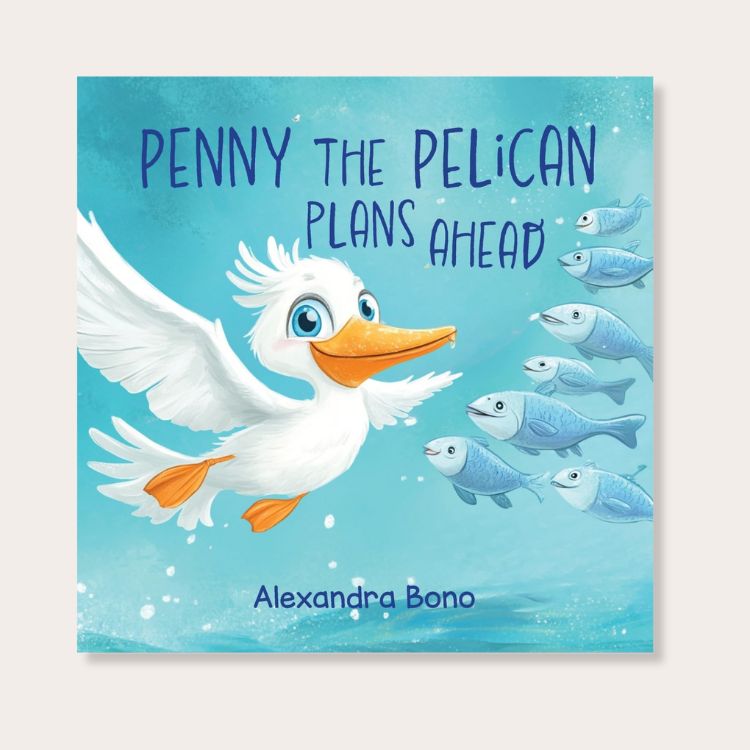
One of the easiest ways I’ve found to start money conversations with my kids is through books. Our current favorite? Penny the Pelican Plans Ahead. This rhyming picture book tells the story of Penny, who learns about planning and saving when her family is expecting a new baby. The cheerful illustrations and playful rhymes make big ideas, like responsibility and thinking ahead, easy for little ones to grasp.
The book’s author and illustrator, Alexandra Bono, is a financial empowerment advocate and the founder of Pelican Invests, a financial empowerment platform built to help families save money and grow their wealth. Through Pelican Invests, Bono provides families with approachable financial education and a mobile app designed to simplify saving and investing for parents at every stage. With a background spanning JP Morgan Chase, the U.S. Department of Treasury, and Columbia Business School, Bono brings both expertise and heart to her mission of helping families build stronger financial foundations. As a parent who’s just starting to build my financial confidence, I appreciate that I can trust experts like Bono to help me introduce these concepts in a kid-friendly way. It’s the kind of resource I wish my parents had when I was growing up, and I find myself learning alongside my kids when we read about Penny the Pelican together.
Piggy banks aren’t just cute and nostalgic—they’re practical. A clear piggy bank lets kids see their money grow, which makes saving more rewarding. Every time my oldest drops a coin in his piggy bank, he gets excited to watch his stash build up. It turns abstract concepts like “saving for later” into something concrete, visible, and even fun.
And to make it more engaging, we’ve started giving their piggy banks “labels.” One is for saving, one is for spending, and one is for sharing or giving. This helps kids see that money doesn’t just disappear into a bank—it has a purpose. The clear design adds another layer of learning, because they can actually track progress toward a goal, like saving for a special toy. Watching the coins pile up gives them a sense of accomplishment and sparks conversations about patience and planning.
Playing money-based games
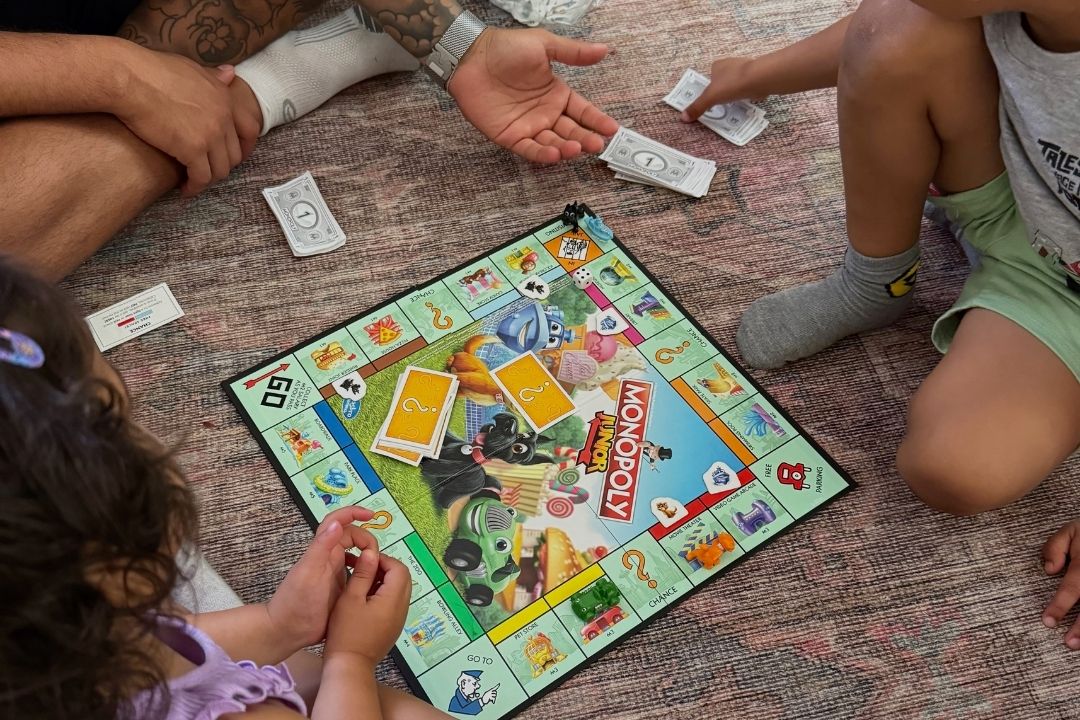
Kids learn best through play, and money is no exception. My family has had a blast playing Monopoly Junior together (where no one’s crying over mortgage payments). Games like this introduce the basics of earning, spending, and saving in a way that’s engaging rather than overwhelming.
Pretend play is another great option—set up a toy cash register, play “store” with snacks or stuffed animals, and let your child practice buying and selling. Not only does it build math skills, but it also helps them start to see the value of money in action. If you want to make it extra fun, give them play money and let them “budget” for items within a set amount. You’ll be surprised at how quickly kids start making choices and weighing what’s worth “buying.”
These kinds of games plant early seeds of financial literacy without kids even realizing they’re learning. To them, it’s just playtime—but to us, it’s laying the groundwork for skills they’ll carry into real life down the line.
Planning a grocery shopping field trip
I’ll admit, I don’t always recommend bringing kids on a grocery run. But on a day when you’re not in a rush, it can be a great hands-on money lesson. Before you go, create a simple shopping list with pictures of items alongside their prices. As you shop, let your kids check off each item and help add up the costs. It’s a fun way to practice math skills while showing them that everyday choices—like whether to grab the brand-name cereal or the generic—can impact the total cost overall.
More money activities to try with your kids at home
Learning about money doesn’t have to be complicated. Here are a few easy, engaging activities you can try right in your living room:
Money puzzles:Use printable puzzles that match coin values with their names or pictures. They’re a simple way to help kids recognize different coins while strengthening problem-solving skills at the same time.
Coin matching: Bury coins in a sensory bin filled with rice, beans, or sand. Kids can dig them up like treasure and then practice sorting and identifying each one. It’s a fun mix of play and learning that keeps little hands busy.
Coin bingo: Swap out regular bingo chips for real coins. When you call out different amounts, kids can cover the matching value on their card. It’s an exciting way to mix luck, learning, and math practice.
Money treasure hunts: Hide coins around the house and let your kids go on a scavenger hunt. Once they’ve found them all, challenge them to add up their total “winnings.” It’s a great activity for rainy days or as a special weekend game.
Coin caterpillars: Line up coins to create silly “caterpillars,” then add up the value of each one. This activity makes math more visual and encourages kids to think about the worth of different coin combinations.
ABOUT THE AUTHOR
Steph Alleva Cornell, Branded Content Editor
Since becoming a young mama in 2020, Steph has found joy in creating beautiful yet relatable content surrounding the raw realities of motherhood. She believes showcasing both the wonders and struggles of being a parent helps other mothers understand that they are not alone in their journey.
As the Branded Content Editorial Assistant, McKenna collaborates with our sales team by creating both written and social media content, collecting and analyzing performance data to report back to our partners, and assisting our editors with their everyday tasks to ensure a smooth and productive process.