


There’s no shortage of things to worry about as a parent. This stress starts before your child’s birth and basically never stops. You worry whether your child is gaining enough weight, rolling over and sitting up ‘on time,’ and if their language skills are developing as expected. The list is long and never-ending.
A lot of this stress comes from underlying notions about what our kids should be capable of, which theoretically comes from a good place. Being a concerned parent who wants their child to be successful isn’t a bad thing, but it can be all-consuming. So when I heard about the term ‘executive function’ and how it’s making the rounds from parenting experts (i.e., Dr. Becky) and moms’ groups as something to pay attention to, I started to feel that familiar feeling of anxiety creeping in. I wondered whether executive function was just the latest parenting buzzword, or something more.
I talked with Tera Sumpter, a speech-language pathologist who specializes in executive function and is the author of the international best-selling book The Seeds of Learning, to learn more about the topic. Here, she shares what parents should know about executive functioning skills in kids.
You May Also Like:
- 2026 Parenting Trends We’re Excited to Embrace This Year
- Are You an Elephant Parent? 6 Signs to Look For
Tera Sumpter, Speech & Language Pathologist
Tera Sumpter is a wife, mother of three, author, founder of Seeds of Learning® LLC, and Speech-Language Pathologist with specialized experience in the areas of reading, executive functioning and learning disabilities. She is an international presenter on cognitive processing and executive functioning, and former adjunct professor of Anatomy and Physiology of the Speech and Hearing Mechanism in the Cleveland State University Speech and Hearing Program.
What is executive functioning?
“A lot of people refer to executive function as the boss of the brain,” says Sumpter, “I like to think of it more as the director or the conductor because it’s more than just bossing.”
As your child grows, their brain is learning how to do everything, from how to talk and put on their shirt to how to read and do arithmetic. Alongside that, Sumpter explains, the executive function system is developing, too, to help kids do everything they’ve learned.
“Executive function tells us how to do something, when to do it, and whether or not to do it,” she adds.
“Executive function tells us how to do something, when to do it, and whether or not to do it.”
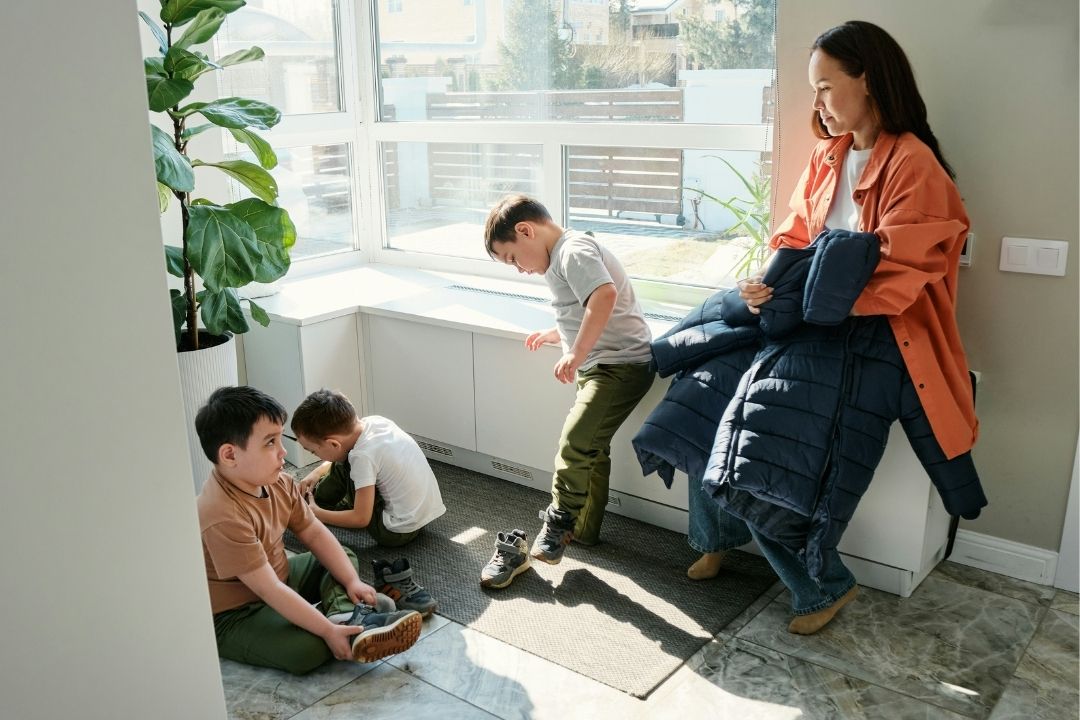
As an example, your child getting dressed by themselves in the morning without getting sidetracked is an example of strong executive function. Your child’s system is mentally conducting them to stay on task to put on their shirt, pants, and shoes, and helping to draw them back to the task if they start to get distracted.


Why is executive function important?
Executive function is a collection of life skills we all use every day. In addition to cueing our brains to take different actions to complete a sequence (i.e., get dressed), a strong executive function system also helps us remain flexible if plans change.
For example, if your child is getting dressed and wants to wear a blue shirt, but only finds red shirts that are clean, their executive function system would help prevent a meltdown over the color. This is called cognitive flexibility, Sumpter explains, and is a skill that’s built over time. That’s why my 3-year-old still has a meltdown when she has in her head that she really wants to wear her princess pajamas and they’re dirty. Her cognitive flexibility isn’t built yet.
Executive function also helps with impulse control, which Sumpter says is one of the later skills to develop. “It’s that ability to pause and to create space to think and adjust and delay gratification and to not be impulsively reacting,” she says. This skill, called inhibitory development, isn’t fully developed until someone is between 18 and 25. Initial inhibitory development happens between ages 3 and 5, and gets more consistent between ages 6 and 12.
Is your child’s executive functioning normal?
The short answer? Probably.
“A lot of times [parents] are expecting kids to do things that are way higher up on the executive function system,” Sumpter says, explaining that it takes up to 25 years to fully develop. You also can’t expect a 3-year-old to have a 10-year-old executive function system.
So if you’re getting texts from your mom’s group that are making you feel overly concerned about executive function, take a deep breath. And remember, everyone’s system fails them from time to time, even yours.
If you’ve ever walked into a room and asked yourself why you did so, that’s a prime example of your executive function failing, Sumpter says. “Nobody’s system is perfect,” she adds.
Children who have autism or who are diagnosed with ADHD or language disorders do tend to have more of a challenge with executive function, but most children’s executive function will develop naturally with good modeling from their parents.
How can parents support executive functioning skills for kids?
Executive function is a skill that parents should be mindful of, Sumpter says, but that they shouldn’t feel like they have to do anything extra about. She has a few recommendations for what parents can do, without going overboard, to help their child. The great news is that you might be doing some, if not all of these already.
Model executive functioning for your child
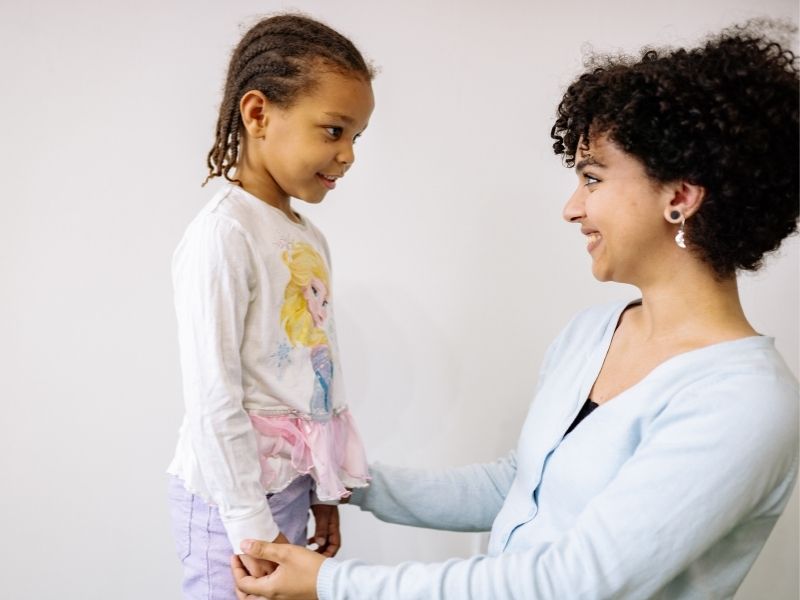
Narrate the steps you’re taking to do something, or narrate the steps your child needs to take to finish a process. Subconsciously, I’ve been doing this every morning with my three and five-year-olds as they get dressed. Every morning I repeat that we take our pull-up off, put it in the trash, pick out our underwear, pants, and dress, and put them on. Then I narrate that when we go downstairs we’ll eat our breakfast, brush our teeth and our hair, and put on our shoes.
“The goal is that it becomes their internal voice,” Sumpter says, which means eventually, when it’s developmentally appropriate, their executive function should cue them to take all the steps themselves to get dressed.
Ask reflexive questions
Sumpter is a big fan of asking reflexive questions to help kids develop executive functioning skills.
“Us directing our kids does not give them the practice of directing themselves,” she explains. “Parents who do all the directing think they’re helping their kids, but oftentimes they’re not because then the child’s executive function system never gets the practice itself to direct itself.”
If your child gets off task with something, instead of telling them the next thing to do try using questions like ‘What do we see ourselves doing first?’ or ‘What do we see ourselves doing next?’ to get them to think through the next steps.
Have your child reflect on wins (or losses)
Another key aspect to developing executive function is to realize when you’ve done it well, Sumpter says. If your child comes downstairs fully dressed one morning, ask them what steps they took to do so. If they say ‘I don’t know,’ then it may be a sign that it was a fluke.
Being able to articulate how they completed the sequence is a sign that their system did what it is supposed to be doing.
Encourage play
“Get your kids off the screens,” Sumpter stresses. “The screen replaces play, and play is how children get the sensory experiences that they need through the world.”
When kids play, they’re building their non-verbal working memory, which is crucial to building strong executive function skills. When they watch screens, kids aren’t getting a robust enough sensory experience to build this, which can lead to weaker executive function.
Final thoughts
Executive function is an important life skill, but it’s one that takes over two decades to fully form. And remember, everyone’s executive functioning fails from time to time.
So, as you hear more about the term as something you should be concerned about as a parent, know that yes, it is something your child needs. But it’s not something you probably need to overindex on.

Elliott Harrell, Contributing Writer
Elliott is a mom of two little girls and is based in Raleigh, NC. She spends her days running a sales team and doing laundry and her nights writing about the things that she loves. She’s passionate about all things motherhood and women’s health. When she’s not working, writing, or parenting, you can find her trying a new restaurant in town or working on her latest needlepoint project.
