


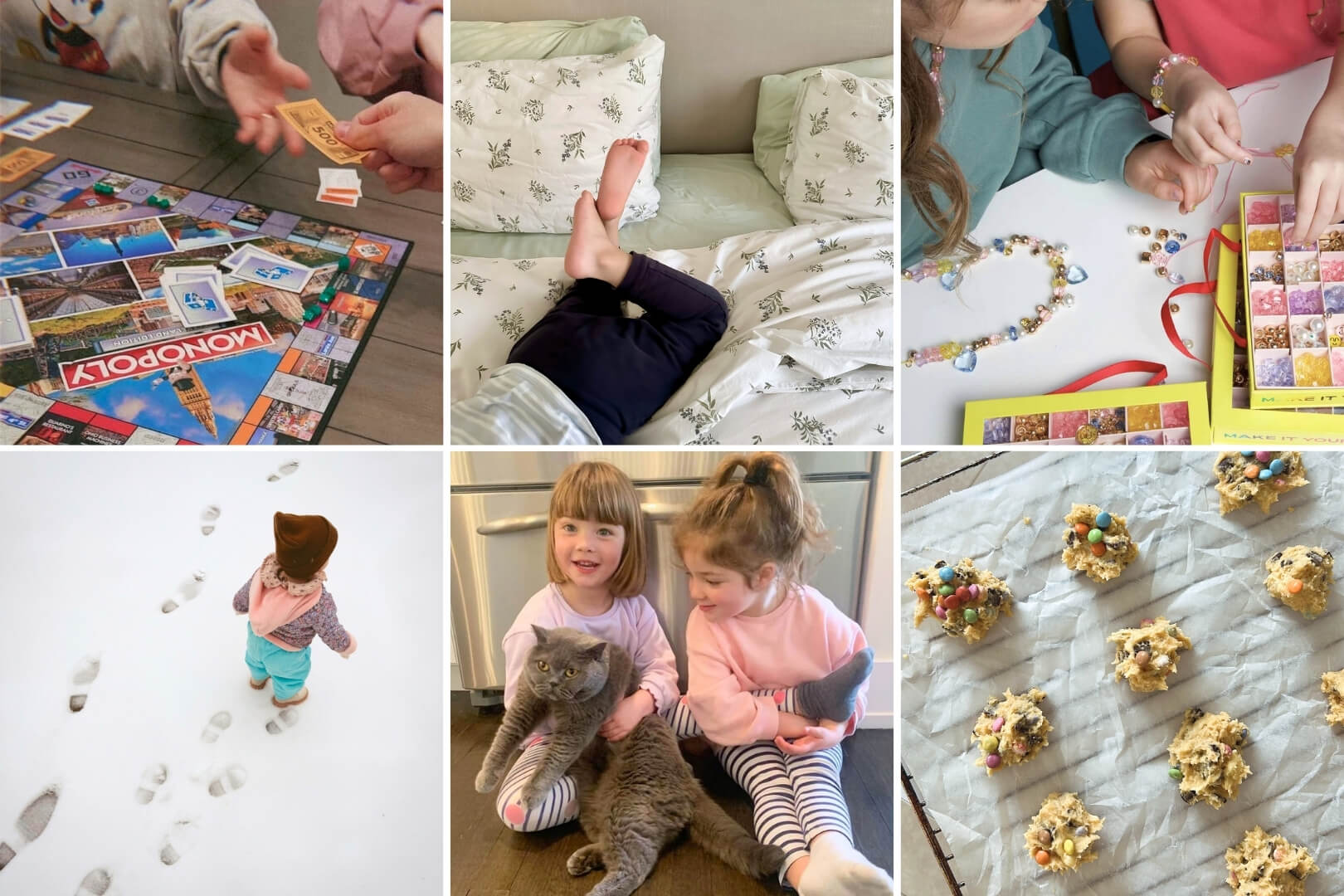
As a mom of three girls—12 and twin 9-year-olds—I think a lot about the kind of humans I’m raising. I want them to be kind, resilient, and curious, but also protected from the endless pull of screens. I’ve felt the pressure to give my kids a smartphone by the time they turn 10. But the conversation about the harm from doing so has only grown louder, with the U.S. Surgeon General’s warning that teens who spend more than three hours a day on social media face much higher risks of anxiety and depression. And CDC data shows teens with four or more hours of daily screen time are significantly more likely to report depression, anxiety, and disrupted sleep. So, I’ve chosen a different path: to delay smartphones and intentionally lean into analog activities that are screen-free joys—talking face-to-face, hands-on play, and activities where phones can’t tag along.
Delaying smartphones and increasing our analog activities feels right for our family. I’m giving my kids the room to grow in the real world with less screen time and more imaginative play—here’s how.
You May Also Like:
- I’m Parenting My Kids Like It’s the ‘90s—Here’s How
- Quiet Time Activities That Actually Work for Different Ages
- ‘The Anxious Generation’ Totally Changed My Perspective on Kids and Screens—Here’s Why
What led me to delay smartphones with my children
A true turning point for me was reading Jonathan Haidt’s The Anxious Generation. Haidt’s work crystallized what I’d been feeling for years: that our kids need a childhood rooted in play, connection, and wonder—not one spent endlessly online. It felt like a movement arriving just in time for my family. Since then, I’ve joined my kids’ school tech committee and attended events for MAMA (Mothers Against Media Addiction) and parent-led groups working to delay devices. I’m focused on building community and pushing for healthier norms around kids and technology.
That’s why, in our family, when the time comes, my daughters won’t be handed smartphones. They’ll get flip phones or “dumb phones” without social media or internet—tools for connection, not consumption. Because the truth is, kids will grow up in a tech-heavy world no matter what—we can’t (and shouldn’t) shield them from it entirely.
I’m not against technology
Let me be clear: I’m not anti-tech. In fact, I love it. I co-founded Super Smalls, a kids’ brand that is primarily sold online. I have to use technology to reach our audience through mediums like Amazon, digital ads, and social media. Personally, I enjoy memes, and most of my news comes from my phone.
While technology is part of my work and my life, it’s also why I’ve had to learn how to set boundaries. I want to model healthier habits and help teach my kids to do the same.
How I set boundaries with my personal screen time
To confront my own screen time, I use an app called OPAL (fittingly, also the name of a gem!) to block social media at the times that matter most. No scrolling first thing in the morning, none after 9:30 p.m., and never during moments of real connection. That small shift has transformed my mental health—I feel less anxious, less constrained to technology, and more present. Go figure. Looking up at the trees while I walk instead of down at my screen is genuinely transformative. I also had to unlearn the reflex to post every vacation, birthday, and milestone. Letting go of that pressure was freeing. It gave me space to enjoy the moment for myself and my family, without needing validation from anyone else.
“I also had to unlearn the reflex to post every vacation, birthday, and milestone. Letting go of that pressure… gave me space to enjoy the moment for myself and my family, without needing validation from anyone else.”
For us, that started with two simple rules. First, no cell phones in the kids’ rooms—my husband and I literally leave them outside the door so we’re not tempted. And second, whenever one of our kids walks into the room or starts talking to us, we automatically put our phones down. We don’t want them to get used to seeing us half-present or absorbed in a screen. We want to model the kind of attention and presence we hope they’ll eventually emulate.

What ‘no smartphones’ and analog activities look like at home
Making those changes in my own life has shaped the way we spend time as a family. At our house, that balance looks like a mix of old and new, with analog activities we enjoy together.
We play board games
We play a lot of games in our house—usually on weekends when we all have the time to sit together, but honestly, we’re always open to an impromptu round after homework and before dinner. Classic card games are our go-tos: UNO (which ruled our home during the pandemic), Old Maid, Go Fish, and even a little family Gin Rummy. We’re also big board-game people. Our Super Smalls Gem Bingo gets everyone shouting gemstones, we get very competitive with Rummikub and Sequence, and we adore the long, winding adventures of Monopoly and Life. Lately, my husband has been teaching the girls Backgammon, which they love because it feels like a “grown-up” strategy game. These games anchor us and create the kind of easy, joyful connection I hope they’ll remember forever.
We read together
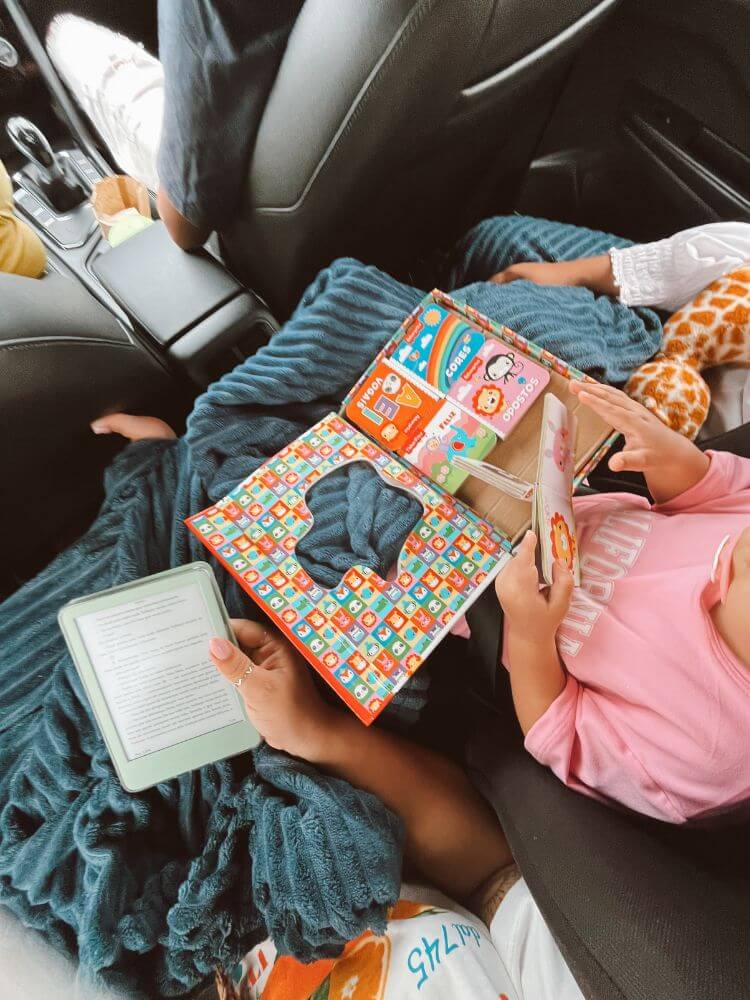
Reading has always been part of how we wind down at night, and it’s evolved right alongside my kids. When all three shared a room, my husband and I would curl up with them and read stacks of board books and picture books. Now that they’re 12, 9, and 9, the ritual looks different, but it’s still a pillar of our evenings.
My 12-year-old is deep into YA novels like Sisterhood of the Traveling Pants. I usually skim reviews or check Common Sense Media to make sure something is age-appropriate, and she loves giving me a quick “book update” during our nightly ‘goodnight’ chat. With my 9-year-olds, we still read together—one book we chose as a trio, so it feels like we’re on the same journey. We just finished Wonder and loved it. And when we’re between novels, we’ll revisit nostalgic favorites like Pinkalicious or The Story Orchestra series. No matter the age or format, ending the day with a story keeps us connected in the sweetest way.
We get outside
In the warmer months, we’re outside as much as possible—walking, biking, and finding any excuse to be in the sun. In the winter, I love that old saying: Are you walking your dog, or is your dog walking you? Our dog, Gracie, gets us outside even on the coldest NYC days, and that’s no accident. A simple phone-free walk around the block connects us to our city, our pet, and each other.
We get creative
We get creative with crafts. I’ve seen how something as simple as beads and stickers can spark joy and creativity. This perspective has shaped my work, too. Super Smalls—the brand I co-founded with my sister, Bianca—isn’t just about sparkly toys, accessories, and jewelry. It’s about the joy and magic of being a kid and protecting that joy in a modern way. That’s why we wrote The Super Book of Gems.
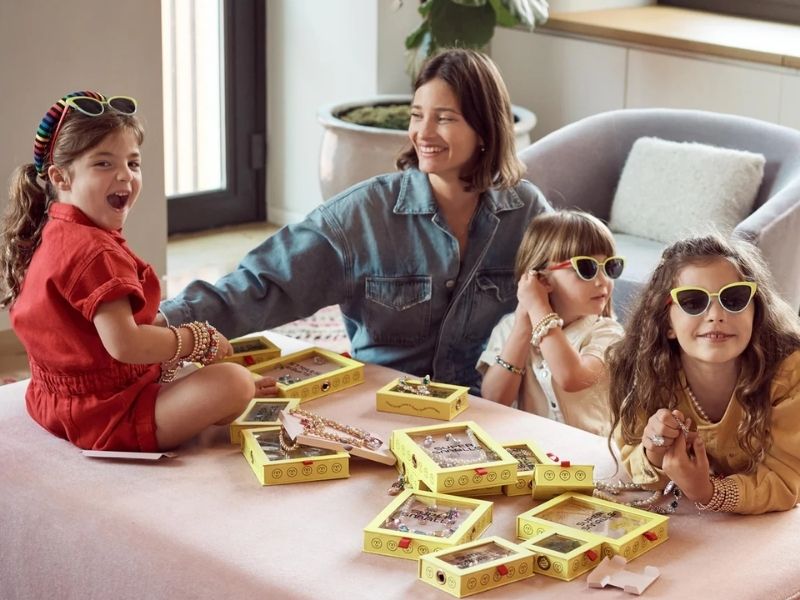
We poured our hearts into it as a kind of love letter to our own kids: part-coffee table book, part-conversation starter, filled with jokes, fun facts, and little sparks of wonder to help kids (and parents) see the magic all around them. And of course, it’s loaded with fine jewelry, gemstone lore, and the best details about jewels. Alongside it, we’ve created playful extensions like Gem Bingo, where you get to learn while you play, and note cards that you can color and sticker.
At their core, all of the items we create are meant to spark curiosity and joy for the adults who gift them and for the kids who play with them. I wish more of us could see the world through that lens—not a screen filter, but the real-life magic of being a kid—exploring, pretending, playing.
We got a landline
We also bought a Tin-Can phone, a kid-friendly, WiFi-connected landline phone with no apps, no games, just real voice calls. The girls “gemified” it with stickers, turning it into something playful while keeping the charm of simply calling a friend. They get safe independence and connection without the slippery slope of smartphones or scrolling.
How I’m finding a healthy balance with technology
I don’t think the future of parenting is about rejecting tech. It’s about balancing the new with the timeless, like leaning into analog activities and giving our kids both modern tools and grounding joys.
At Super Smalls, we use nostalgia to inspire our creations—the things we loved and longed for inform the new and improved things we make today. Similarly, I think using that lens with my children helps me strike that balance too, and it helps me model the behavior I want to see in them.
But if we can also give them moments that feel timeless, like board games, books, stickers, silly crafts, a phone call just for fun, then they learn what genuine play feels like. They get breathing room with analog activities while seeing how powerful presence is. Delaying certain tech will help amplify the analog joys of yesterday so my kids can step into tomorrow a little more gradually and full of curiosity and wonder.

Maria Dueñas Jacobs, Founder of Super Smalls
Maria Dueñas Jacobs is the founder of Super Smalls, a kids’ accessories and toy brand that brings a touch of luxury and imagination to childhood play. Before launching her company, she spent over a decade in fashion as the Accessories Director at Elle and Senior Accessories Editor at Glamour. A mom of three, she serves on her children’s school tech committee, is involved with Mothers Against Media Addiction (MAMA), and recently co-authored a children’s book with her sister, the Super Book of Gems, which celebrates creativity, curiosity, and a lifelong love of sparkle.
Products included in graphics linked within article. Feature graphic image credited to: @mduenasjacobs | Instagram, Super Smalls, Margaux Martinez | Dupe, Rachel Melvin | Dupe, Alexandra Ruggieri | Dupe, Reine Jalloul | Dupe
