This post is sponsored by Cash App but all of the opinions within are those of The Everymom editorial board. We only recommend brands we genuinely love.
I Ditched the Chore Chart and Piggy Bank—Here’s What We’re Using Instead
no more birthday money from Grandma vanishing into the abyss
Prepaid debit cards issued by Sutton Bank, Member FDIC. Cash App Visa® Debit Flex Cards issued by Sutton Bank, Member FDIC, and The Bancorp Bank, N.A., pursuant to a license from Visa U.S.A. Inc.Prepaid debit cards issued by Sutton Bank, Member FDIC. Cash App Visa® Debit Flex Cards issued by Sutton Bank, Member FDIC, and The Bancorp Bank, N.A., pursuant to a license from Visa U.S.A. Inc.
If you have kids, you probably know the classic allowance struggle. One day there’s a crumpled dollar bill stuffed in a backpack pocket, and the next, birthday money from Grandma has completely disappeared into the abyss. As cash becomes less common, I’ve realized that money can feel surprisingly invisible to kids—which isn’t exactly ideal when you’re trying to teach them how to earn, save, and spend responsibly.
Rather than expecting mom and dad to keep track of his birthday and allowance earnings, I wanted my 7-year-old to be able to see, with his own eyes, how much money he actually has. We used to have piggy banks back in our day (good times), but in today’s digital world, we need the modern-day equivalent. So basically, a secure place to store his cash that’s connected to a debit card with training wheels, but completely managed by mom. It’s a tall order, but thankfully, I found a money app that’s up for the challenge. Turns out Cash App just launched kid accounts for ages 6 to 121 and delivered everything I was searching for—security and age-appropriate independence—on a silver (or rather lime green) platter.
Setting it up was easier than I expected
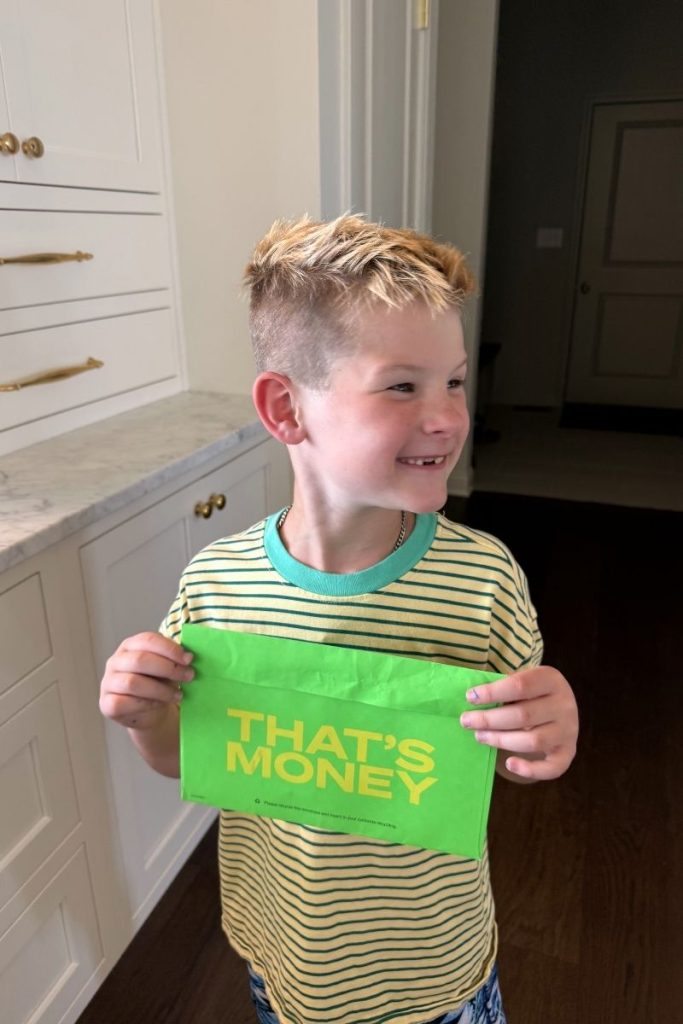
One of the first things I appreciated was that Cash App for kids doesn’t require Luke to have his own device. Everything lives within my Cash App account, which means I can monitor activity, move money, and manage settings from my phone. As a parent, that felt like the right balance. Luke gets the excitement of having his own account and debit card**, but I’m still the one overseeing everything behind the scenes.
The debit card design was huge–and so fun for Luke
Even setting everything up felt straightforward. I was new to Cash App myself, so I had to register both my own account and Luke’s. The verification process felt thorough (which I appreciated given that we’re talking about a child’s finances), but the overall experience was seamless and exactly what I expected.
The highlight: Designing his debit card
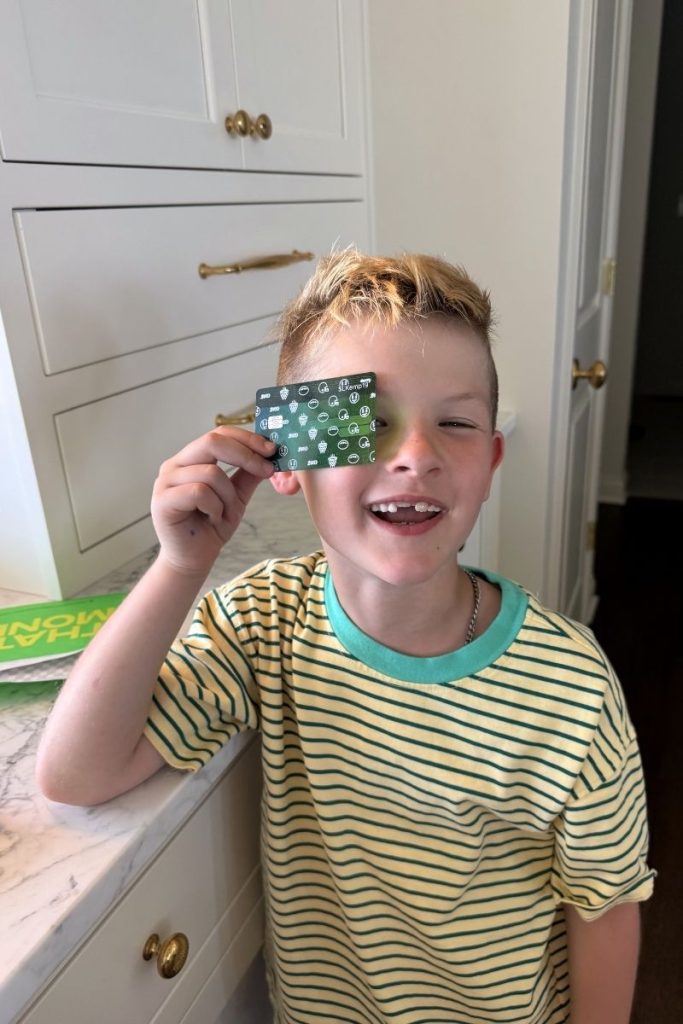
The absolute highlight for Luke was designing his debit card. It was basically like Christmas morning in our house. The timing couldn’t have been better because we had just finished putting together a summer allowance plan with daily chores, weekly responsibilities, and extra opportunities to earn money through odd jobs. Suddenly, all of that felt real to him.
Designing the card became part of the fun. He chose a green-and-blue sparkle background and loaded it up with very 7-year-old-approved graphics, including sports icons, the cash-face emoji, and the word “SPEED!” because apparently that’s essential financial branding when you’re in second grade.
We’ve always tried to give Luke ownership over new milestones. When he was potty training, we took him to the craft store so he could paint his own potty stool. Designing his debit card felt like the 7-year-old version of that same idea. He proudly told his friends about it for days afterward.
The parent features I appreciate most
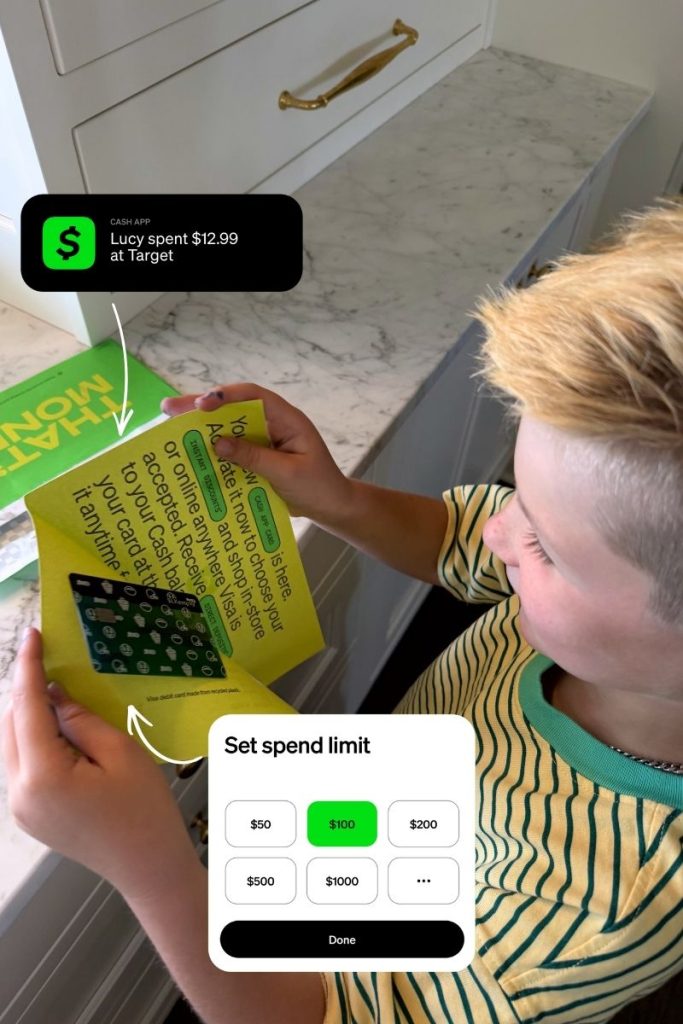
While Luke is focused on having a debit card with his name on it, I’m a little more interested in the practical stuff. A few features I’ve found especially helpful include:
No subscription fees or minimum balance requirements: I don’t have to worry about yet another subscription.
Spending limits I can manage myself: A 7-year-old would spend his entire balance on candy, given the chance.
Merchant blocking for extra peace of mind: To make sure his book fair money goes where it’s supposed to.
The ability to instantly lock or unlock the card: Because let’s be honest—kids lose things.
Built-in fraud protection monitors the account 24/7: I don’t have to become the fraud department on top of everything else.
Easy visibility into where money is being spent: Because “I don’t know where it went” seems to be a universal childhood budgeting strategy.
No need for Luke to have his own phone or app access: Screentime is already an ongoing battle as it is.
It feels like enough flexibility to let him start learning without feeling like I’m throwing him into the deep end.
On top of the easy setup and cool debit card design, it’s become much easier to help Luke connect everyday moments to real money lessons.
Allowance for summer jobs (and occasional pest control)
If I’m being honest, one of the hardest parts of allowance was remembering to actually pay it. I rarely carry cash anymore, so even when Luke earned money, I often didn’t have bills on hand. Recently, I promised him $1 if he handled a spider situation for me—which was honestly worth every penny. When I sent the money, I added the note “Spider Removal,” and it transferred within seconds. I didn’t have to remember to take cash out at the ATM, and he didn’t have to wait.
It sounds silly, but moments like that have made money feel more immediate and meaningful. Luke can see exactly where the money came from, and I actually follow through on what I promised.
This summer, we’re leaning into that even more. Along with his regular chores, he has a running list of optional “summer jobs” like picking up sticks and rocks in the yard, vacuuming, helping in the garden, and other small projects around the house. My hope is that he starts making the connection between effort, earnings, saving goals, and spending decisions while the stakes are still low.
Budgets for his blossoming social life
Something nobody warned me about is how quickly the social scene takes off once kids hit elementary school. Luke is constantly at playdates, sleepovers, birthday parties, and activities with friends. Just recently, he went on an outing with another family, and they generously bought him a small game he and his friend had been eyeing.
It was one of those moments that made me realize how useful it would be for him to have access to his own spending money—money connected to his own earnings and gifts—so he can politely offer to pay for himself when appropriate. Knowing that I can still see transactions, set limits, block certain merchants, and manage the card makes me feel much more comfortable as he starts becoming more independent.
Birthday money doesn’t disappear into the void
Remember that birthday money that always seems to vanish? This might be the problem I’m most excited to solve.
Luke typically receives money from grandparents and relatives throughout the year, but once it gets tucked into envelopes, drawers, or my purse, it basically becomes invisible to him. Now, when family members send birthday money, it can go directly into his balance, where he can actually see it when I show him on my app. For the first time, he can watch that number grow instead of simply hearing me tell him he has money somewhere.
Teaching financial literacy without making it a lecture
The biggest reason I wanted to try Cash App for kids wasn’t just convenience—it was financial literacy. I wasn’t raised with great money habits. I grew up around a lot of financial stress and debt, and those experiences definitely shaped how I think about money today. For my kids, I want something different. I want them to learn about money from a place of confidence, ownership, and understanding rather than fear. I want them to make age-appropriate mistakes now, when the consequences are small, instead of learning those lessons for the first time as adults.
That’s part of why I’m excited about the savings tools. Cash App for kids offers a 3.25% yield2, making it simple to introduce the idea that money can grow over time. Instead of turning saving into a lecture, I can simply show Luke what happens when he sets some money aside. More than anything, I want him to see the full picture: money comes in when you earn it, money goes out when you spend it, and saving helps you reach bigger goals down the road.
The bottom line
After trying Cash App for kids, my biggest takeaway is that it makes money feel more tangible for both of us. Luke gets to experience the excitement of earning, saving, and spending in a way that feels real, while I get the visibility and controls that help me feel comfortable along the way.
And if his emoji-covered debit card is any indication, learning about money has become a whole lot more exciting than dropping quarters into a piggy bank.
Megan Kemp, Senior Sales Manager of Brand Partnerships
Megan is the mom to her spunky 6-year-old son and cute-as-a-button 2-year-old daughter. She handles her busy days with grace and relishes family time spent under the sun gardening, playing sports, or boating at the lake.
McKenna Pringle, Assistant Editor of Branded Content
As the Assistant Editor of Branded Content, McKenna collaborates with our sales team by creating both written and social media content, collecting and analyzing performance data to report back to our partners, and assisting our editors with their everyday tasks to ensure a smooth and productive process.
Prepaid debit cards issued by Sutton Bank, Member FDIC. Cash App Visa® Debit Flex Cards issued by Sutton Bank, Member FDIC, and The Bancorp Bank, N.A., pursuant to a license from Visa U.S.A. Inc.
**Cash App is a financial services platform, not a bank. Banking services provided by Cash App’s bank partner(s). See cash.app for more details. Prepaid debit cards issued by Sutton Bank, Member FDIC. Cash App Visa® Debit Flex Cards issued by Sutton Bank, Member FDIC, and The Bancorp Bank, N.A., pursuant to a license from Visa U.S.A. Inc. See terms and conditions for the Sutton prepaid card, Sutton debit flex card, and Bancorp debit flex card.Savings provided by Cash App, a Block Inc. brand.
Parents and legal guardians can open a managed account for kids 6-12. To view the eligibility requirements for sponsoring a teen or child, please visit the Sponsored Accounts section of the Cash App Terms of Service.↩︎
Cash App will pass through a portion of the interest paid on your savings balance held in an account for the benefit of Cash App customers at Wells Fargo Bank, N.A., Member FDIC. To earn interest on your Cash App savings balance, you need to have sponsor approval. Exceptions may apply. Savings yield rate is subject to change.↩︎
This post is sponsored by Cash App but all of the opinions within are those of The Everymom editorial board. We only recommend brands we genuinely love.