


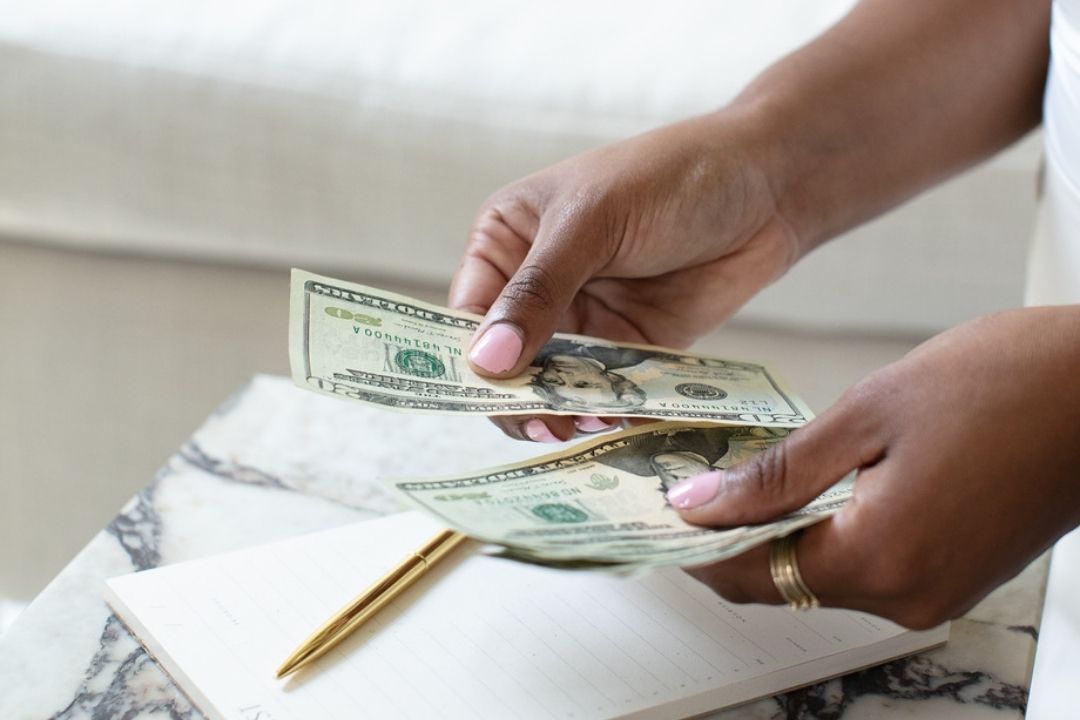
Every winter, it feels like the budget goals I set for the year go completely out the window. Between the holidays and my daughters’ back-to-back birthdays, by the time spring rolls around, our finances are spent. And with summer around the corner—demanding every parent empty their wallets for summer camps, vacations, and excursions—my husband and I decided that March would be the perfect time to embark on a “No-Spend Month”.
The rules? For the entire month of March—minus my husband’s birthday—necessities would be our only expenses. This meant no unnecessary shopping, random trips to Uniqlo, or hitting up our favorite coffee shops on the weekends. No ordering in, eating out, or grabbing excess snacks from Trader Joe’s. The only expenses allowed were routine groceries, bills (of course), and any emergency household necessities that were bound to come up (because, life).
Tbh, I expected this to be easy. I don’t consider myself to be much of a spender—I only purchase something when I feel I truly need it. I keep a capsule wardrobe, use all of my makeup before purchasing anything new, and squeeze the last bit of product out of every bottle before restocking. How hard could it be to forgo a month of unnecessary spending? Well… harder than I thought.
You May Also Like:
- Financial Reset for Moms: What to Do Now to Set Up Your Family for Success
- Why Does It Feel Like We’re Barely Staying Afloat as a Middle-Class Family?
Initial thoughts after a no-spend month
Thirty-one days later, and I’m currently laughing at the version of me who thought this would be a breeze. (Oh, how naive I was.) It turns out that a no-spend month is much more challenging than it seems—even if you consider yourself to be on the careful side with finances—and especially when you have a family.
What surprised me the most
Here’s everything that surprised me the most about this challenge, what I did well, and what I’d do differently next time (because there will be a next time—and soon).
I enjoy ‘little spends’ more than I thought I did
As I mentioned earlier, I always thought I was a careful spender. I’m known to walk into stores and happily browse without spending a penny. I’m the queen of filling up a cart online just to talk myself out of it. And I will wear something down before replacing it. (You should have seen the holes in my tennis shoes before I finally bought a new pair.)
However, forcing myself not to spend unnecessarily made me realize that I take delight in what I call “little spends.” I can talk myself into grabbing a cortado whenever I’m out, even though I have a perfectly good espresso machine at home. There’s something about walking into an aesthetically pleasing coffee shop and having a barista prepare my drink with the dreamiest latte art that will trump my at-home attempts anytime. It was a challenge to tell myself, “Girl, we got coffee at the house!” Talk about having to parent yourself. Why do I have to be the adult telling myself that I don’t have coffee money? I hated that for me. (Insert pout.)
“It was a challenge to tell myself, ‘Girl, we got coffee at the house!’ Why do I have to be the adult telling myself that I don’t have coffee money?”
There were also a few times I felt more tempted to shop than I usually do. The urge felt stronger when I knew spending was off the table. Spending money is one of the only ways you can have fun outside of your house, especially when it’s cold outside. It is much harder to find fun, no-cost things to do in winter than in the spring and summer. In the warmer months, I fill my time on the tennis courts, taking local hikes with my family, or perusing local festivals. In the colder months, staying home can get old quickly, which leads to more unnecessary spending. I had to channel more discipline than expected to achieve my no-spend goal.
Being a parent means unexpected needs pop up
This was probably the worst month—outside of my kids’ birthday month—to attempt a no-spend month. We’re a homeschooling family, and our co-op goes on learning adventures every week. This is something we look forward to, because it gives us a reason to leave the house, meet up with friends, and learn in the community.
Usually, our learning adventures require driving somewhere and packing a lunch, but sometimes we venture into the city to go to a museum. When we do this, we always take the train, because traffic and parking are a nightmare. And when we take the train, we get lunch in the city. A decision I made last year, after stressing myself out trying to carry three lunches in a backpack for the entire day, which always led to back pain and misery.
It just so happened that we had two learning adventures in the city during our March no-spend month, which meant purchasing two train tickets and lunch twice. I could have been strict with our plans, but I decided that these occasions would have to be exceptions. For my sanity as a mother, these lunch purchases were necessary. I had to shrug my shoulders and say, “Oh well!”
The positive? Not spending money on eating out over the weekends meant we had money to spare for those trips, which is the ultimate goal of a no-spend month. When you need the money, it’s there.
We also had a few more necessary expenses pop up unexpectedly, like some household items, toothbrushes for the kids, and homeschool supplies. Even though we were supposed to be spending less money, it still felt like we couldn’t get around spending money—and honestly, that was a bit frustrating.

I realized that spending money is necessary
Every time I was faced with a circumstance where I would have normally spent money and couldn’t, I started to think about just how necessary spending money actually is. While money cannot buy happiness, it certainly can buy pleasure, access, resources, freedom—and it’s vital for stimulating the economy. It’s okay to admit that.
“While money cannot buy happiness, it certainly can buy pleasure, access, resources, freedom.”
Spending money almost always feels guilt-ridden for me, and is typically something I can only justify when it’s essential. Even that coffee shop stop brought feelings of guilt almost immediately. But without it, I realized I had less to look forward to during my otherwise mundane weeks.
Yes, I make most of my coffee at home, and no, I typically don’t purchase something unless I need it. But, grabbing a coffee out once a week is something that I look forward to after spending so many days at home. A perusal through Home Goods to stock up on discount cleaning supplies brings me joy. Grabbing lunch while I’m out instead of having to always pack something from home is a stress reliever. And, that’s okay.
Yes, money can be a source of joy—and that, too, can be a need. As long as I’m in control of how often I’m spending that “joy money” and have budgeted for it, it’s okay to live a little without the guilt.
What went well—and why
I made a plan and stuck to it
Before March 1 hit, I began making a plan for how our no-spend month would go. I knew I needed enough groceries to make eating out a non-issue, which meant stocking up on a fair amount of pre-made items and ingredients for meals. When the weekend rolls around, we don’t want to be bothered with cooking—but if we don’t have something quick in the freezer, it becomes very tempting to hit up Uber Eats. I chose to spend a little extra on stocking the freezer with some pre-made meals to make weekend evenings a bit easier.
I also made intentional plans for how we would spend our weekends at home. Every weekend in March, we tackled a household task we had been putting off. One weekend, we cleaned the garage. Next, the basement. By assigning a large project that required our attention at home, we weren’t (tempted) to stave off boredom with a shopping trip. (We also let our kids have a bit of screen time to offset the extra days at home—you gotta do what you gotta do.)
We enjoyed some intentional quiet family time
Before our no-spend month, we hit up the library to grab some gems. Since the weekends are when we tend to spend the most money, it was important to have some activities to look forward to while spending more time at home. Our kids are readers and so are we, so when we’re knee-deep in a good book, we want nothing more than to cozy up at home and read. When we got tired of the books and the cleaning, we all played video games for an hour.
Choosing to go spend-free for a month gave us more time together as a family because we removed the distractions, the busyness, and unnecessary purchases of a typical weekend.
What I would do differently next time
Have a meeting with my spouse before beginning the challenge
While my husband and I had a brief conversation about the no-spend month, we should have had a full sit-down family meeting—complete with an agenda, goals, and objectives. This would have ensured that we were on the same page with what constitutes a need during a period of spending restriction. There were a few times when it was clear that our definitions of “what a need is” were different. An intentional meeting would have cleared the confusion while also allowing us to agree upon the goals we wanted to accomplish during the challenge.
Set goals ahead of time
Speaking of goals, I should have set some. I went into the month thinking that we should simply restrict all spending that wasn’t a necessity. However, as the month progressed and things kept coming up, it became difficult to see if we were making any real progress. We should have set some specific goals and created our own definition of success so that we could track exactly what was working and what wasn’t, why, and how to implement the positive changes into our regular budgeting and spending habits.

What a no-spend month actually taught me
Listen, finances can be a scary thing when you either don’t have control over them or you don’t know where your money is going. However, it’s okay that money gets spent, too—it’s supposed to. Going on a no-spend month is not a punishment for overspending or a crash diet for your money. The goal of a no-spend month is to make you more aware of your spending habits and what typically drives your behavior regarding your finances.
Unexpected expenses will always come up, but you can make space for them
It won’t be perfect. Things will come up. Your kids will need something. You’ll forget about that field trip or school fundraiser. But you will find that your intentionality around your spending habits is sharper. You will ask yourself, “Is this a need?” before pulling the spending trigger. And chances are, your discipline will allow you to have a bit of extra cash when that unexpected expense arises.
You can adjust your definition of ‘needs’ and ‘wants’
On the other hand, you may adjust your definition of what a necessity is—realizing that sometimes purchases that bring joy or ease stress are just as vital as paying a bill or buying groceries. That’s okay! Now you know what you want to prioritize in your budget, and you can make sure you have room for these needs without guilt or question.
Planning our next no-spend month
Now that I’ve tried a no-spend month, this is something I’d like to implement quarterly, which I think is super doable. Next time, however, I will plan the no-spend month a bit more in advance, with goals, a meeting with my spouse, and a triple check of the calendar to try my best to avoid, or at least prepare for, scheduling mishaps. Even so, things are bound to come up, and that’s alright. That’s life. The most important thing here is to be more conscious about what is driving our spending, become more intentional with each spending decision, and have a plan for where your money is going at all times.

Caroline Sumlin, Contributing Writer
Caroline Sumlin is a writer, author, and content creator specializing in topics ranging from self-worth, lifestyle, wellness, motherhood, education, society, and culture. Caroline received her Bachelor of Arts degree in Journalism from Howard University in Washington, DC.
