


Approximately 40.5 percent of Americans will be diagnosed with cancer at some point in their life. It’s a diagnosis no one wants to receive, but the good news is that the odds of beating a cancer diagnosis have gone up significantly in the past 50 years.
Survival rates can vary by type of cancer and individual circumstances, but thanks to things like better treatment options and better early detection screenings and tests, the overall survival rate has risen from 49 percent in the 1970s to 68 percent today.
Recently influencer Campbell Puckett, AKA Pookie as her husband Jett calls her, revealed that she’d undergone surgery to remove some precancerous cells. Two weeks later, she was able to announce that all of the precancer was removed successfully and that she remains cancer-free.
So, what is precancer, and should you be worried about it? I sat down with Dr. Sue Chang, MD, FCAP, and a spokesperson of the College of American Pathologists to learn more about what it is, what you can do to try to prevent it, and what to do if you suspect something is going on that’s not normal.

Sue Chang, MD, FCAP
Dr. Chang is a Los Angeles based pathologist, associate clinical professor in the Department of Pathology, and Associate Chief Medical Information Officer at City of Hope, a cancer research and treatment organization with five locations throughout the United States. She graduated from Harvard University and went on to receive her medical doctorate from New York Medical College. Dr. Chang is board certified in anatomic pathology, clinical pathology, cytopathology and clinical informatics.
What does pre-cancer mean?
Cancer doesn’t appear overnight. As Dr. Chang explains, for most cancers there’s a progression of sorts that happens where cells in your body go from normal to abnormal, or precancerous, and then can develop into cancer.
“Precancer” is a fairly broad term, but precancerous cells are those cells in your body that don’t look like they’re supposed to. They might be shaped differently or larger than normal, which signals doctors to take another look at what might be going on.
“[Because] of the stepwise process, that’s why you hear people say things like precancerous or atypical,” says Dr. Chang. “That’s just [doctors] trying to explain that it’s not normal anymore, but it’s not invasive cancer.”
“For most cancers, there’s a progression of sorts that happens where cells in your body go from normal to abnormal, or precancerous, and then can develop into cancer.”
While anything related to the big C-word sounds scary, Dr. Chang is quick to remind people that “just because there’s precancerous changes does not mean a person will unequivocally develop cancer.”
If a doctor finds precancer during a screening, like a pap smear, they’ll do things like additional tests, remove the precancerous cells, and may set you up for more frequent future screenings to monitor things.
“We’re always very, very diligent when we find [precancer] because we really want to give our patients the best chance they have to clear any sort of precancerous shenanigans that are occurring and live their full best lives,” says Dr. Chang.
Where can you have precancer?
Technically, you can have precancer anywhere in your body, although Dr. Chang says there are some areas that are more likely to develop precancer than others.
“You hear very commonly, especially in America, colon cancer, breast cancer, lung cancer,” she says. “Skin cancer is [also] a huge one. It’s very common to have precancerous skin lesions.”
Remember that the progression to a cancer diagnosis doesn’t happen overnight, and that while it is possible to develop precancerous cells anywhere, that doesn’t mean you’ll develop cancer if you have them.
What can you do to prevent precancer?
Three of the biggest things that Dr. Chang recommends to try to avoid precancer and subsequently a potential cancer diagnosis are to take preventative measures like wearing sunscreen, getting a human papillomavirus (HPV) vaccination, and keeping up with screenings like mammograms, pap smears, and colonoscopies at the recommended ages.
“Time is your biggest asset,” says Dr. Chang. “Catching [precancer] early means you can buy yourself time.”
Get a HPV vaccine, if you haven’t already
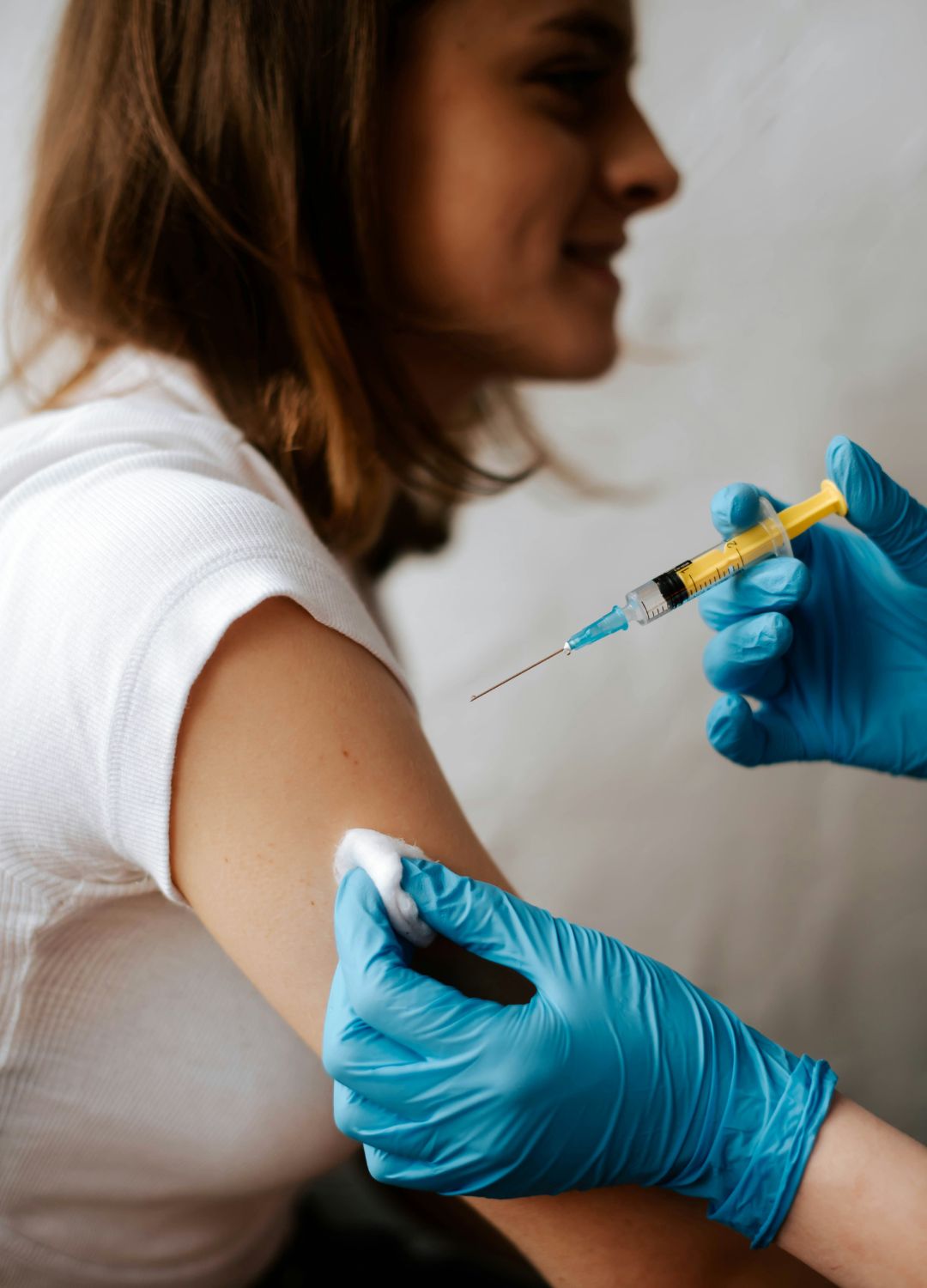
In 2006, the FDA approved the HPV vaccination as a way to prevent cervical cancer, and it’s since been shown to protect both sexes from things like vaginal and anal cancer, too. According to the CDC, the HPV vaccination prevents over 90 percent of the cancers that HPV causes. It’s recommended that kids get the vaccine when they’re 11 or 12, but if you never got an HPV vaccination, it’s not too late.
Dr. Jen Gunter, an OB-GYN, talks openly about why she got the HPV vaccine when she was 52. She had just left a long-term relationship and knew it was likely to have new sexual partners. Dr. Gunter explains in her substack that while HPV infection is most common in women 25 and under, there are plenty of unfortunate instances where people who believed they were in a monogamous relationship find out they’re not and subsequently test positive for HPV.
You’ll be tested for HPV at your pap smear, so if you haven’t had the vaccine, ask your doctor about it at your next appointment, as it’s a proven way to reduce your risk of cancer.
“Cervical cancer was very, very common and is now less common,” emphasizes Dr. Chang, “because of both better screening and also a vaccination for HPV.”
Keep up with preventative screenings
One of the other key ways that you can prevent precancer from potentially becoming full-blown cancer is to keep up with things like your physical, skin check, pap smears, mammograms, and colonoscopies.
A routine physical and skin check should happen annually. A Pap smear is recommended every five years for anyone with a cervix. For mammograms and colonoscopies, the current recommendation is screenings starting at 40 and 45, respectively.
Dr. Chang says it’s also super important to know your family’s history when it comes to cancer and to discuss this with your doctor, as that may mean starting preventative screenings earlier. So if your family has a history of breast cancer, as an example, you may start getting them earlier than 40.
One tip she has for keeping up with appointments? Don’t leave the doctor’s office until you’ve put your next appointment in your calendar, even if it’s a year away. I’ve started to do this, and while I suspect the receptionist thinks I’m texting and not paying attention, I agree with Dr. Chang that it’s the only way to really keep up with these key appointments.
What should you do if you suspect something might be wrong?
Paying attention to your body and having familiarity with what’s normal for you versus not is critically important to catch any abnormalities early.
“Out of everybody, you’ve got the most data on yourself,” Dr. Chang likes to remind people. “If you know your body, and you know something’s off, that’s your number one sign.”
She recommends that if something seems off, start to document it, as it’s not always possible to make a doctor’s appointment immediately. Take pictures and make notes so that when you do get an appointment, you’ll be able to walk a doctor through all of your data points.
And the biggest thing? Don’t push off going to the doctor. If you’re worried about not being taken seriously, having notes and a log of your symptoms can make you feel more confident about being seen and will give your doctor a great starting point to work with.
Anything abnormal going on in your body is worth another look, but it doesn’t mean that you’ll necessarily end up with cancer. Take the preventative measures you can control, and be quick to take action on anything that doesn’t seem normal.
“I think one of the great injustices about moms is that they take care of everybody else, but nobody takes care of them,” Dr. Chang says. “I really hope that [moms] keep an eye on themselves or they keep an eye on each other.”
Elliott Harrell, Contributing Writer
Elliott is a mom of two little girls and is based in Raleigh, NC. She spends her days running a sales team and doing laundry and her nights writing about the things that she loves. She’s passionate about all things motherhood and women’s health. When she’s not working, writing or parenting you can find her trying a new restaurant in town or working on her latest needlepoint project.
