



With summer here, I’ve been thinking about life by the water more than usual. And since becoming a parent, it’s definitely less “I can’t wait to sit on the beach with a book” and more “how do I keep my child safe near water?” For my family, water safety is not optional. We’re lucky to live minutes from the beach. And one set of grandparents has a pool. Water is a big part of our lives. But if I’m being honest, it makes me a little on edge now that my toddler is more interested in every type of water, which is why I signed him up for ISR swim lessons.
If you’ve looked into swimming lessons at all, you’ve probably come across ISR (Infant Swimming Resource). It’s one of those things that people feel strongly about. Some parents are all in. Others feel unsure, especially when they hear there can be tears in the beginning. And if you’re like me, a few weeks ago, you sort of felt right in the middle about it.
If you’re considering ISR, or you’ve been curious about what it looks like day-to-day, here’s what I’ve learned so far.
You May Also Like:
What are ISR swim lessons?
ISR stands for Infant Swimming Resource (you can find an instructor in your area here). The main goal for this type of swim lesson is to teach young children how to get themselves out of a dangerous situation in the water. It’s meant to be very practical and very skill-based.
ISR swim lessons look different from traditional swim lessons, which are often group-based, more play-focused for little ones, and sometimes include a parent in the pool. ISR is always one-on-one and is built around what a child can do if they unexpectedly end up in the water. You can think of ISR as safety and drowning prevention, and traditional lessons as technique and enjoying the water.
ISR swim lessons can start as early as 6 months old. It’s just your child and the instructor in the water, for only about 10 minutes per session, typically 4–5 days a week.
Because everything is tailored to the individual child, the overall length of the program can vary. I was told most kids fall somewhere in the 4–8 week range, with refresher lessons built in over time.
What they’re working toward depends a bit on age, but the main skills look like:
- Rolling onto their back to float, rest, and breathe
- Staying in the float position until there is help
- For older toddlers, swimming a short distance, then flipping onto their back to float, then continuing that sequence until they reach safety
These lessons aren’t centered on “learning to swim” in the traditional sense, especially for very young children. The focus is on what a child can do if they find themselves in the water on their own.

Why parents choose ISR (and why we did)
I first heard about and looked into ISR last year, but it didn’t fit into our schedule. Then this year, I saw a posting for lessons five minutes from my son’s daycare. It felt like a sign. So, I signed him up on a Friday, and he started lessons the following Monday. He’s almost 3 years old, and he completed 6 weeks of lessons, 4-days per week.
For my family, swim lessons in general felt non-negotiable since we’re around water so much. There were a lot of particulars I considered when choosing a type of lesson, and safety came first, which made ISR stand out. Enjoyment and a love for water matter too, but for right now, not in the same way. Here’s why many families choose ISR:
Little ones learn a lifesaving skill
For a lot of families, the decision to start ISR swim lessons comes down to one thing: water safety. I don’t love even typing the word drowning, but it’s the main factor here and the leading cause of accidental death in children ages 1-4.
ISR is often chosen by parents who spend a lot of time around water, whether that’s a backyard pool, a nearby lake, or regular beach days. And it’s meant to give young children a set of skills they can rely on if they were to ever accidentally fall into water.
For some families, the focus on self-rescue (rolling onto the back, floating, breathing) offers a layer of protection. This, of course, isn’t instead of supervision. There won’t be any type of lesson that replaces being present and watching your child.
1-on-1 attention
Another thing that stood out for me with ISR is the one-on-one component. It’s just my son and the instructor, at his pace. And I was intrigued that the lessons were only 10 minutes. This sounded short, but for my son’s age, it’s enough time to concentrate, try something new, and not completely shut down. Short, consistent practice felt like it would stick better than a longer, more drawn-out class.
Above all, I wanted my child to have a clear, practiced response if something didn’t go as planned. For me, I was okay with fun coming after.
ISR vs. swim lessons: a quick comparison
The chart below offers an at-a-glance comparison of ISR versus traditional swim lessons. Of course, specific costs and duration will vary based on your location and instructor.
| ISR Swim Lessons | Traditional Swim Lessons |
| 10-minute lessons | 30-45 minute lessons |
| 4-5x/week | 1-2x/week |
| Instructor and child only | Parents often in pool with child under 3 |
| 1:1 lessons | Single or group lessons |
| Cost: approx $125-175/week | Cost: approx $15-30/lesson |
| Focus: self-rescue techniques | Focus: water comfort and swim skills |
What the first few weeks of ISR swim lessons are like
I’ll say this upfront—those first two weeks were harder than I expected. For him, but also for me. There were tears. There were moments he called for me while I sat just a few feet away, giving a thumbs up and trying to look more confident than I felt. And then, by the end of week two, we had a shift in momentum.
We’ve just finished ISR swim lessons, so if you’re wondering what ISR swim lessons look like day-to-day, here’s a snapshot.
What a lesson looks like for us
We go to a private home with an indoor pool for lessons. We arrive, change in a small bathroom, and walk over to the pool together.
Before my son gets in the water, the instructor asks me a few quick questions, like how he slept, if he’s had regular urine and bowel movements, and checks that he hasn’t eaten for two hours before the lesson. Then she turns to him and reminds him to ask, “Can I come in the pool?” She reminds him that whenever he wants to go into water, he should always ask an adult. I love this type of detail.
For each lesson, we’re asked to bring three towels (one to lay on the floor next to the pool as a barrier, the second as a layer to absorb water while he rests after the lesson, and the third to cover and warm up with). So, I set two towels by the pool and put the third in the towel warmer. I usually sit right by the steps, but there are chairs a little further away. Then the lesson starts.

ISR Week 1: It’s all new
- There’s a new instructor, new environment, and new expectations
- Separation is a big factor, but I’m still right there and trying to encourage without inserting myself too much
- The focus is on learning basic movements: short swims toward a bar at the pool edge, early float work
My son was definitely unsure, but not completely overwhelmed. Besides the first lesson, there were a few tears each time, but also moments where he just went with it. By the end of each lesson, he’d get a sticker and be all smiles and want to chat about what he did in the pool.
ISR Week 2: Harder than I expected
Our instructor told me to expect this week to be harder ahead of time. She shared that week one can feel new and at week two, the newness wears off and reality hits that they have to come back and do this again. This reminded me very much of our daycare experience, where my son was curious the first few drop-offs, then things got harder, then easier.
Our instructor’s insights were right:
- There were tears almost immediately after getting into the pool
- More vocalization of “I want mommy.”
- More resistance and more emotions
This was the hardest part for me. It was not easy to sit a few feet away while he asked for me. But I would give a thumbs up and say something along the lines of “you’ve got this!”
What really helped was giving my child a way to handle it. I told him he could ask for a break if he needed one, and he did—sometimes as soon as he entered the pool. The instructor honored that and would hold him and splash a little, or bring him back to the steps to reset while playing with a pool toy. You’re of course dealing with a clock since lessons are so short, so breaks can’t be long, but they helped.
And then, just like week one, he’d wrap up each lesson calmly and be so excited about the sticker he got to pick. When his dad asked him one night how it went after a lesson, he even said he liked swimming.
ISR Week 3: Something started to click
The biggest thing was that there were no tears this week. There were other little things I noticed, like my son wanting to open the door and be the first to walk in, or his reminders to warm the towel. I could sense more ease.
Things I saw this week in the pool:
- It was clear that there was more confidence with his float, and he started asking to try it
- He was floating longer and on his own
- There was still hesitation with swimming to the bar, so the instructor adjusted to swimming toward the stairs instead, and this worked really, really well
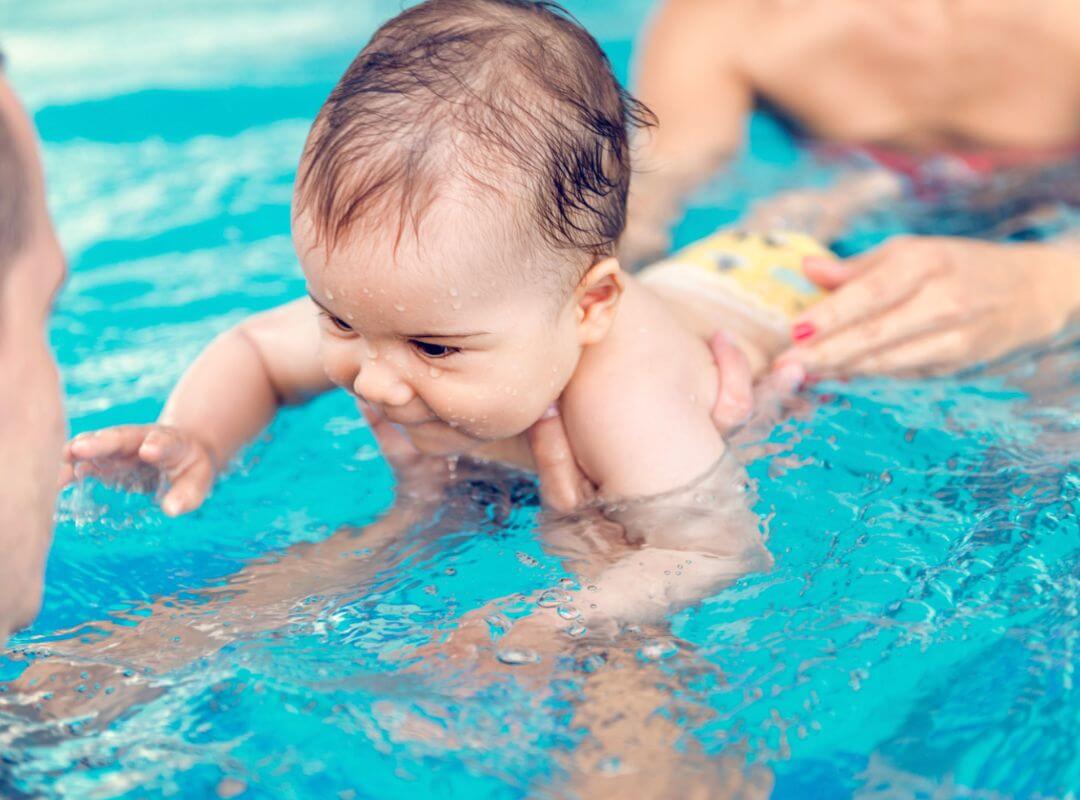
ISR Week 4: We went backwards
My son was really doing great with his float. He was steady and gaining confidence with each lesson. But he absolutely hated swimming to the bar.
The instructor would release him maybe a foot away so he could swim toward it independently, and while he tolerated it the week before, this week it triggered full-blown panic. One day, he even had a breakdown in the car on the way there. And almost every morning that week, his first question was, “Is there swim today?” If I’m being honest, this was the week I seriously considered stopping.
At the same time, we were also suddenly dealing with much harder separation at daycare drop off and his third birthday. It felt like everything hit at once. Was it the lessons? A developmental leap? Just a perfect storm? I’ll never know.
The following week happened to line up with April vacation, so he’d already be taking a break from both daycare and swim. I decided to help him finish the week and reassess after some time off.
ISR Week 5: A breakthrough
When we returned from break, my son told me very simply on our way to the lesson: “I’d like to do my float and swim to the stairs, but not the bar.” We told his instructor, and there was never another tear. Something about the bar clearly made him anxious, while the stairs felt safer and more predictable. He was still practicing the same skill.
By the end of the week, he was swimming farther toward the stairs with confidence. He was smiling during lessons and recreating them at home with his stuffed animals.
Skill-wise, this week felt huge:
- stronger kicks underwater
- more comfort getting his face wet
- a very solid float
- practicing different positions to enter into the float
And one thing that really stood out to me: for weeks, he had tried to hold onto some part of the instructor’s body for reassurance. This week, he let go without hesitation.
ISR Week 6: Continued progress
This week just continued to build. My son was clearly happy going to lessons and kept asking when it was time to swim again. His confidence in swimming to the stairs kept growing, and his instructor even added little “turbo boosts,” where she’d move him quickly in a different direction so he had to independently reorient himself back to safety at the stairs.
And his float is amazing now. The instructor had said around week four that her goal for him was to be solid in his float, and he is. The only reason lessons ended after week six was logistical. The family who owned the pool was traveling for a few months, and the new pool location and timing just didn’t work for us. But the difference between week one and week six felt enormous.
What has helped us stay consistent each week
- I remind my son the day before and the morning of that it’s a swim day
- We talk about how it’s okay to feel nervous, and it’s hard to do something new
- I stick to the same encouraging phrases like “you’re safe” and “you can do hard things.”

The 10-minute time commitment (it’s short … and not)
A big part of ISR is that the lessons are only 10 minutes long. For this age, 10 minutes is enough time to focus, try something new, and not completely shut down out of fear or frustration. Doing anything new for a few minutes is a big ask after all. And ISR is physically and emotionally intense, so short and consistent works.
But it’s still a huge commitment. You’re showing up 4–5 days a week for a 10-minute lesson. For us, the lesson itself is the quickest part. Each time we’re there, it takes my son longer to dry off and change than any time spent in the pool (that’s also because he’s a toddler who insists on doing all the clothing steps himself).
And then there’s the drive. This is why we didn’t do ISR lessons last year. The closest option was about 45 minutes away, and I couldn’t make that round trip work five days a week. This year, we found an instructor five minutes from his daycare, which felt very doable.
If I had to sum it up, I’d say the time commitment for the ISR swimming lesson itself is short, but purposeful. But it’s important to think through the to and from commute and the multiple days a week requirement.
What’s the best age to start ISR swim lessons?
There’s no one clear answer for this. ISR can start as early as 6 months, and from what I’ve seen, when we go, there’s a wide range of ages taking lessons. There’s a younger child right after my son’s lesson, and an older child after that.
I believe it’s one of those situations where you know your child and circumstances best. There’s part of me that wishes we had made it work last year. He was a little younger, a little less aware, and maybe it would have felt easier in those early lessons.
But I also see the benefit of doing it now. At almost 3, he can communicate very well. He can tell his instructor, “I need a break,” or “I don’t like this.” We can talk about what’s coming, what to expect, and I can remind him that it’s okay to feel nervous and still try.
Is ISR controversial? Here’s what to know
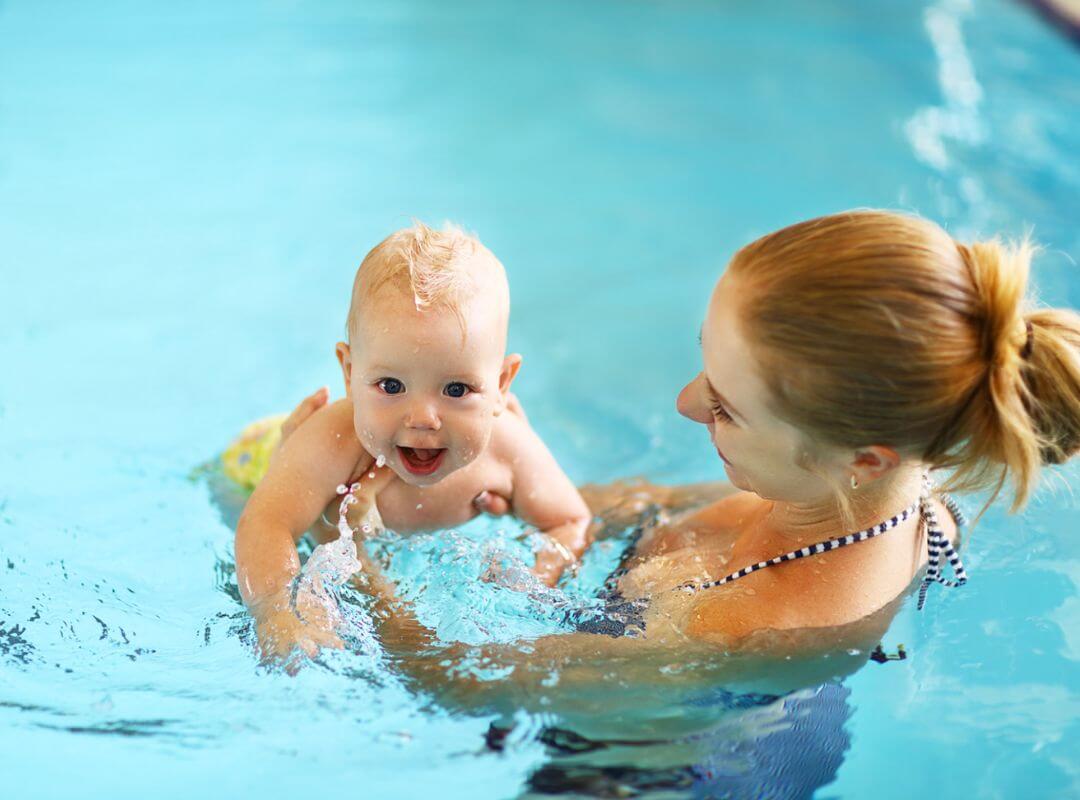
Like most parenting decisions, ISR isn’t something everyone agrees on. Some parents feel really confident in it and love the focus on self-rescue. Others feel unsure about the approach, especially not being in the water with their child, and the emotions that can come up in those early lessons.
The first time I heard about ISR was from a friend who had enrolled her daughter around age one. She had been a competitive swimmer herself, so her stamp of approval for this type of lesson made me pause and take it more seriously. From there, I did my own research and tried to find as much neutral information as I could.
From what I found—and now having gone through six weeks myself—the main concerns tend to be:
- Not being in the water with your child
- The emotional side of the lessons, especially at the beginning
- The strong focus on self-rescue over traditional swim play
I had these same hesitations going in. What shifted for me was seeing how it has played out so far for my son, how our instructor responds to him, how he’s supported through the harder moments, how he’s adjusted over time, and the skills he’s developing. Like most parenting decisions, this really comes down to knowing your child, your environment, and your own comfort level.
So … is ISR worth it? (My honest take so far)
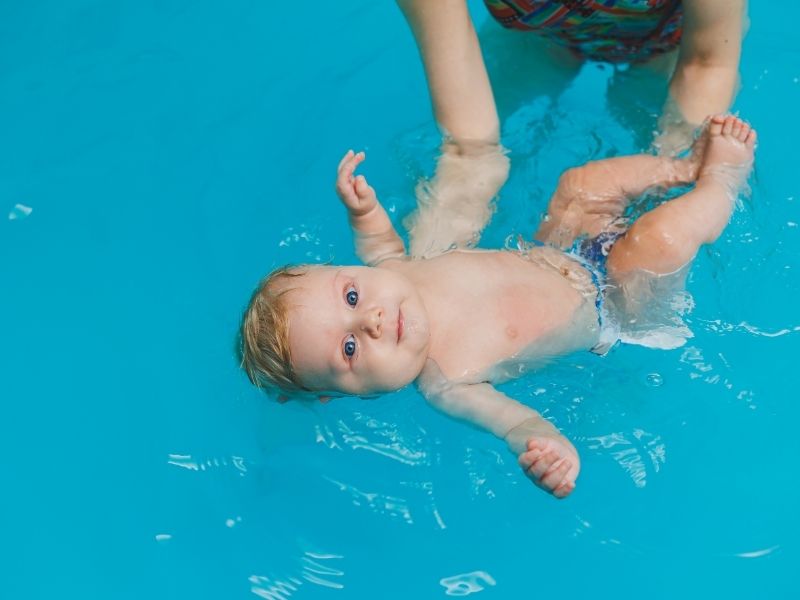
It was hard at first. And then hard again. At times, it was more emotional than I expected. And there were moments I questioned if we should keep going. But I also saw progress. Now my son can float and hold that float with confidence, and I have a toddler who is much more relaxed and aware in the water.
I like that the lessons aren’t rushed. There’s no “he’ll be swimming by week six” promise or one-size-fits-all feel. It’s slow and steady, and very tailored to what he needs. When he’s ready, they build. When he’s not, they adjust.
That said, I did sometimes think he’d be doing a little more after six weeks. But in all honesty, I think that has more to do with temperament and comfort level than the lessons themselves. The child after him was younger and learning skills much faster, which was a good reminder that every child moves at their own pace.
I also think a lot of this comes down to the setup around the lessons. We’ve done a lot of small prep at home, like reading simple books that have the characters swimming, talking about it briefly, and then moving on, and taking a few photos and videos each week so he can see himself doing it. He loves that part.
And finding the right instructor here is incredibly important. Ours is warm, calm, and firm. All three of her own kids did ISR, and she became certified after seeing the positive impact.
Another thing I appreciate, too, is that we pay week by week. So I knew that if it didn’t feel like the right fit, we could stop.
As for who ISR swim lessons might be a good fit for:
- Families who spend a lot of time around water
- Parents looking for a safety-first approach
- Kids who can handle some structure and repetition
And who might want to wait:
- Kids who are especially sensitive to new environments or separation
- Families who aren’t able to commit to the schedule right now
That said, even though my son probably falls into that more sensitive category, with some prep and consistency, he’s adjusting and learning a lot. While it’s not an easy commitment, it feels right for our family and is very worth it.
ISR swim lessons: FAQs
Best age for ISR swim lessons?
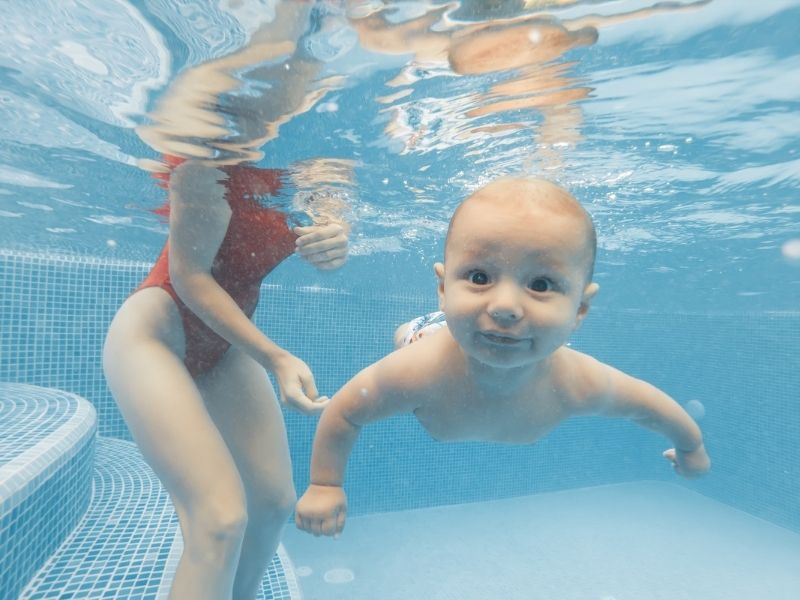
ISR can start as early as 6 months old and goes up to around age 6. For younger children, the focus is on rolling onto their back to float, rest, and breathe until help comes. For toddlers, it builds into a “swim, float, swim” sequence they can repeat until they can get out of the water or someone is able to help them.
Why are ISR swim lessons so short?
Lessons are typically around 10 minutes because they’re physically and emotionally demanding. In that short amount of time, kids are learning very specific skills that require a lot of focus. It’s enough time to practice without overwhelming them, especially since lessons happen 4–5 days in a row.
Do pediatricians recommend ISR?
This one varies. Some pediatricians support ISR as part of a layered approach to water safety, while others may not specifically recommend it. What’s consistent is that no swim lesson replaces active adult supervision, and being present and watching your child is always the most important factor.
How much do ISR swim lessons cost?
Cost can vary depending on your location and instructor, but a general range is around $125–$175 per week.
ISR vs. traditional swim lessons: which is better?
If you’re around water often, ISR may provide some peace of mind for parents when it comes to water safety. If your focus is more on water enjoyment, the gradual approach of regular swim lessons could be right for your family.

Danielle Bouchard, Contributing Writer
Danielle is a New England–based freelance writer and editor whose work focuses on motherhood, family, education, and lifestyle content. As a toddler mom with another baby on the way, she loves exploring the everyday moments that shape modern motherhood. When she’s not outside playing with her son, she’s most likely searching for her next great read or walking their very enthusiastic dog.
