



If I’m being honest, I’ve never loved my breasts, which is why I’ve been heavily considering getting a breast reduction. Pre-kids, I was probably a large C or a small D. Post-kids, I’m easily a double D or E. My breasts were never perky enough to go bra-free before kids. And after pregnancy and exclusively pumping for eight months, I think they’re even sadder and saggier.
I’ve made offhand comments about wanting a breast reduction since my mid-20s. But now that I’m done having kids and am turning 40 in a few months, I’ve been talking more and more about “getting the girls done.” I’ve finally gotten serious about finding out more about the procedure, thanks in part to how open others are becoming about their plastic surgeries.
Earlier this summer, TikToker Rachel Leary famously asked Kylie Jenner for the details about her breast augmentation. She got a candid answer from Jenner herself. And actress Tisha Campbell proactively told Entertainment Tonight about her mommy makeover on the red carpet at the BET Awards in May.
I reached out to one of my favorite content creators, Lee Funke of Fit Foodie Finds, who recently had a reduction, to learn more about her experience, and I also recently had a consultation of my own for the procedure.
Outside of talking to my doctor, I also talked with Dr. Michele Shermak, MD, FACS, ASPS Member, owner of Michele Shermak MD in Baltimore, and Dr. Sachin M. Shridharani, MD, FACS, Director of Luxurgery in New York City, about the procedure. Read on to hear what you should know if you’re considering a breast reduction, too.

Dr. Michele Shermak, MD, FACS, ASPS Member
As a top-ranked board-certified plastic surgeon in the Baltimore area, Dr. Shermak offers a unique perspective and intuitive insight to her clients that cannot be found elsewhere.
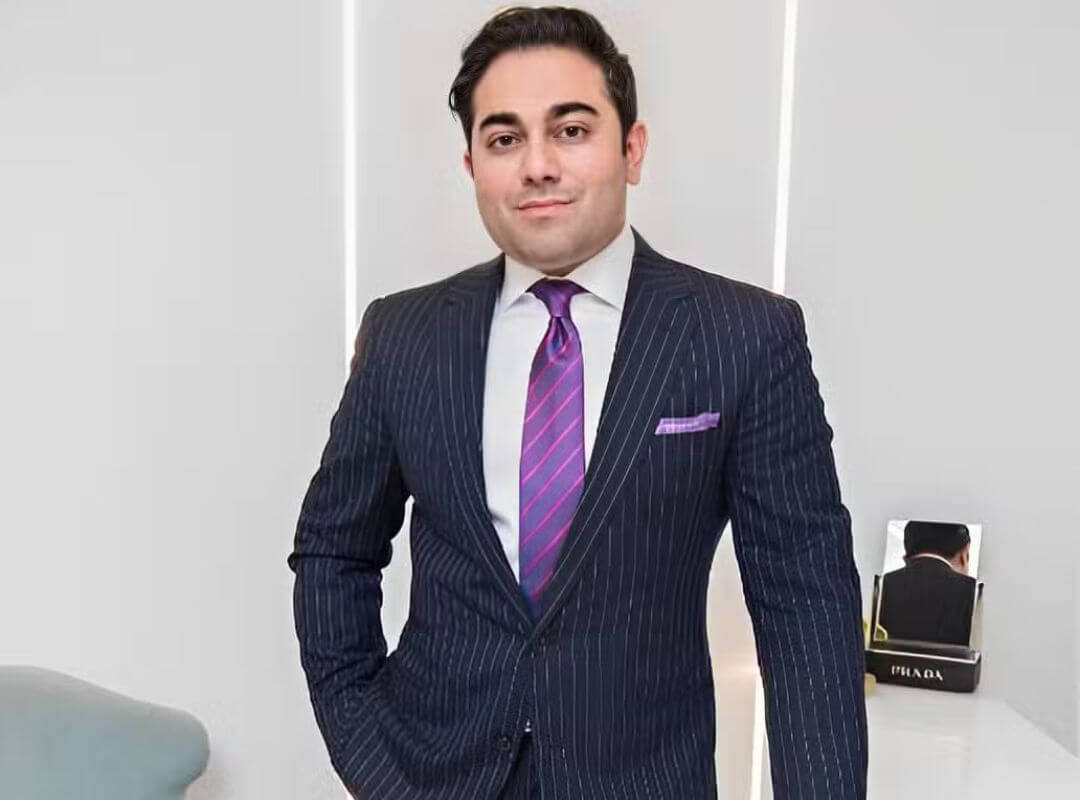
Dr. Sachin M. Shridharani, MD, FACS
Dr. Sachin M. Shridharani is a renowned, Manhattan-based plastic surgeon, board certified by The American Board of Plastic Surgery and founder of LUXURGERY – the confluence of luxury and aesthetic surgery.
Why I’m considering getting a breast reduction
“The main reasons that people tell me that they’re interested in a breast reduction have to do with the discomfort of having incredibly large breasts,” says Dr. Shridharani. “Women often feel like they can’t wear clothing that fits them appropriately, or [that their chest] makes them look a lot larger than they actually are, and there’s a tremendous amount of strain on the cervical spine and thoracic spine so patients have a lot of pain and discomfort.”
I tick all of these boxes. Finding clothes, especially in the summer, is difficult since it’s not an option to go braless and since I haven’t found a strapless bra that feels supportive enough. To fit my chest, I often have to go up sizes, which makes me look bigger.
I don’t like how my breasts look, but I also feel like the size of my breasts contribute to my constantly sore neck and back. Because I’ve always had a large chest, it’s hard to tell if getting surgery would help or not, but lightening up the load, so to speak, seems like it would only help.
Will I need a breast reduction or lift?
In the simplest terms, getting a breast reduction means surgically making your breasts smaller. Getting just a lift means your breasts stay the same size but end up sitting higher on your chest.
My surgeon sent me a great video after my consultation to recap how a breast lift works, which was helpful.
“We would never reduce the breast and leave a patient with small droopy breasts,” says Dr. Shridharani. “So effectively, when I perform a breast reduction, that also includes having a breast lift.”
Dr. Shermak says this varies based on the patient. Some patients come in, she says, thinking they need a breast reduction, but that isn’t always the case. “Sometimes the issue is that the skin has been so stretched and the breast tissue has deflated,” she says, meaning the patient may need less of a reduction and more of a breast lift.
At my consultation, my doctor explained that, yes, doing a breast reduction without doing a lift would not give me the results that I’m looking for. He’d remove both breast tissue to make the size of my breasts smaller but would also push the tissue up so that my breasts sit higher on my chest than they do now.
Read more: Wondering whether you can breastfeed after a breast reduction? One mom shares her story.

How much does breast reduction surgery cost?
Whether or not insurance will cover part or all of your surgery depends on your plan and the doctor you choose. Most plans will not cover purely cosmetic procedures, but will potentially cover procedures that are medically necessary.
Funke detailed her surgery costs in an Instagram post. Without insurance, it would have been nearly $30,000 out of pocket. But because her plan covers medically necessary reductions and she qualified, she paid just over $4,000.
“Most [insurance] plans will not cover purely cosmetic procedures, but will potentially cover procedures that are medically necessary.”
“With my insurance, whether [the surgery] is covered is at the discretion of the surgeon,” Funke explains. “The surgeon had to submit something to my insurance to say, ‘Yes, I think this is medically necessary,’ but [with] a lot of other insurances, [there is] a lot [that] goes into getting it accepted.”
This often includes showing that you’ve attempted physical therapy or other remedies for a period of time to help with any discomfort.
According to the American Society of Plastic Surgeons, the average surgeon cost for a breast reduction is $7,800. That doesn’t include things like any surgical center costs, anesthesia, or labs.
The practice I had a consult with does not accept insurance, so everything would be out of pocket. They were transparent about what the total cost would be, and it looks like if I move forward, it will be just under $13,000 for the reduction and lift.
How to choose a doctor for your breast reduction
Choosing the right doctor for your breast reduction is important. “People should definitely find a board-certified plastic surgeon,” stresses Dr. Shermak, “so they know that the plastic surgeon is maintaining their education and everything necessary for patient safety.”
I started by asking friends and friends-of-friends who have had the procedure where they went. I searched my local moms’ Facebook group to see where people were going and the Bustmob! Facebook group that has over 100,000 members to get perspectives on local providers.
From there, a few names repeatedly surfaced, so I researched those particular doctors more on review sites. I ultimately landed on Dr. Jeremy Pyle with Amelia Aesthetics in Raleigh, NC. He worked with a few of my friends whom I trust to give me honest feedback. Plus, the other reviews across Facebook and other sites supported their opinion.
Funke, who knew she wanted to try to use insurance for her surgery, started by calling her insurance provider to see who would be in-network. She says she ended up having consultations with two local providers and ended up going with her surgeon for similar reasons.
“I ended up going with her by the word-of-mouth recommendations,” she says, and because she was in-network with her provider.

What to expect during your breast reduction consultation
I was nervous heading into my consultation. I kept reminding myself that this is something I’ve been thinking about doing for over a decade. Additionally, Dr. Pyle has seen hundreds, if not thousands of breasts over time, and it was unlikely that mine were anything he hadn’t seen before.
I’m sure every practice and doctor does things a bit differently, but I had a call with a practice admin before my consultation to go through a few details about what I was looking for and a brief medical history. This meant when I got to the consultation, Dr. Pyle already had a basic understanding of why I was there.
My husband couldn’t go with me, so I brought my neighbor as a support person. It was helpful to have someone else ask questions I hadn’t thought of and for emotional support.
Dr. Pyle talked me through the procedure, and we talked about my ideal outcomes. This was before I needed to take my top off so he could assess what procedure would be best for me. Meeting him and chatting before we got to that portion definitely put me at ease.
His assessment was quick and professional. I definitely had built it up in my head and almost wanted to ask, ‘That’s it?’ when he finished.
From there, he talked to me about realistic expectations for how small he could make my breasts and what recovery looks like. His team member walked me through the appointments I’d have leading up to and after the procedure and pricing. All in all, it took about 40 minutes.
Breast reduction surgery day
Depending on the details of your surgery, Dr. Shridharani says the procedure could take as little as two-and-a-half hours and up to five hours. Patients are under general anesthesia the whole time.
“During the surgery, strategic areas of breast tissue are resected,” he explains. “The nipple-areolar complex, blood flow, and sensation [are] preserved, and all the depressed tissue is taken out that needs to be removed.”
This means that you’ll keep your original nipple after surgery, although it is common for a surgeon to resize your areola to better match your new breast size.
The breast tissue that is removed will be sent to a pathologist just to make sure no breast cancer is present. Your doctor will also weigh the tissue. Funke’s doctor removed nearly three and a half pounds of breast tissue during her procedure.
After surgery, you’ll wake up with bandages on, as well as a supportive bra. The procedure is an outpatient surgery, meaning you’ll go home the same day.
Scars from breast reductions
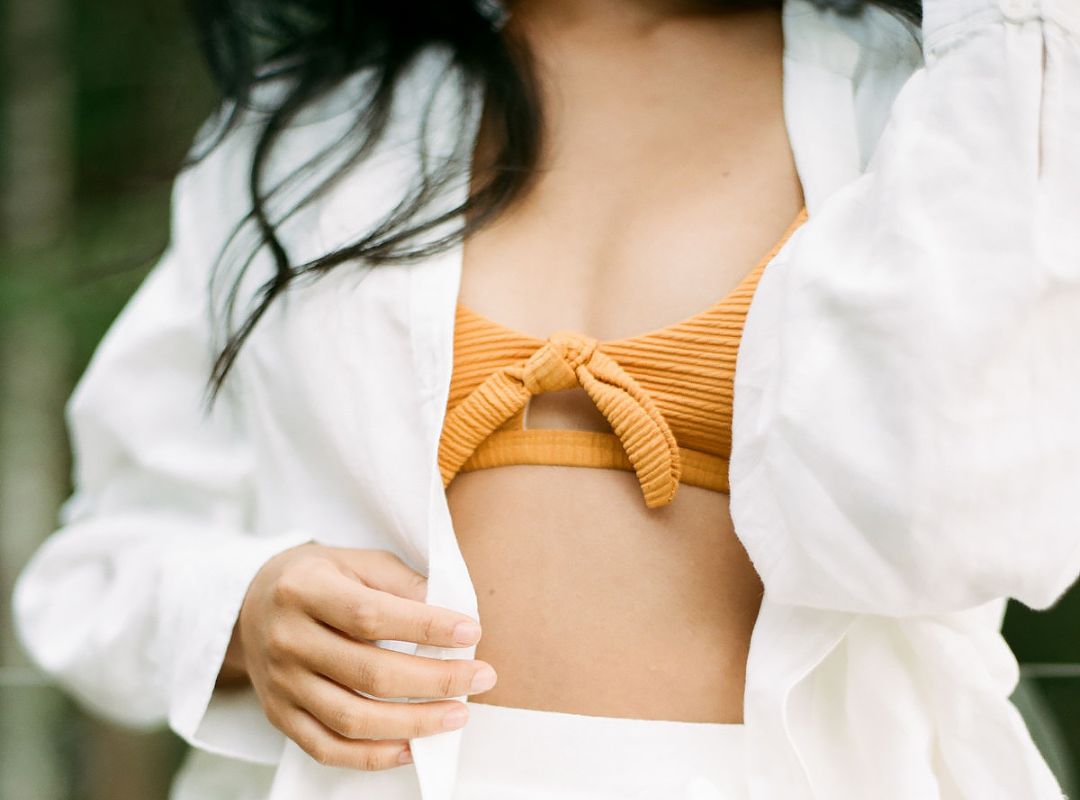
Dr. Shermak says surgeons will typically make what’s called an ‘anchor incision’ for the surgery. That’s an incision that goes around the nipple areola, she says, and then vertically down the breast and under the breast crease.
“The vertical incision fades a lot over time,” she says, noting that she can barely see her scars from her own breast reduction surgery. “It’s a very forgiving incision.”
The scars will be covered by your bra or bathing suit, so people won’t have an obvious clue that you’ve had surgery.
Recovering from breast reduction surgery
One of the biggest reasons that I’ve put off breast reduction surgery is worrying about how much it will hurt.
“The recovery was way worse after having a baby,” says Funke, though. “My recovery was so fast that my mom was planning to stay with us for longer than she did, but I think it depends on how active you are and how your body responds.”
Dr. Shermak says she generally recommends that people plan to take four days of uninterrupted time to focus on healing. After that, she says people can typically drive and slowly work their way back to regular activity. She says the average recovery for most people is four to six weeks.
“The pain is pretty manageable,” she says, referencing her own experience as well as what she’s heard from patients. “Patients should be quite comfortable even just with Tylenol, naproxen, and ice packs.”
My doctor did advise me to try to avoid lifting my kids for six weeks. But if I needed to pick them up, I could squat down and bear-hug them to do so (versus just leaning over and picking them straight up). Having them snuggle against me will be fine as soon as it feels comfortable for me, which they said would probably be around two weeks (but could be sooner). They also said that being a mom came first, and if I had to pick them up, it wasn’t likely to cause major damage.
My doctor also reiterated that recovery is typically fairly mild for patients. I asked him if he could tell my husband that I couldn’t do bedtime for a few weeks anyway. He laughed and said he’d see what he could do.
Read more: Still curious about breast reduction recovery? This mom just went through it.
Deciding to go through with a breast reduction
“You’ve only got one life,” Funke reminds me when I ask her for advice on whether to get the surgery or not. “And if [your breasts] are preventing you from living your best life or causing health problems, you might as well just do the research and have that information.”
$13,000 is a large expense, but I’ve figured out a way to finagle it into our budget using a mix of my earnings from teaching mahjong, freelance writing, and a bit of savings. I teach and write in addition to a corporate job and have always earmarked the money for ‘fun’—but haven’t touched much of it—so this feels like as good of a reason as any.
As a mom, I often put my own needs and wants last, but I’m realizing that this is something that feels right for me. I hope getting a breast reduction ultimately makes me feel more confident and reduces my back pain. But hey, being able to go bra-free isn’t a bad outcome either.
Elliott Harrell, Contributing Writer
Elliott is a mom of two little girls and is based in Raleigh, NC. She spends her days running a sales team and doing laundry and her nights writing about the things that she loves. She’s passionate about all things motherhood and women’s health. When she’s not working, writing or parenting you can find her trying a new restaurant in town or working on her latest needlepoint project.
