This post is sponsored by Little Bellies, but all of the opinions within are those of The Everymom editorial board. We only recommend products we genuinely love.
Toddler Only Wants Snacks? Here’s How to Encourage Positive Snacking Habits
the snack monster is real—here's how to conquer it
If there’s one universal truth of parenting, it’s this: toddlers love snacks. Some days, it feels like they’re powered entirely by puffs, crackers, and whatever can be eaten one-handed while sprinting around the house. Whether it’s a sudden growth spurt or a firm protest against anything green, the “snack monster” phase is very real, and it’s very normal.
The good news? It doesn’t have to be a battle. Instead of trying to pry the snacks away, many parents are shifting their mindset and treating them as mini-meals—small but mighty opportunities to support both development and exposure to new flavors and textures. Because toddlers naturally prefer grazing over sitting down for full meals, “snacking with purpose” becomes the secret weapon. Think: organic and wholesome ingredients that feel fun to eat but still pack a delicious punch. Yes, it’s possible! Here’s how to encourage positive toddler snacking, plus a list of our kids’ current fave bites.
Not all snacks are created equal, and when it comes to toddler snacking, a few simple guidelines can help turn everyday picks into something more intentional. View snack time as little moments of discovery: opportunities for toddlers to explore new textures, practice self-feeding, and get comfortable with a variety of flavors. Our favorite snack brands do this really well by making a few key differences:
Simple, recognizable ingredients: The best snacks are made with real, whole-food ingredients you can easily recognize and pronounce. Think dried organic fruit and vegetable powders, made from whole organic fruit and vegetable ingredients that not only sound familiar but also introduce little ones to new tastes in a gentle, approachable way.
No artificial ingredients: Aim to avoid snacks made with artificial colors, flavors, sweeteners, or preservatives. Sticking to simple and natural ingredients helps keep snack time aligned with a balanced approach to eating.
Designed for developmental stages: Texture matters just as much as flavor. Snacks designed for specific age stages can help little ones safely practice chewing, biting, and self-feeding while gradually building confidence with more complex textures.
The better-for-you snack our toddlers are loving
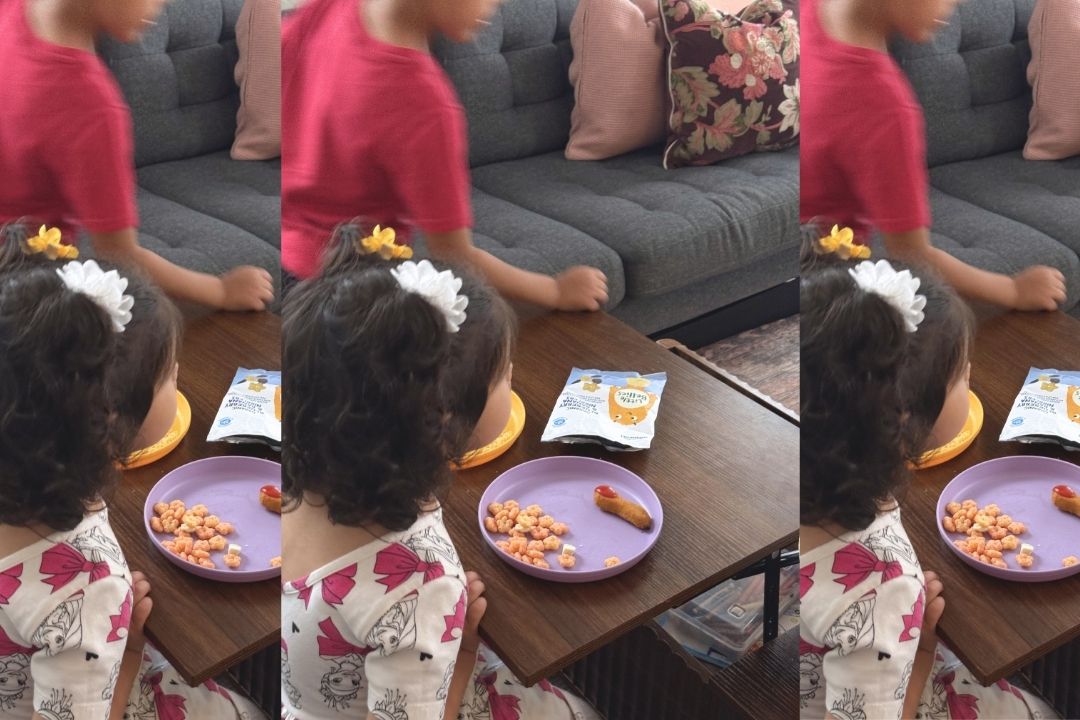
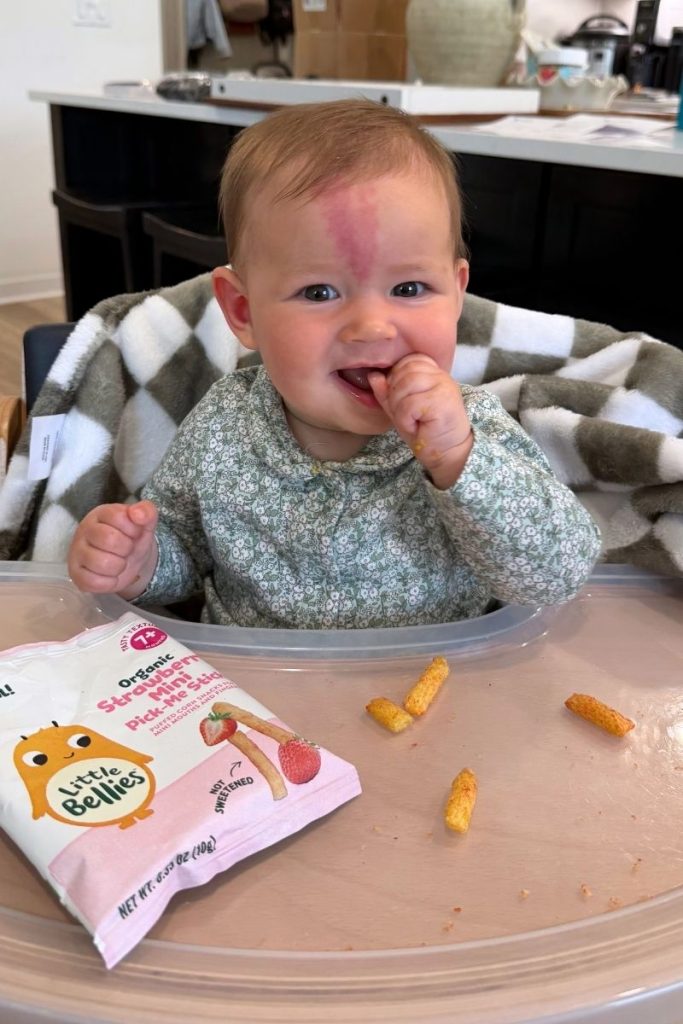
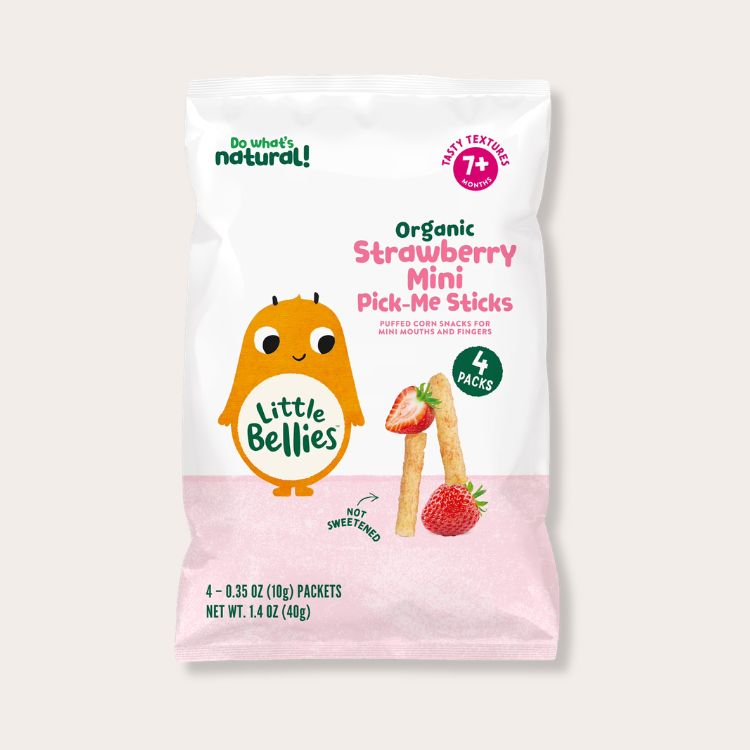
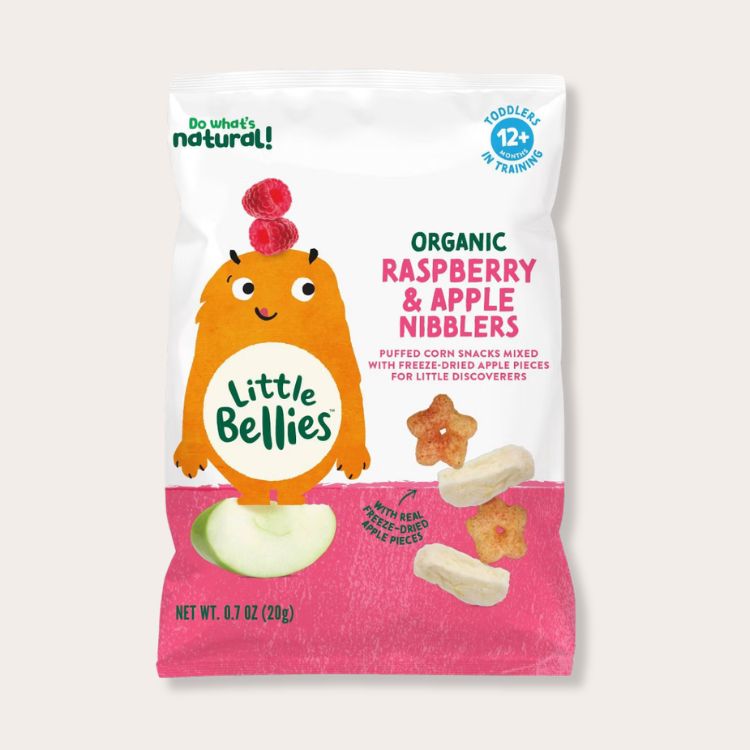
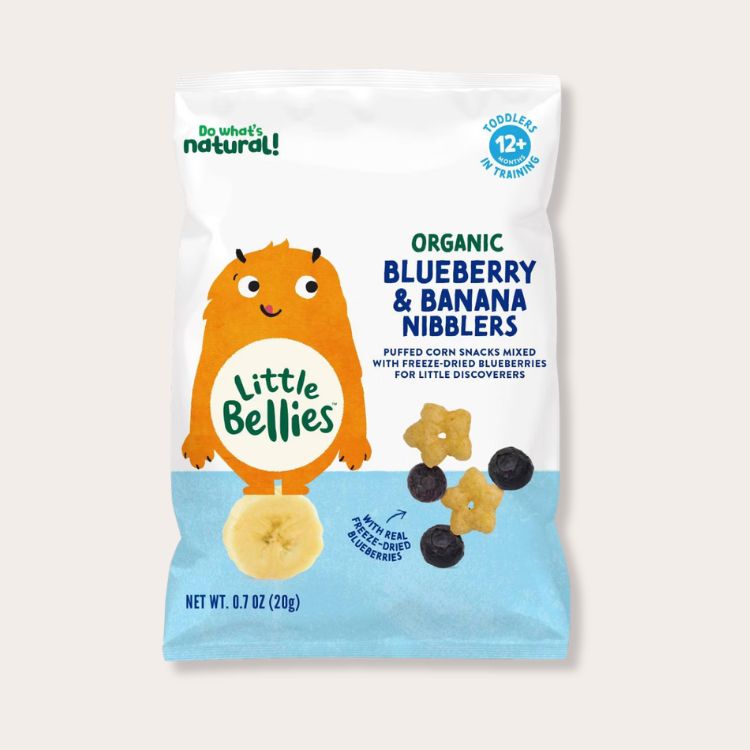
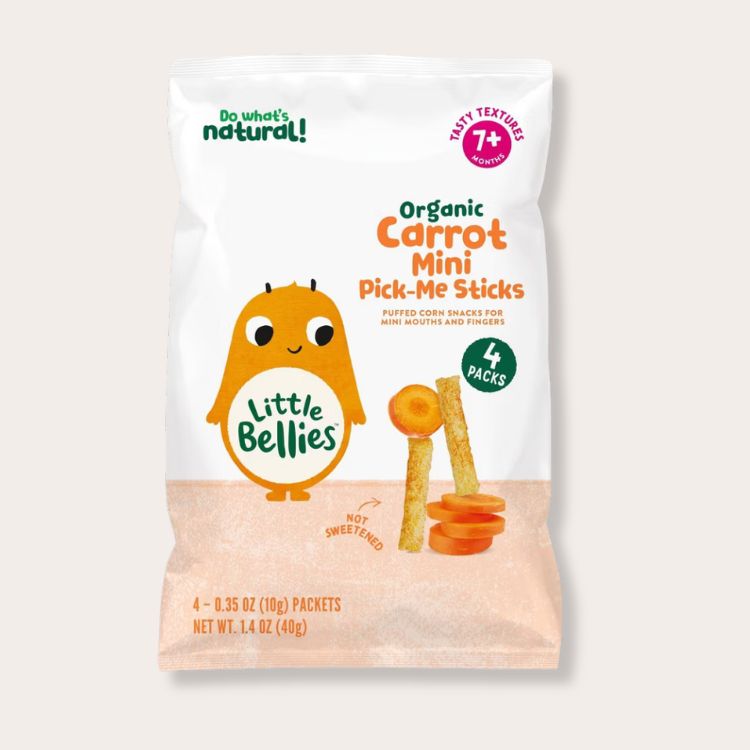
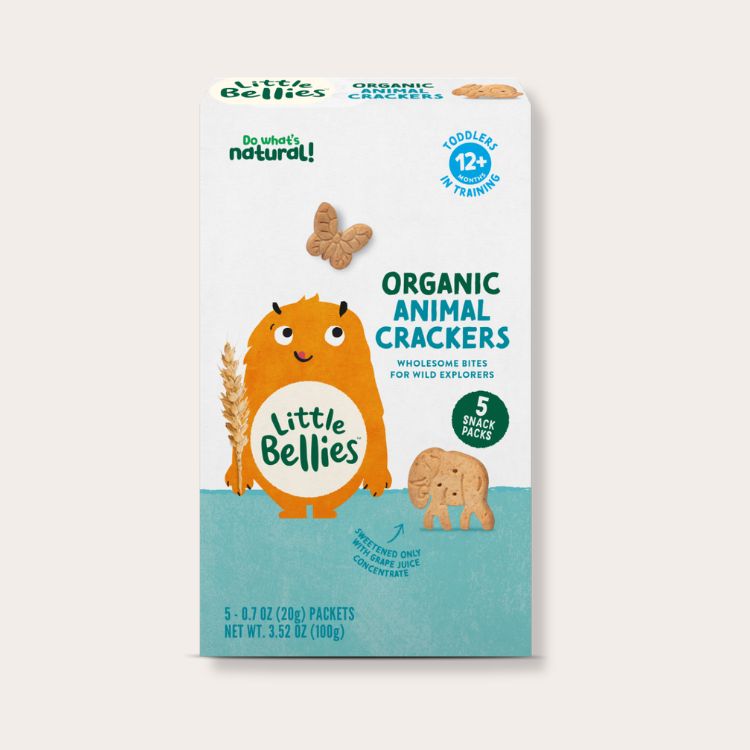
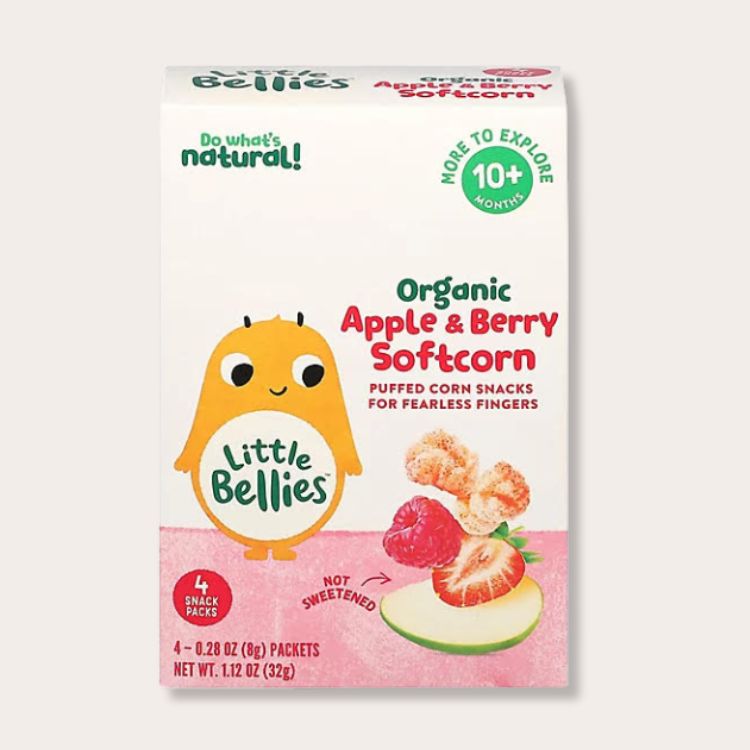
When it comes to checking all those boxes, Little Bellies is a go-to in our rotation. Designed specifically for little ones as early as 7 months,10 months, and 12+ months, these snacks strike a thoughtful balance between flavor exploration and convenience.
What makes them stand out? Every ingredient, recipe, and supplier is carefully selected and screened with young eaters in mind. Little Bellies also carries out frequent testing for heavy metals to adhere to best-in-class international standards for appropriate limits—so parents can feel confident they’re offering something that’s been developed with safety in mind.
From soft, easy-to-dissolve puffs to more textured options that encourage chewing, their range supports little ones as they move through different feeding stages and become more adventurous eaters. And the convenience factor is hard to ignore. With their latest launches at Target and Walmart, stocking up is as easy as clicking “add to cart.” They’re available in both single packs and multi-packs, making it simple to keep extras on hand for busy days (which, let’s be honest, is every day).
Shop Little Bellies’ newest snacks at Target and Walmart
When snacks start to take center stage, a few small tweaks can make a big impact. With a little intention, flexibility, and creativity, snack time can support both development and a balanced approach to eating—without turning into a negotiation.
1. Build a “snack charcuterie” plate
Instead of handing over one item, create a mini spread: a handful of puffs, sliced fruit, a few cubes of cheese, and maybe even some deli meat. Offering a variety of textures and flavors at once encourages curiosity and lets toddlers explore at their own pace.
2. Make wholesome snacks easy to reach
Accessibility is everything. Keeping better-for-them options visible and within reach—like storing an assortment on a lower pantry shelf or in a designated snack bin—encourages independence and helps toddlers make their own choices.
3. Upgrade your on-the-go game
For busy days out, a snack spinner or divided container can be a game-changer. Fill each section with a mix of options like fresh fruit and organic animal crackers to offer variety throughout the day and keep little ones engaged with different textures and flavors.
At the end of the day, snacks aren’t the enemy that ruins meals—they’re an opportunity. With the right choices, they can support development, encourage exploration, and introduce new flavors along the way. And when those options are as easy (and toddler-approved), snack time starts to feel a whole lot more like a win.
McKenna Pringle, Assistant Editor of Branded Content
As the Assistant Editor of Branded Content, McKenna collaborates with our sales team by creating both written and social media content, collecting and analyzing performance data to report back to our partners, and assisting our editors with their everyday tasks to ensure a smooth and productive process.
This post is sponsored by Little Bellies, but all of the opinions within are those of The Everymom editorial board. We only recommend products we genuinely love.