


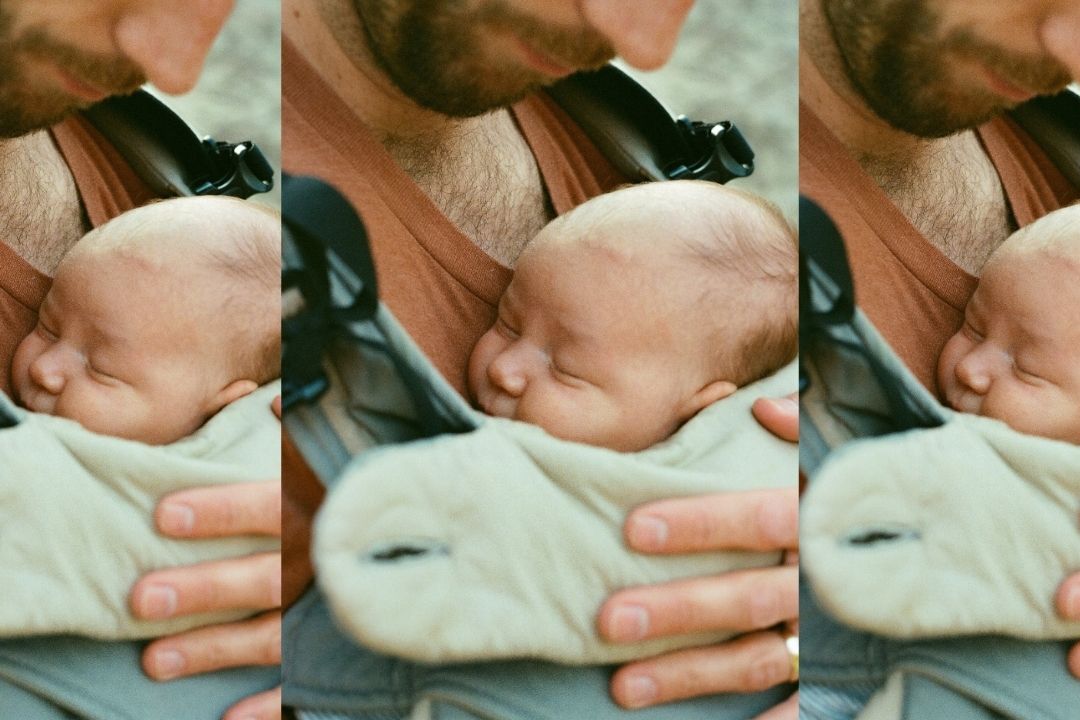
Recently, as I pulled into work while talking to my mom on the phone, she asked about my 18-month-old daughter, her granddaughter. I said she was going to the pediatrician that day for a check-up, and my mom asked if I was taking off work for the appointment. “No,” I said, and she sounded puzzled. “Then who is taking her?” she asked, as if there was no one else who could do the job. I replied that my husband offered to take her, as his work schedule was more flexible than mine that day. “Wow,” she said. “Your father was never able to take you to doctors’ appointments. Things are so different now.” I nodded in agreement, thankful that my daughter has a millennial dad.
Millennials—those born between 1981 and 1996—haven’t always had the greatest reputation. Lazy, entitled, and selfish were just a few of the initial negative stereotypes of millennials. As a millennial myself, I tend to disagree, especially when it comes to my husband. He gives 110 percent effort into everything he does, including his role as a father. This level of effort and dedication seems to be one of the generational differences between millennial dads and other generations—like every father I see proudly wearing a baby carrier at the park… or solo parenting at the doctor’s office.
You May Also Like:
- 5 Ways I’m Parenting Differently Than My Boomer Dad
- 27 Father and Son Activities for Quality Time Together
- Fun Father-Daughter Activities to Try
Millennial Dads vs. Previous Generations
We know there are differences in parenting between millennials and previous generations. With fathers, the biggest difference overall is the level of involvement in care. While, of course, we love our dads, it’s fair to say moms of the past did almost all of the heavy lifting when it came to child-rearing. We still have progress to make, but times have changed for the better. Keep reading to see what might make millennial dads the best generation of fathers so far.
They spend more time with their kids
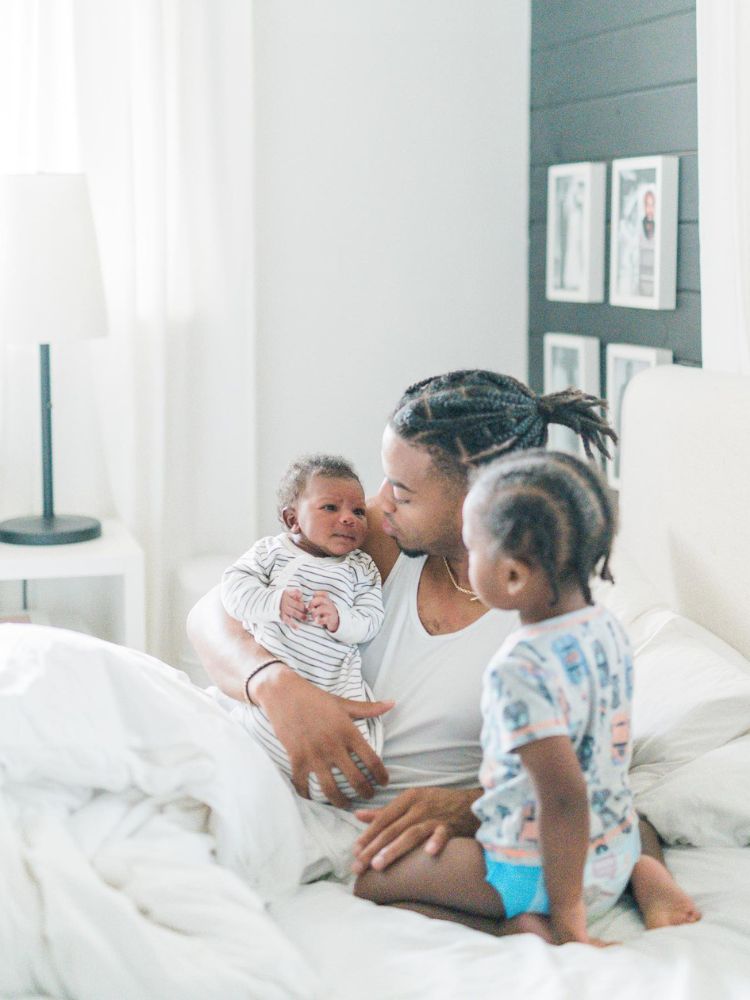
Millennial dads are more likely to take regular night shifts with a newborn or become active members of the school’s PTO/PTA than previous generations. The Pew Research Center found that millennial dads have tripled the amount of time dedicated to childcare compared to dads from 1965. In a 2016 study, The Pew Research Center also found that 57 percent of millennial dads consider being a parent as part of their identity, which is only one percent less than mothers at 58 percent. When fathers inherently believe that parenthood is part of who they are, they will dedicate more time and effort to raising their children.
“Millennial dads have tripled the amount of time dedicated to childcare compared to dads from 1965.”
Now, it does help that more people work from home than in years past. According to reports from the U.S. Census Bureau, prior to the COVID-19 pandemic in 2019, 5.7 percent of Americans were working from home. According to the U.S. Bureau of Labor Statistics, as of March 2026, 22.6 percent of employees work remotely. Whether inside or outside the home, having a job that is more flexible allows fathers to share more of the load when it comes to childcare. Not to mention, according to a 2023 Pew Research Center study, nearly 1 in 5 stay-at-home parents are dads. The more that men can help in the day-to-day child-rearing, the more that parenthood can become an integral part of who they are.
“The more that men can help in the day-to-day child-rearing, the more that parenthood can become an integral part of who they are.”
They prioritize paternity leave
Research in Iceland proved that fathers who took at least two weeks of paternity leave became more involved in their child’s life in the long term. However, if you’ve never asked a boomer dad if they took paternity leave, be prepared for a laugh in your face. Whether due to a cultural stigma or the fact that the United States is the only developed nation that doesn’t require paid parental leave, the importance of paternity leave was lost on older generations of fathers.
Thankfully, millennial dads not only see the benefit, but they also are actively searching for it. In an Ernst & Young’s global generational survey, 83 percent of millennials said they would look for a company with strong parental leave benefits. There are even companies like Parentaly and Tilt that make it their mission to help companies successfully manage their leave programs. Because of this desire, a cultural shift is on the horizon in both the workforce and in legislation, with 13 states adopting paid family leave programs. For millennial dads, not taking paternity leave is no longer a badge of honor.
They care about their mental health
Dads struggle with their mental health, too, and millennials are much more open about it than previous generations. According to a survey by the Thriving Center of Psychology, 55 percent of Gen Z and millennials have been to therapy, and 90 percent of Gen Z and millennials believe more people should go to therapy in general. Therapy and mental health struggles don’t have the same negative stigma that may have existed for older generations of men.
They don’t assume traditional gender roles
Gender roles blur for millennial dads, too. A recent study conducted by the marketing agency Bigeye concluded that millennials, even more than Gen Z, are more likely to push back against traditional gender stereotypes. Millennial dads understand that childcare and household duties are not a one-person job reserved for the mother. Rather, parenthood today is more of a partnership, where both parents might not only leave for the office but also drop off the kids at soccer practice.
Millennial Dads vs. Gen Z Dads
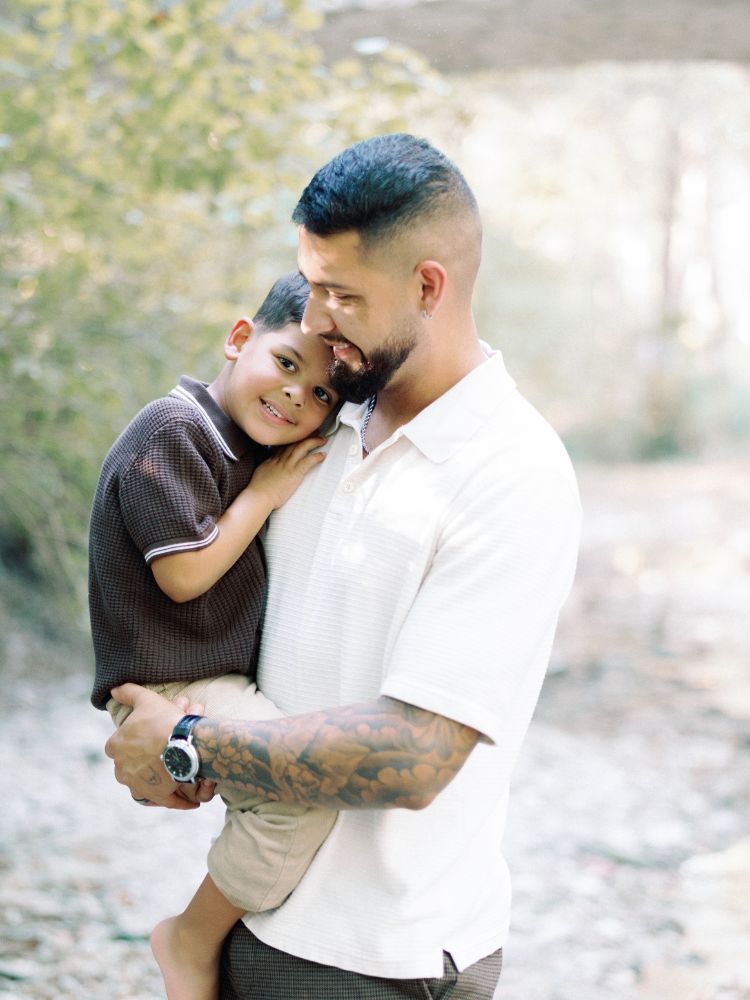
What about the next generation of dads? Gen Z men—born between 1997 and 2012—are just beginning to tiptoe into parenthood. Initial research shows that, despite coming of age during uncertain times, Gen Z men still want children (even more than Gen Z women). And like millennial dads, Gen Z rejects the idea of the emotionally distant, uninvolved father. They’re optimistic and excited about raising the next generation.
“Like millennial dads, Gen Z rejects the idea of the emotionally distant, uninvolved father.”
However, there is some evidence that a portion of Gen Z men, more than their millennial counterparts, desire a shift back into traditional gender roles in parenting. For example, in a 2025 poll by the Young Men Project, nearly half of male respondents (U.S. men aged 18-29) strongly or somewhat agreed with the statement, “Things are generally better when men bring in money and women take care of the home and kids.” And when asked what qualities best describe what it means to be a man, nearly half of young men also answered, “providing for your family.”
Today, however, more mothers are the primary earners in their families than ever before. An article on Vox additionally noted that women today no longer face the same social and economic pressure “to marry and procreate” as previous generations. So those Gen Z men who are enthusiastic and optimistic about fatherhood will need to get their female partners on board.
Of course, it’s still too early to know what exactly the next generation of dads will look like (some are only just entering high school), but hopefully, they’re taking notes from the millennial dads who view parenthood as a partnership.
Still More Work to Be Done
While millennial dads are changing the narrative of what it means to be a father, it is only the tip of the iceberg. It takes a certain amount of privilege to be able to work from home, have paid time off, or be able to afford a therapist. If anything, both millennial men and women are realizing a lot still needs to change, both inside and outside of the home, to make parental involvement more accessible to all.
For example, even with dads being more present than ever, moms still carry a lot of the mental load for their families. From managing the family calendar to coordinating play dates to keeping our education system afloat with hours of unpaid labor, women are expected to keep everything running smoothly. And despite all of this, many men still turn down paternity leave even when it’s offered or resist signing up for the school PTA. Thankfully, these issues are being talked about more and more, so more change can happen.
I know it’s not only my daughter who benefits from her millennial dad (he’s less likely to cry when she gets a shot at the doctor)—I benefit, too. I’m able to be a mother, work, and fulfill my passions, all because there is a generation of men out there who are willing and able to share the load, figuratively—and literally—my husband is much better at doing the laundry.

Mia Revak, Contributing Writer
Mia Revak is a 5th grade teacher, writer, and contributor for The Everymom, where she covers parenting, pregnancy, product reviews, and the everyday moments that shape modern motherhood. A mom of two, she lives with her family in Chicago.

Kathy Sisson, Senior Editor
Kathy Sisson has been a key contributor in the editorial parenting space for nearly a decade, not only as a full-time editor at The Everymom but previously as a freelance writer for top parenting sites, including Scary Mommy, Motherly, Parent Co., and more. As an editor at The Everymom, she has produced hundreds of articles on a range of parenting topics, reviewed dozens of family-focused products, interviewed leading experts in the children and parenting world, and created viral parenting social media content. A mom of two, she is committed to sharing the honest, helpful, and often humorous stories of motherhood.
