


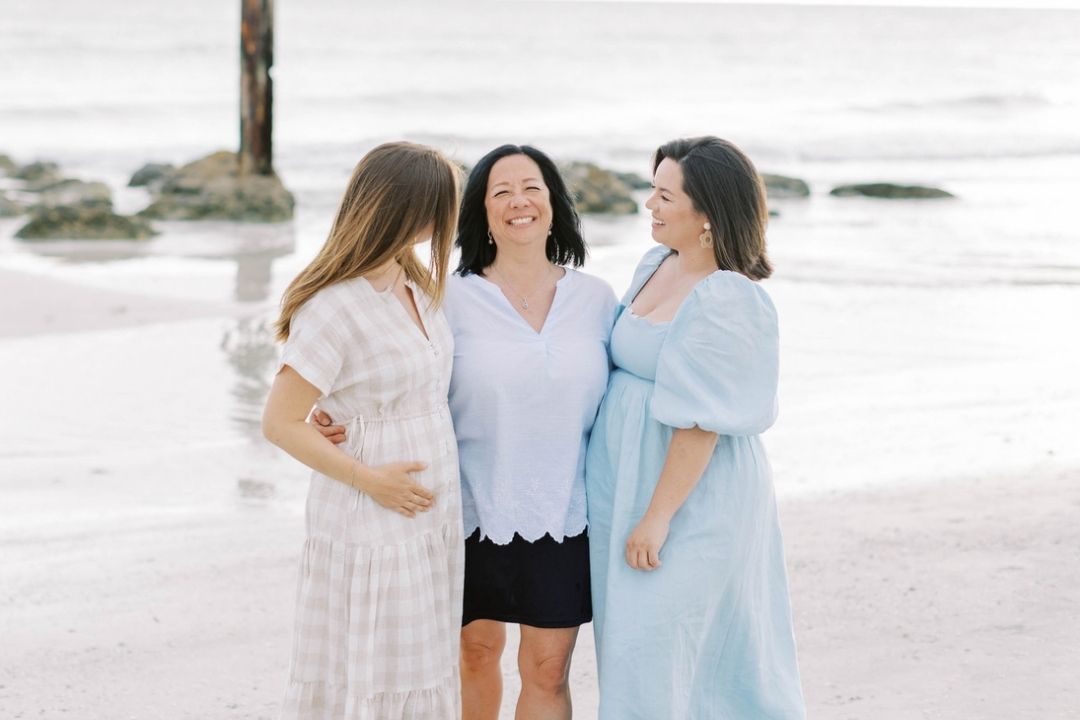
I have a confession to make. I like my side of the family better. Not that I don’t like my husband’s side; my in-laws are some of the most generous and thoughtful people I know, and I get along with my sister and brothers-in-law really well. But I’m just closer with my side of the family. And while I have a friend or two (literally, I can count them on one hand with leftover fingers) who prefers hanging out with their husband’s side of the family, most of my friends in cis, heterosexual relationships are in my camp.
As is the internet, it seems, which makes me feel totally justified with my ‘confession.’ Content creator Brooke Newman’s viral reel from last year pretty much hits the nail on the head, depicting dad’s side of the family as being formal and stuffy but mom’s side as fun and casual. Some commenters were quick to say the dynamics between their two families are the opposite, but many pointed to similar feelings of being closer with their mom’s family.
“Why is this so accurate lol” one commenter posted, while another wrote, “So we all have the same families huh?”
Read More:
Do we all have a favorite side of the family?
My friends and I have all discussed how this manifests in our houses. Having a ‘favorite’ family usually means we’re spending more time with that side, which has led to in-laws feeling hurt or jealous. One friend’s mother-in-law even keeps a ledger of how much time her family is spending with her mom’s side versus her husband’s side. Yikes.
But is it true? Are we all really closer with mom’s side of the family? Turns out, quite possibly, for a couple of really simple and valid reasons. I talked to Dr. Tracy Dalgleish, a couples therapist, psychologist, and author of You, Your Husband & His Mother, to get her thoughts on why mom’s side of the family tends to get more attention and how to approach favoritism complaints that might pop up.

Dr. Tracy Dagleish
Dr. Tracy D is a psychologist, couples therapist, author, and relationship educator who helps people change painful patterns and build relationships that actually work.
Why are you usually closer with your mom’s family?
Obviously not EVERYONE is closer to mom’s side of the family. One of our editors, for example, was closer to her dad’s side of the family growing up (and still is), primarily because of proximity, a troop of cousins her age, and her dad’s close relationship to his parents and siblings.
Every family relationship is different, something Dr. Dalgleish stresses, but she says the idea of people being closer to their mom’s side of the family comes up quite a bit with the couples she works with.
“It really is a conversation that I repeatedly have,” Dr. Dalgleish says, “and there are so many layers of complexity around it.”
Still, there are three main reasons why the mom’s side of the family may very well be the favorite in some relationships: your own relationship with your mom, the mother-in-law relationship dynamic, and kinkeeping.
You probably have a better relationship with your mom than your MIL
Think about it. If you get married when you’re 30, for example, you’ve had three decades with your mom already. Even if you’re not overly close with your mom, in that time you’ve figured out her nuances, know how she responds to different situations, and probably have a general sense of how she operates.
And if you are close and, say, have talked several times a week for the past 10+ years, she’s just got a heck of an advantage over your mother-in-law. It’s not that your mother-in-law isn’t a great person; there just isn’t history there.
“With your own mother, you have developed years of expressing yourself and setting boundaries,” Dr. Dalgleish explains. “The relationship isn’t precarious for many people, not for all, and so because of that there is this natural flow of sharing and setting boundaries and expressing what you want and need, which builds intimacy and closeness in a relationship.”
“With your own mother, you have developed years of expressing yourself and setting boundaries…which builds intimacy and closeness in a relationship.”
Even if you marry your high school sweetheart, it just can’t compare to the amount of time you’ve had with your own mom. That means you may be more comfortable around your mom’s family, more likely to be in touch with them, and ultimately consider them closer.
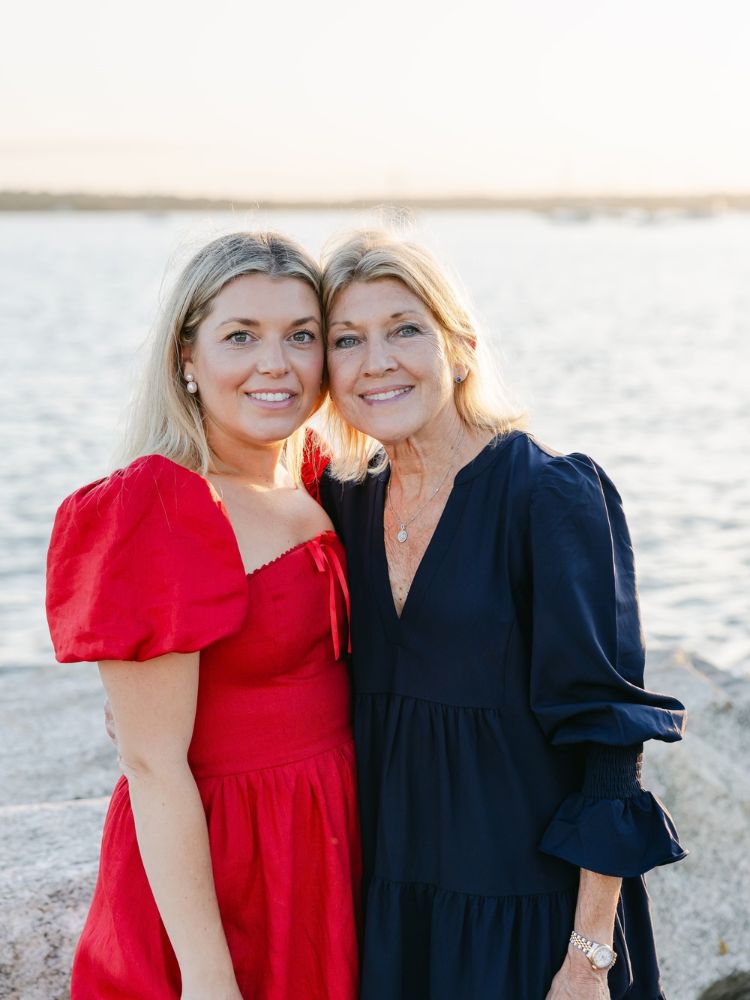
The mother-in-law and daughter-in-law dynamic is tricky
On top of naturally being closer to your mom, Dr. Dalgleish talks about the power imbalance that exists at the start of a mother-in-law and daughter-in-law relationship.
“Most women enter into a family system wanting to be liked and are pleasing and caring, and that is a tricky dynamic,” she says, “because at some point, a woman says, ‘I’m not going to keep pleasing everyone, and I’m not going to keep giving everything to everybody, and I’m going to now look after my own family.”
Yup, this checks out. Of course no one goes into a new relationship wanting to cause drama and stress. It’s human nature wanting to be liked. But this isn’t an authentic relationship (like the one you are more likely to have with your mom), and it may make it harder to build a strong connection and feel like you’re close with that side of the family.
Your husband may be contributing to the problem
Mom’s side might win the favorite award due to the history of kinkeeping—a term describing “the efforts expended on behalf of keeping family members in touch with one another,” first coined by Carolyn J. Rosenthal in a 1985 sociological study.
“The responsibility for managing all families has traditionally landed on women,” Dr. Dalgleish says. This means being responsible for doing things like buying birthday presents for grandparents, sending school photos, coordinating time to get together. That invisible mental load is heavy, and “women today are [rightfully] saying, I don’t want to carry all of that and consciously telling their partners, ‘This is now your responsibility to manage your relationship with your family.’”
“Women today are [rightfully] saying, I don’t want to carry all of that and consciously telling their partners, ‘This is now your responsibility to manage your relationship with your family.”
Dr. Dalgleish says it’s important that this isn’t usually malicious; it’s just women saying they can’t do it all. Which is true. I’m not trying to purposely withhold information from my in-laws; I just don’t have the capacity to take care of myself, my kids, my house, my job, and both sides of the family. I feel more comfortable scheduling time to FaceTime with my parents and the kids, which means they get to “see” each other more often. My husband could do this too, and I hope that he does, but it’ll be on him to schedule this time.
Historically, men haven’t been as likely to keep these familial connections and traditions. There are many studies that show the kinkeeping role falls more squarely on women. But with things changing, and women pulling back from doing everything, it may affect the overall family dynamics. If mom is scheduling time for the kids to see her parents, but the dad isn’t taking on this role for his side of the family, the bond with mom’s side might become stronger.

Managing family expectations and hurt feelings
If you and your kids are closer to your side of the family, this may create some tension. Grandparents on the “non-favorite” side may be jealous of the time or attention the other side is getting.
You don’t have to justify where and how you spend your time as a family, Dr. Dalgleish says. Nor should you feel guilty for having all communication for your in-laws go through your husband because it’s simply not possible to do everything for everyone. But you may want to set expectations upfront about what your plans are.
“A lot of conflicts I find in families are stemming from unspoken expectations and desires,” she says. That might look something like a grandparent thinking your family will be at their house for four days over Christmas when your plan was to only spend one.
“A lot of conflicts I find in families are stemming from unspoken expectations and desires.”
Stating your intentions and what you will and won’t be doing with your family early is important to try to avoid some of this conflict. With the holidays coming up, now is a great time to make a plan with your partner and be proactive about where and when you’ll be spending time with family throughout the season.
“There’s no right or wrong way to do it,” Dr. Dalgleish says. “It’s what’s best for your family.”
Sure, someone may be upset to hear that you won’t be spending a longer amount of time at Christmas, but I guarantee there will be more drama if you wait until mid-December to let family members know that rather than now.
Read More: Is Your MIL Already Asking About Holiday Plans? Here’s How to Manage It

Keeping connections with ‘dad’s side’ of the family
I have two girls, so I’m pretty pumped that I might have an advantage if/when they decide to get married—and if they get married to a guy. But I do know some boy moms who worry about what their relationship with their sons will look like one day.
Creator Johanna Correa broke down in another viral reel when she realized, “One day I will be the dad’s side of the family, and no one likes the dad’s side.”
If you have the same worry, don’t despair. There’s an old saying that “a son is a son until he takes a wife, but a daughter is a daughter for the rest of your life,” but you can help rewrite this feeling into oblivion.
“Teach your boys how to be emotional,” says Dr. Dalgleish. “Teach them to tune into what’s happening around them, and to check in on the family, and to participate in planning.”
Things are changing, she stresses. You can still be close with your grown children, even as ‘dad’s side’ of the family.

Elliott Harrell, Contributing Writer
Elliott is a mom of two little girls and is based in Raleigh, NC. She spends her days running a sales team and doing laundry and her nights writing about the things that she loves. She’s passionate about all things motherhood and women’s health. When she’s not working, writing or parenting you can find her trying a new restaurant in town or working on her latest needlepoint project.
