


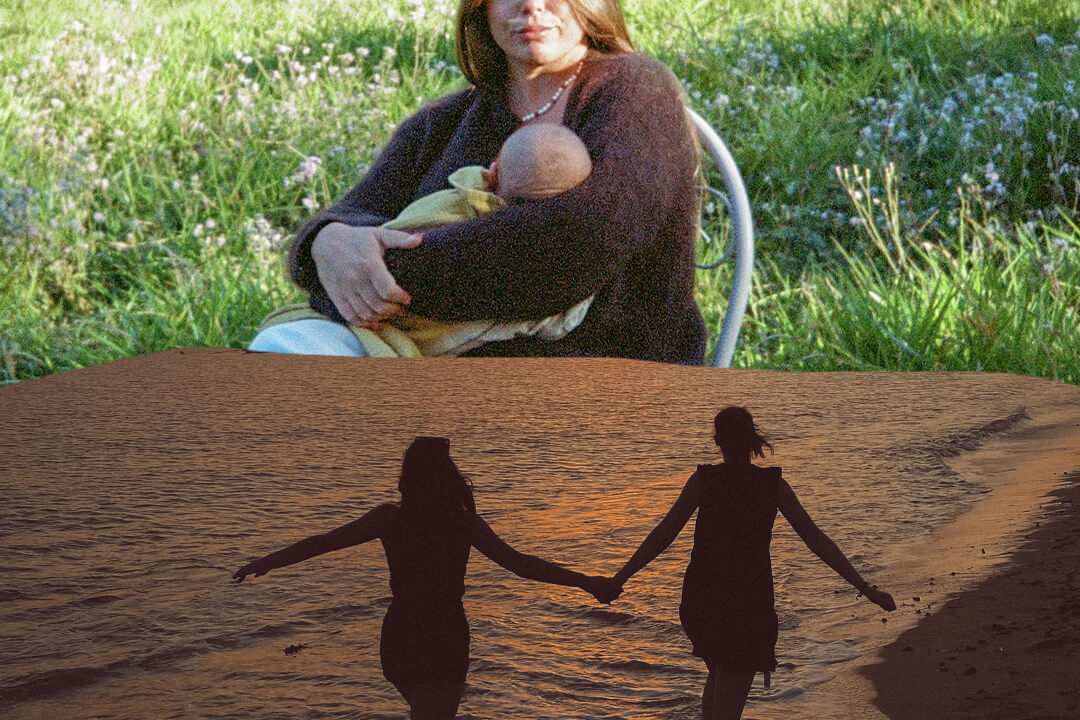
As a married woman without children, I’ve had my share of friendship fallouts as my friends became mothers over the years. The first time it happened, I was in my mid-20s. At the time, I didn’t have the language to describe what was happening to my friendship after a close friend of mine became a mom. Our steady fallout felt personal—like something was being directed at me. I wondered if I was being a bad friend. I had sent her gifts, liked her baby photos, and shared interesting articles about motherhood. Since the friendship was long-distance, what else could I do? Now I know that what I experienced has a name: The Motherhood Divide.
Even though we lived on opposite coasts, it hadn’t affected our friendship before she had kids. At her bachelorette party in Cabo, we sat on the beach underneath the stars, talking about what we hoped our careers might become one day. She dreamed of getting into wedding planning. I talked about eventually starting my own business.
Soon after, she became pregnant. To celebrate the birth of her daughter, I sent her a dozen adorable baby outfits. I was genuinely happy for her, even though having a baby felt very far down the horizon for me. It never crossed my mind that her becoming a mother might change our friendship, any more than distance had. But it did—almost immediately.
Related Stories:
- I’m Not a Mom Yet—What I Wish My Friends Would Stop Telling Me About Motherhood
- How I Dealt With Losing a Mom Friendship
- I Lost My Best Friend Because of My Fertility Struggle

Hannah Carmichael, Friendship and Connection Coach
Hannah helps clients feel more present and clear on what it is that gives them life meaning and value, and more in control of the relationships they’re building—whether that’s with friends, colleagues, or potential romantic partners.

Danielle Bayard Jackson, Women’s Relational Health Coach
Danielle teaches women how to develop personal and professional connections through a variety of roles: owner of TELL Public Relations and Friend Forward; host of the Friend Forward podcast; relational health coach; and national speaker.
What is ‘The Motherhood Divide’?
The Motherhood Divide happens when two people who once shared similar lifestyles and priorities begin to live very different lives, without necessarily having the language or the tools to navigate that shift.
According to friendship coach Hannah Carmichael, having a baby is one of the most common life events that reshape female friendships. The reasons are both practical and emotional: shifting priorities, time constraints, identity changes, and a growing gap between two people’s lived experiences. “It’s easy to make [the divide] personal,” she explains, “when the truth is it’s the seismic shift in circumstances that’s to blame,” says Carmichael.
“It’s easy to make [the divide] personal… when the truth is it’s the seismic shift in circumstances that’s to blame.”
Danielle Jackson, women’s relational health educator, places this within a broader relational pattern. Major life changes—such as career shifts, relationships, and new belief systems—can all introduce friction into friendships. Motherhood, however, tends to reshape nearly every aspect of daily life at once, making the shift more visible—and often more difficult to navigate.
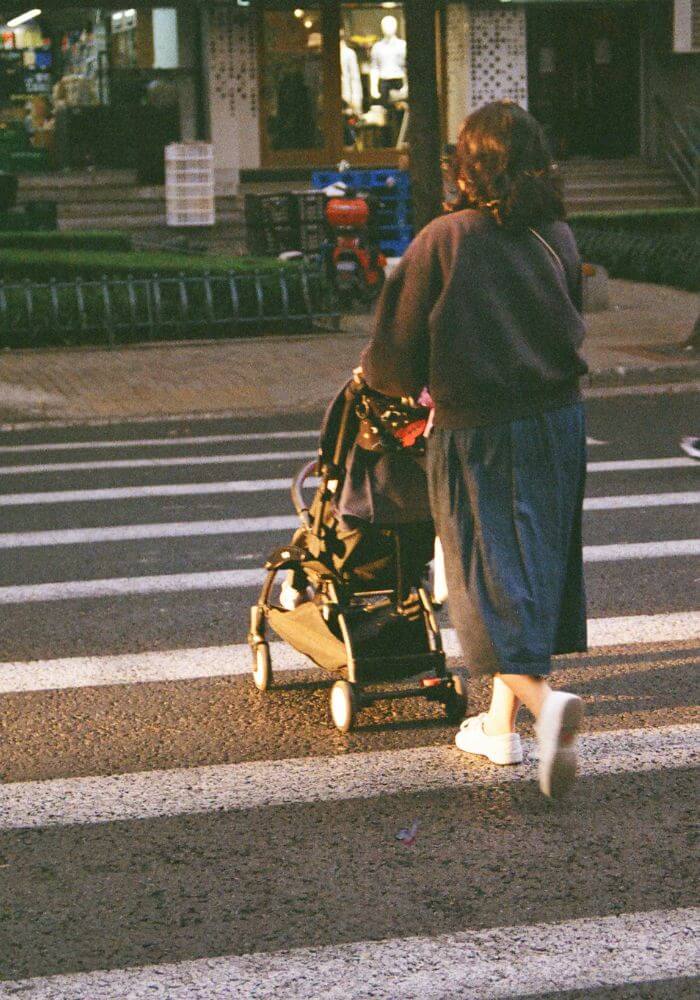
The struggle to connect with motherhood
The messages started appearing from my friend, often in response to something I had posted on my Instagram.
“I can’t just Uber now,” she replied to one of my Instagram Stories. “They don’t have child safety seats.”
Another time, she responded to one of my #OOTD posts—taken in the bathroom of my office, as many office outfit photos are. She commented, “Now I only wear two pairs of pants and look sloppy every day.”
These messages were confusing because I never knew how to respond to them. What did she want me to say? Initially, I tried to relate the best I could. But it started to feel like immense pressure: pressure to understand her new life as a new mom and to change how I lived just so I could relate to her. It also felt like judgment around how I continued to live my life.
How my friendship drifted
So, I responded to her less and less until I eventually blocked her after she sent a message saying, “You’ve got way too much time on your hands.”
That marked the beginning of a pattern. Over the years, as more friends became mothers, similar shifts followed. They weren’t dramatic fallouts, but quietly drifting apart—or at worst, me blocking them on Instagram when the same tone began to surface.
I once asked in a Facebook group of female entrepreneurs about my experience. A kind stranger responded with, “I remember being resentful of my past self when I first became a mother, and I can imagine seeing you continuing to live their past life, and how easy it is to project that resentment onto you.”
The answer, while insightful, wasn’t particularly helpful in navigating this experience. So I did what I do best—I sought out expert advice. Now that I understand what I experienced is real and part of a wider relational pattern, I feel more equipped to navigate this “divide.”
Don’t assume and communicate clearly with each other
When I was going through these friendship shifts, I thought I was doing everything “right.” I was showing support in the ways that felt natural to me: sending gifts and sharing interesting articles. But I wasn’t actually checking if those efforts matched what my friends needed. According to Jackson, this is where many friendships begin to break down.
“But I wasn’t actually checking if those efforts matched what my friends needed.”
Sometimes, mothers assume their exhaustion and overwhelm are obvious, so they may not explicitly communicate them. At the same time, friends without children may hesitate to ask questions, assuming they might be adding pressure to their friend’s already full plate. So instead of communicating, both sides are left guessing.
Carmichael emphasizes that it’s important to start by acknowledging what’s going on for the other person. Even a simple acknowledgment can shift the dynamic. Saying something directly—rather than trying to interpret behavior—creates room for connection. Jackson describes this as “front-loading the transition”: naming what’s happening early and doing it with vulnerability.
Looking back, I could have said something as simple as, “Hey, I’ve noticed some of your comments, and they’ve made me feel like I’m doing something wrong.” Or “Let’s talk about it. I imagine this transition into motherhood must be hard—how are you doing?”
It’s OK to ask questions and ask for support
Jackson explains, women have a “tendency to not articulate their needs because they are socialized to maintain an appearance of cooperation.” So to explicitly say, “I need help; I am struggling,” can feel like a marker of inadequacy.
As someone without children, I cannot fully understand the realities of motherhood, nor can I guess what someone might need, no matter how hard I try. I can, however, ask questions out of genuine care and curiosity. Carmichael notes that non-judgmental approaches like this open the door to an honest conversation.

Be willing to adapt as the friendship changes
I’ll admit, I have felt slightly envious that my partner’s group chats have largely stayed the same, regardless of whether members of his group have children or not. Why do his male friendships seem to remain unchanged?
Jackson offers helpful context. She explains that women often go through a profound transition called matrescence—a combination of physical, emotional, and neurological changes that occur when they become mothers. Alongside this, women still tend to take on a greater share of childcare and domestic responsibilities. As a result, their time, energy, and availability shift in ways that are deeply felt in their daily lives—and, by extension, their friendships.
In contrast, men’s social lives often remain relatively unchanged. They may still have time for leisure, hobbies, and regular communication with friends, allowing those friendships to feel stable.
Changing relationships doesn’t necessarily mean something is wrong. As Carmichael explains, friendships don’t need to look the same to remain meaningful—they need reciprocity. She also shares ways to create that reciprocity.
“Friendships don’t need to look the same to remain meaningful—they need reciprocity.”
For the mother, “a small but powerful habit is to ask your friend a question that shows genuine interest in her life before you launch into updates about yours.”
And as for me: “have enough humility to recognize that you don’t fully understand the seismic change that’s just happened in her life—and become a student of her new reality,” recommends Carmichael.
Give yourself (and each other) grace
Whenever I am learning something unfamiliar, I have to remind myself to be patient. Similarly, when a friend is going through something I’ve never experienced, it deserves that same level of grace. There’s awkwardness that comes with not knowing how to relate in the same way. Conversations may feel off. There will be times when I won’t know how to respond to certain comments. Timing won’t always align. Overall, staying connected requires more effort.
As Carmichael notes, neither person is wrong—both are experiencing significant change. For the new mother, it’s the loss of freedom and a shift in identity. And as for me, it’s the loss of a friendship that once felt easy and familiar.
“For the new mother, it’s the loss of freedom and a shift in identity. And as for me, it’s the loss of a friendship that once felt easy and familiar.”
To navigate this discomfort, Jackson says that we might have to coach ourselves mentally and say, “This is really hard, and I don’t know what it’s like to be friends with you under these conditions, but I am willing to figure it out.” She calls it the “spirit of experimentation,” because the truth is, you’ve never been friends like this before. In that spirit of experimentation, I’ve learned to approach navigating this “divide” with curiosity.
Decide which friendships are worth navigating
Not all friendships are the same, and it’s a natural ebb and flow of life that some friendships come and go. It’s OK to ask, “Is this friendship really worth it to me?“
One of the most helpful reframes for me was understanding that not every friendship is built to withstand this kind of shift. As Jackson explains, some friendships weren’t necessarily very deep to begin with or were rooted in a single context—school, work, proximity, or a specific phase of life. When that shared context changes, the connection may not continue.
She points to the idea of “multiplexity”—friendships that exist across multiple touch points tend to be more resilient. When you have connections throughout different parts of your life, there’s more holding the relationship together. Without that, the friction of a major life change can outweigh what originally connected you. That doesn’t mean the friendship wasn’t real. It was real at that moment in time, and it doesn’t necessarily need to evolve beyond that. Carmichael reinforces that the friendships that do last are the ones where both people decide it’s worth the creative effort to adapt. Those are the friendships I choose to continue.
Friendships evolve after motherhood, and that’s OK
What I understand now is that friendships aren’t static. They reflect where each person is in their life, and when those paths diverge, the relationship needs to adapt, and it needs to be reciprocal. Because of changing life experiences, some of my friendships changed what they looked like. Some faded. Some ended.
While it wasn’t always easy, it gave me a clearer understanding of what I value in friendships: mutual respect, genuine curiosity, clear communication, and a willingness to learn from one another, even when our lives may look completely different. I now believe The Motherhood Divide doesn’t have to feel so drastic if I approach it this way. It also means a friendship doesn’t have to stay the same or last forever—and that’s OK.

Maggie Wu, Contributing Writer
Maggie Wu is the founder of Mother First, a platform created from a desire to explore more expansive and multifaceted perspectives on motherhood beyond the one-note narratives often shared. Through sharing postpartum care practices around the globe and interviewing mothers about their postpartum experience, it reflects her interest in creating space for perspectives she wishes existed earlier—ones that see motherhood as something each woman has the freedom to define for herself.
Feature graphic images credited to: Georgie Rozsa | Dupe and Liza Duymelinck | Dupe
