


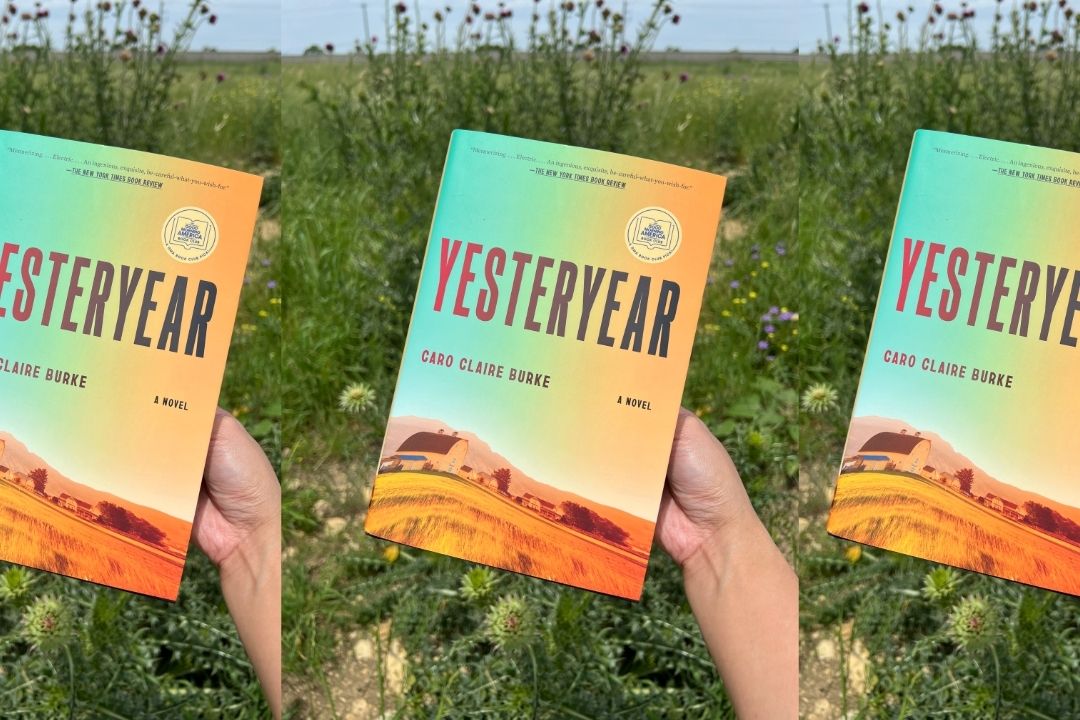
When I picked up Caro Claire Burke’s debut novel Yesteryear, I thought I knew exactly what to expect. As a journalist who has reported on tradwife culture and opinioned on the deeper, more dangerous messages of this type of content, I was fully anticipating a takedown of the facade. Many influential trad wives—like the one fictionalized in this novel—are cosplaying traditional living, all while earning money (lots of it!) off the idea that other women should embrace their “divine femininity” while their husbands “provide” for them.
What I didn’t expect, though, was to think so much about the larger themes of motherhood and womanhood and the performance of it all. I’m neither a trad wife nor a social media influencer, but reading Yesteryear had me reflecting on my own relationship to the performance of motherhood. I think ultimately, it’s not just a novel about a specific subculture. It’s about something far more universal.
You May Also Like:
- 10 Books to Read If You Loved ‘Yesteryear’
- The Buzzy New Book That’s About to Be in All Your Mom Group Chats
- Taylor Wolfe’s ‘Just a Busy Season’ Is the Book Every Mom Should Read
- The Best Memoirs for Moms (To Add to Your TBR List!)
What is ‘Yesteryear’ by Caro Claire Burke about?
But first, a bit about this book. Yesteryear is about Natalie Heller Mills, an ultra-successful lifestyle influencer who shares her “homesteading life” (drinking raw milk, making food from scratch, and raising a large brood) with millions of followers. She and her family live on a sprawling ranch called Yesteryear, and they sell this hyper-curated vision of traditional living.
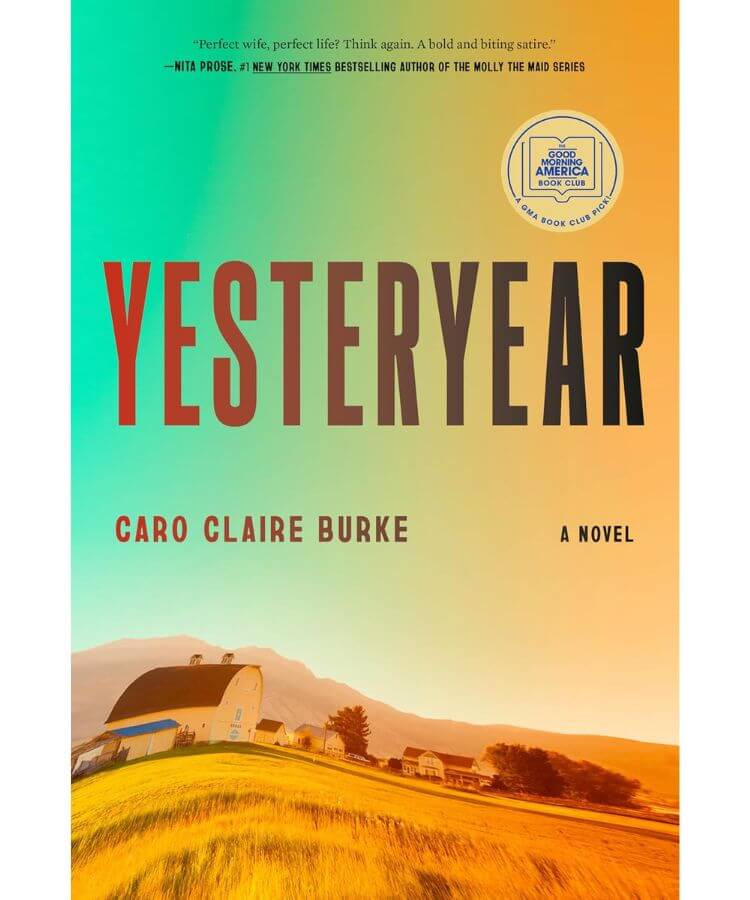
Natalie lives a traditional lifestyle—she resides in a charming farmhouse, has six children, and is married to her cowboy husband—with one very untraditional component: her 8 million social media followers. So what if she has nannies and cleaners and cooks helping her run things behind the scenes? The only thing that matters is that her followers believe her to be the epitome of traditional, divine womanhood.
That is, until one day, when she wakes up in the year 1855. There, she has the farmhouse and the children and the husband, but this time around, she’s actually expected to be the perfect wife she’s always embodied online. But is the performance of motherhood really her greatest dream?
What they leave out of their content, though, is the fact that they employ a full staff to run the ranch, care for the children, and produce the content. And the fact that Natalie’s father-in-law, a wealthy political icon, has bankrolled much of the operation.
The book alternates between timelines: in one, Natalie shares what her journey from college student to young wife and mother to mega-influencer truly looks like. In another, she finds herself stuck in the 1800s; she’s forced to actually live the life she romanticizes online.
Small moments that made me question everything
Yesteryear’s smartest, most pivotal scene (IMO!) exposes how performative motherhood, even without millions of followers, can be. When she’s struggling as a new mom, Natalie has a conversation with her own mother.
“How were you always so good at everything?” Natalie asks. “The house was always clean. You always got dressed and put makeup on. We always had outfits planned for us. How did you do all that?”
It’s her mother’s answer that makes me look at this book—and the greater culture of motherhood—in a whole new way. “I would imagine I was being watched,” her mother says, and “I pretended I had a little audience sitting on the couch with me. Watching me vacuum or take out the trash. Cheering me on!”
The response rewires something in Natalie’s brain and in my own mind as well.
The impossible standard of motherhood
Caro Claire Burke’s Yesteryear pulls back the curtain on what really goes on in the world of content creation: the disconnect between what many influential mothers (especially those who lean into the tradwife trope) present and what truly transpires behind the scenes. That’s the obvious, above-the-surface takeaway here. But what is buried within Burke’s prose is something larger, something that’s hardly unique to mom-fluencers. It’s about how much of being a woman is about performing, and how fine the line is between living in your own version of womanhood and performing this manufactured ideal—especially when womanhood becomes motherhood.
Now more than ever, messages about what it means to be a good mother are in our faces all the time. We log on to social media and see a video telling us, “The dishes can wait. Your kids will never be this little forever. Why are you wasting their one precious childhood on chores?” Then you scroll past it, only to find a clip telling you that if you’re not giving your children a clean, tidy home, you’re failing them. They’ll carry the trauma of that clutter forever.
Let’s be honest: none of us is completely immune to the pull of these messages. We don’t just want to be good mothers; we want to be good at motherhood. Where do we draw the line between wanting to do what’s best for our families and ourselves and wanting to do what brings us closest to this impossible, mythical standard?
Social media’s illusion of authenticity
The drawback of having our devices in our hands constantly is that we are practically allowing strangers into our own homes. Or, at the very least, into our own psyches. The pressure to perform the ‘good woman’ and ‘good mother’ ideals predates the apps. Natalie’s own mother, for example, fell into the performance of motherhood without access to them. We’ve been taught as women that the tidiness of our homes, the quality of our meals, the intensity of our mothering, the strength of our marriages, and the way we look are measures of our success in this game of womanhood. Those messages weren’t created on social media; they were just amplified by it.
“We’ve been taught as women that the tidiness of our homes, the quality of our meals, the intensity of our mothering, the strength of our marriages, and the way we look are measures of our success in this game of womanhood.”
And in Yesteryear, we see how formative they can be. Natalie seems to almost split into two personas: the one she plays onscreen and the one she inhabits in real life. As the novel goes on and her fame grows, her online audience becomes even more invested in the brand of ‘Natalie Heller Mills.’ She seems to lose her sense of what is real and what is fake. The version presented in Yesteryear is stark and extreme. Natalie creates a deliberate facade and intentionally performs the role of a perfect wife and mother so wholly that she loses her grip on reality.
Online tropes encourage performance
But I think about certain social media tropes, and I can’t help but connect Yesteryear’s themes of performance to them. The tradwife and girlboss ideals are obvious examples here, but there are so many smaller subtropes on our feeds. Right now, for example, I see content from creators who dub themselves “high-effort” moms. They share the things they do for their own families (think: baking bread from scratch or making educational flash cards for their kids). Elsewhere on social media, moms are proclaiming the “miserable mom trend” is out. They’re happy, hot, and in love with their husbands, they claim. Much of the motherhood discourse today contains messages about how “getting ready” with a full face of makeup every morning—even if you have nowhere to go—is “self-care.” It’s a surefire way, they say, to not “lose yourself” in motherhood.
How much do we lean into the ‘perfect mother’ performance?
The thing is, it’s impossible to find the line between what we do for our own gratification and what we do in the name of performance. We are trying our best because we truly want to take good care of our kids and our home. But we’ve also been conditioned to believe we’re failing miserably if we don’t optimize every part of our lives.
Untangling the ‘good mother’ myth from reality
But when we cook elaborate meals, or assemble artful holiday baskets, or put together sensory bins, or employ popular gentle parenting phrases, or intensely supervise our kids at the park… are we truly doing it because we believe it’s in our kids’ best interests? Or are we leaning into the perfect mother performance? Are these self-care practices truly for us? Or do we do them for the performance of ideal womanhood? When we organize our homes top to bottom, labeling spices and color-coding closets, are we really doing it because we prefer our spaces when they’re organized? Or are we performing the perfect homemaker role?
These standards and expectations around motherhood didn’t originate with us. Still, they’re everywhere, and they get under our skin. There are too many narratives out there about all the things we should be for them not to affect how we perform.
Because, as Yesteryear points out, the ‘good mother’ myth is drilled into us from the time we are children. It is screamed into our ears every time we log on to our phones. And by the time we become mothers ourselves, we can’t always distinguish those voices from our own maternal compasses. We don’t all perform for millions of followers. But like Natalie’s mom, maybe we’re all a little bit seduced by the idea of impressing an audience.
Maybe we even convince ourselves that this is what will help mothers live up to the high standards we set—or the standards the world sets for us. It’s impossible to untangle the two, and Caro Claire Burke’s Yesteryear reminds us of that.

Zara Hanawalt, Contributing Writer
Zara is a twin mom and freelance journalist with over a decade of experience covering parenting, women’s health, and culture. In addition to The Everymom, she’s written for outlets like Vogue, Marie Claire, Glamour, Cosmopolitan, Parents, Shape, Motherly, The New York Times for Kids, What to Expect, and many others. In her spare time, she enjoys reading, cooking, travel, watching TV, and trying new restaurants.
