



I’m a mom of two boys, ages 6 and 8. Whether it’s due to the algorithm or the videos I most often engage with, I see a ton of content on social media about “boys being boys.” You know, the so-called funny videos of boys peeing in the bushes, breaking toys, or wrestling with abandon. Even as a mom to only sons, the boy mom social media culture never sat well with me. Honestly, I felt like it made the rest of us boy moms look bad.
But then I saw a reel by digital creator Tory Halpin (@toryhalpin), and I felt so seen. In the video, she argues that boy mom culture isn’t just something boys are born with—it’s that bad behavior is accepted, with a lack of appropriate boundaries. Not to mention society’s role in perpetuating harmful stereotypes. So it’s not the term “boy mom” I take issue with—it’s when boy mom culture perpetuates problematic “boys will be boys” behavior.
You May Also Like:
- 7 Parenting Tips for Raising Feminist Boys
- ‘Can Boys Do Ballet?’: How I’m Helping My Child Combat Gender Stereotypes
What is ‘boy mom’ culture?
Boy mom culture is the idea of defining a mom by having only male children. But it goes so much deeper than that. It’s often referred to by the eponymous “boy mom” label, slapped on everything from hats to t-shirts. While I’m proud of my two boys, I’m not proud of all that the label implies and how it’s portrayed, especially on social media.
The term “boy mom” reinforces common stereotypes of boys. Think, being messy, careless, wild, or my least favorite, a “future heartbreaker.” It also comes with its own aesthetic, centering on chaos but also zeroing in on physical resilience, extreme risk-taking, and emotional toughness or avoidance. And honestly? Boy mom culture is problematic and can be toxic in so many ways.
Why ‘boy mom’ culture feels harmless, but isn’t
The idea of boy mom culture sounds harmless. But, as a mom of boys, I’ve experienced some of the problematic aspects firsthand.
It lowers expectations for boys’ behavior
My least favorite aspect of boy mom culture is the “boys will be boys” mentality. It’s outdated and based on outdated general stereotypes. Plus, it promotes aggression and a lack of accountability for problematic behavior.
It can also be harmful to boys who don’t fit into this stereotype. My oldest son is sensitive, thoughtful, and doesn’t like to play rough. He’s been the receiver of unwanted rough play from many male peers over the years, which was ignored or chalked up by the other parent as “typical boy behavior.” But it’s actually a violation of his personal boundaries, which is never OK, regardless of gender.
It discourages emotional expression
Boy mom culture also portrays boys as less sensitive or emotional and discourages them from expressing their feelings. Telling boys not to cry or “toughen up” may seem harmless, but it’s not. Labeling boys from the outset as lacking sensitivity or worse, correcting them when they do display emotion, can have long-term impacts on their emotional intelligence and future relationships.
It reinforces gender stereotypes
Another issue with this harmful social construct? It limits boys’ interests and identities. Walk through the toy aisles of your local stores, and you’ll see cars, trucks, and LEGOs allocated to boys, while girls get pretend food, pets, dolls, and the like. And if your son doesn’t like sports? His options are even more limited.
This creates a narrow version of masculinity that can lead to bigger, long-term issues in men, such as aggression, rigidity, and lack of flexibility when it comes to household roles.

The double standard no one talks about
But boy mom culture isn’t just damaging to boys. It’s also bad for girls. Forcing boys into the typical masculine boxes, such as doing yardwork, taking out the trash, and not cooking or cleaning, can lead to emotional and household labor being placed on girls later in life.
“Boy mom culture isn’t just damaging to boys. It’s also bad for girls.”
Then there’s the toxic trend of boy moms referring to their sons as their “little boyfriend” or saying raising boys is like going through the longest breakup of your life. This puts boys in the role of a romantic partner rather than a child, and sets the stage for issues between mom and a boy’s future spouse. It just feels inappropriate to me, regardless of the sweet intention behind it.
Social media’s role in amplifying the ‘boy mom’ trend
Social media labels can help foster a sense of belonging or even help you find your people; they can also pit people against one another. Think #typeCmom, #betamom, #almondmom, #girlmom, #girldad #tradwife, etc. Check the hashtag #boymom on Instagram, and you’ll see nearly 20 million posts. What do they have in common? Well, many of these boy mom clips feature an unsuspecting mom being hit in the face with an errant ball or being tackled by a well-meaning little one.
Sure, social media centers on viral content and relatability. And many times, typical “boy mom” humor is based on exaggerated realities. But that doesn’t mean these posts aren’t problematic. It often pits moms against each other, with some boy moms implying that they “have it worse” than girl moms. It can also be alienating to moms of boys who don’t fit into these gender stereotypes. Also, why isn’t there a “boy dad” label? The “girl dad” label has its own problems (i.e., “she’s not allowed to date, ever.”) But it makes no sense that the boy parent label would only apply to moms raising boys.
“Many times, typical ‘boy mom’ humor is based on exaggerated realities. But that doesn’t mean these posts aren’t problematic.”
What raising boys actually requires
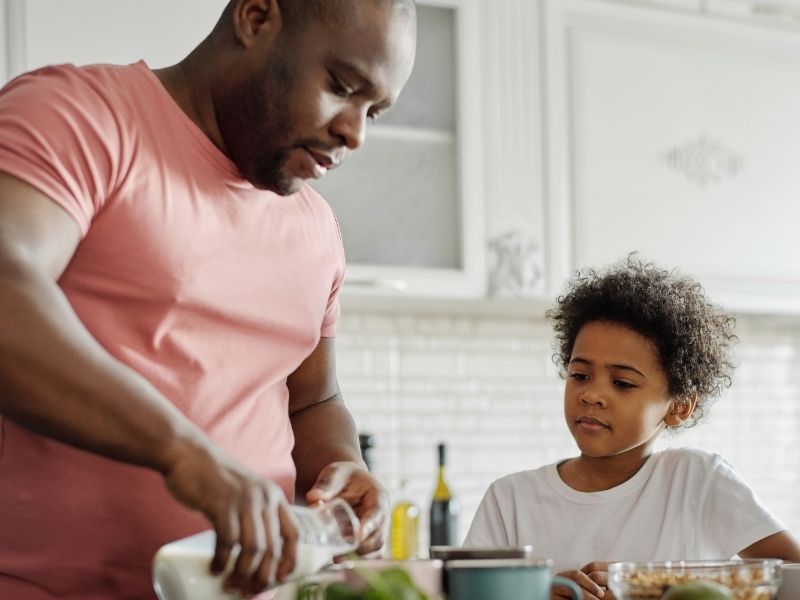
Once you start seeing the problem with boy mom culture, it’s hard to unsee it. It starts with parents. We all know that parenting narratives help shape adult relationships. So it’s important to set boys up for success by teaching emotional regulation, encouraging empathy and communication, and modeling respectful relationships. That’s where my husband comes in. He can model positive masculinity—from modeling emotional regulation and empathy to showing strength and leadership in nurturing our boys.
It also doesn’t hurt to switch up the often-gendered roles in your household. Let them see your husband cook dinner while you mow the grass. Value each partner’s career equally, making childcare an “us” issue, not a “mom” issue. And also? Please stop saying dads are “babysitting” their own kids. Just no. (I’m looking at you, Boomer parents.)
What to say instead of ‘boys will be boys’
Kids can be messy, wild, and risk-prone. It’s not a boy-girl thing. It’s a developing frontal lobe thing. Reframe it and say “kids will be kids,” and watch the reaction. And if a behavior is truly not acceptable, correcting with “be respectful of body boundaries,” “let’s lower our energy,” or “let’s take a deep breath” are all good moves. These tools are helpful to all children, not just boys.
“Say ‘kids will be kids’ and watch the reaction.”
Parents can also take an active role in deconstructing harmful stereotypes, letting their child choose activities they’re truly interested in, not just ones typically aligned with their gender. I’ve tried to live this one. Both my boys have played sports, but they’ve also dabbled in dance, are currently taking piano lessons, and are in musical theater.
You can love being a mom to boys without buying into the culture
I love having two sons. While they can be rough, love sports, and have broken quite a few things in my house (two TVs and counting), they’re also sweet, cuddly, and incredibly considerate. They’re tiny humans, and humans are complicated and complex and don’t need to fit into any one box.
This isn’t a criticism of moms or parents. We’re all just doing our best. It’s about embracing evolving parenting norms and empowering each other to raise boys differently. That’s why I do my best to validate my boys’ identities without stereotypes and celebrate their individuality over labels. I’m taking the boy mom stereotype and reframing it—I’m not just raising boys. I’m trying to raise kind, emotionally healthy kids.

Rachel Morgan Cautero, Contributing Writer
Rachel is a full-time freelance writer based in Ponte Vedra, Florida. When she’s not busy wrangling a toddler, preschooler, and one very stubborn French bulldog, she’s writing on all things personal finance and parenting. Her work has appeared in The Atlantic, Forbes, Parents, Nerdwallet, The Balance, Yahoo Finance, Truly Mama, SmartAsset, HerMoney, and DailyWorth.