



Let’s be real—you might be rolling your eyes at the mention of a “high-effort” mom. Guess what? I don’t blame you. I, too, roll my eyes the moment social media places yet another label on one of the many roles moms play in an attempt to categorize, divide, or rank us. Can’t we just live our lives and do our thing without labels and comparison?
While I’m mostly anti-label, I must also confess that my disdain for labels comes from never fully identifying myself with any of them. There are Type A, B, and C moms. Crunchy moms, vanilla moms, and almond moms. There are beige moms, butter moms, and beta moms. Whew. I’m exhausted just listing all of them here, let alone trying to keep up with them on the internet.
I typically keep swiping whenever a new mom-label trend pops up on my For You Page, but one recent label has effectively stopped my scroll—and that is the “high-effort” mom trend. For the first time in a while, I’ve come across a label that actually feels like it fits. Not because I think it makes me a better mom, but because it gives a name to something I’ve always recognized about the way I approach motherhood.
You May Also Like:
What is a High-Effort Mom?
Depending on which TikTok video you watch, you may get a different definition of what a high-effort mom is. Some describe her as someone who goes the extra mile to make their little ones’ childhood as magical as possible. Others define being a high-effort mom as someone who chooses to treat childhood as intentional preparation for adulthood, often resulting in stricter rules or boundaries for their children. Some attribute high-effort parenting to investing in extracurricular activities to give their kids a head start on future success.
Why is High-Effort Parenting Controversial?
Whatever the definition, the high-effort label has sparked its fair share of controversy. For some, it represents an admirable commitment to intentional parenting. For others, it raises questions about unrealistic expectations, unnecessary pressure, and the tendency to measure one family’s parenting choices against another’s.
“[High-effort parenting] raises questions about unrealistic expectations, unnecessary pressure, and the tendency to measure one family’s parenting choices against another’s.”
The specifics may vary, but the parents who identify as high-effort typically have certain ideals or priorities for their children’s childhood that matter greatly to them. As a result, they devote additional time, energy, and resources to nurturing those priorities and creating the experiences they desire for their children. However, that doesn’t mean you care any less about your children’s childhood—or the adults they will eventually become—if you don’t identify as a high-effort parent. And I think this is what the controversy gets wrong.
A high-effort parent is not better than, more loving than, or inherently more intentional than a parent who identifies as low-effort, Type B, or something else entirely. A high-effort parent is simply someone who chooses to invest additional time and effort in the specific areas of parenting that matter to them, with the hope of cultivating the outcomes they desire. Somewhere along the way, social media has twisted this distinction into yet another opportunity for comparison and competition.

Why I Identify as a High-Effort Mom
When I became a mother, I never set out to identify my parenting style with one label or another. In general, though, I’ve always been someone who puts a lot of effort into most areas of my life. Living with intention has always been important to me, and naturally, I’ve carried that approach into my parenting.
I Was Raised By ‘High Effort’ Parents
Becoming a mom also helped me realize just how high-effort my own parents were. Looking back, I can recognize how much thought and intentionality they put into preparing me for adulthood. While some of their expectations and decisions weren’t always fun as a child, the care they put into my education, extracurriculars, and boundaries helped equip me with the skills and independence I needed to transition into adulthood. Recognizing that, I wanted to carry some of those practices into raising my own children.
I’ve Focused My Parenting Priorities
I identify as high-effort because there are certain areas of parenting where I’m unwilling to cut corners, even when doing so requires more time, energy, or patience from me. Some of those areas include education (we homeschool), establishing and maintaining boundaries, teaching my children responsibility, and being intentional about the activities and experiences they participate in. I’ve found that many of the parenting decisions that require more effort in the moment—or even over an extended period—can create greater ease for our family in the long run.
For example, I spent years teaching my children to manage their morning and bedtime routines independently, allowing them to work through difficult tasks even when it would have been easier to step in and do things for them. Today, they’re largely independent with those routines, and that same approach extends to other areas of parenting: requiring them to order for themselves at restaurants, speaking up at doctor appointments, preparing their own meals, and taking on extra chores to earn money. I share Michelle Obama’s belief that we’re raising future adults, so I parent accordingly—even when it requires more effort in the moment.
What a High-Effort Mom Is Not
Much like most social media trends, high-effort parenting can get a little misconstrued on the internet. Many comments claim it to be performative or another example of succumbing to societal pressure to be “the perfect mom”. And I can understand why. Some of the content out there can definitely feel like an endless checklist of unattainable perfectionism with the label “high-effort mom” slapped on it. From maximizing every holiday to never forgetting a spirit day at school to cutting every carrot in your kids’ lunchbox in the shape of a star, many social media examples of high-effort motherhood can feel like unnecessary pressure to do it all.
It’s Not Performative
While there’s nothing wrong with doing those things, it can be harmful to make them the defining characteristics of high-effort parenting. Being a high-effort mom isn’t a performance measured by how well you curate every moment of childhood. Those things can certainly be part of it if they matter to you, but they’re not a requirement. I, for one, don’t do most of what I see on the internet under the high-effort mom label, yet I still identify with it. If you enjoy going all out as a part of your parenting, that’s wonderful. But you don’t have to. Ultimately, high-effort parenting is about what happens in the intimate, difficult moments and everyday decisions you make while raising your children.
High-Effort In Every Aspect of Parenting
A high-effort mom doesn’t have to be high-effort in every moment or every area of motherhood. You can intentionally put forth less effort into certain things so that you have the time and energy to invest more in the areas that matter the most to you. For example, I don’t have the wherewithal to put together a Boo Basket for Halloween or do Elf-on-the-Shelf at Christmas. My energy is reserved for holiday family outings, weekends spent doing my kids’ hair, and bonding over movies, and the extra time I devote to teaching them various life skills and responsibilities.
High-Effort Parenting Is Not ‘Better Than’
Most importantly, high-effort parenting is not a morally superior version of parenting. Honestly, I believe every version of parenting requires a great deal of effort. If you care about your children and demonstrate that care through your time, attention, and countless decisions you make to support their growth and well-being, you’re putting in effort that matters. High-effort parenting is not about perfectionism, adhering to someone else’s standard, or maintaining the perfect routine. It’s about intention—however that looks to you.
“I believe every version of parenting requires a great deal of effort.”
When Doing More Feels Like Too Much
Sharing our parenting styles online—and within our friends in real life—often invites unsolicited advice and commentary, no matter what version of parenting you align with. You can consider yourself high-effort, low-effort, butter, or type A through Z, and someone will inevitably have something to say about your choices. You’re putting too much pressure on your kids or not enough. You’re spoiling them too much or too little. And sometimes, sharing what works for your family can unintentionally make other parents feel inadequate about the time, energy, or resources they may not have available to make similar choices.
To put it plainly: You can’t win. Someone will always find something to criticize. You might even feel compelled to defend your choices to other parents, friends, or family members, who don’t understand why you do things the way you do. As much as I understand that pressure (trust me, I’ve been there), as long as you feel confident about the choices you’re making for your family, there is no need to explain yourself.
Trust your heart. You know your family, your children, and your circumstances better than anyone else. There is no need to justify your motherhood to anyone, no matter what label you claim.
We All Don’t Have to Parent the Same Way
I’m still not big on labels, but it feels nice to find one that I can finally identify with. Not because it makes me a better mom, but because it gives language to an approach to motherhood I was taking all along. Sometimes, it’s nice to have the words to articulate something you already know about yourself.
However, this label, like so many others, shouldn’t become another source of fuel for the comparison fire online. We should be able to share what works for our families without making other mothers feel inadequate. Whether we do more, less, or something entirely different, there’s no universal formula for raising children well. We all have different values, priorities, and circumstances that shape how we parent. We’re all putting effort into raising our children, and that effort deserves to be recognized.
So whether you claim the label or leave it behind, I hope you feel free to put your effort where it matters most to you.
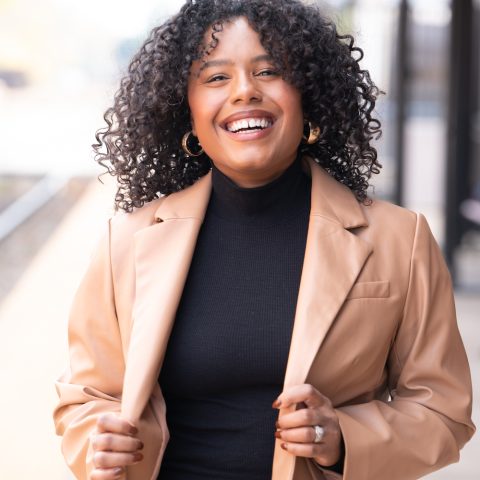
Caroline Sumlin, Contributing Writer
Caroline Sumlin is a writer, author, and content creator specializing in topics ranging from self-worth, lifestyle, wellness, motherhood, education, society, and culture. Caroline received her Bachelor of Arts degree in Journalism from Howard University in Washington, DC. Driven by her passion for freedom and justice, Caroline crafts articles that urge readers to reflect more deeply and critically about themselves, their lives, and the world around them.
