



Having a baby is one of life’s most exciting milestones, but it’s also an expensive one. In 2026, an average conventional delivery in the U.S. costs more than $15,700, and families with employer-sponsored health insurance pay nearly $2,600 out of pocket on average. For a working-class family, these costs can pose a huge burden, both mentally and financially. And with inflation continuing to skyrocket, families aren’t just wondering when to have a baby. They’re asking themselves: where’s the best place to have a baby?
We’ve taken a close look at WalletHub’s recent research on the best and worst states to have a baby, from healthcare rankings to childcare access. Using their data, we’ve made a guide for expectant parents on which states are the best ones to have a baby in and why. Of course, the report is a broad analysis of cost and systems data, not a verdict on any individual city or state being unsafe to raise a child. And for those who live in lower-ranked states, we’ve also included advice and insights from Dr. Jaimey Pauli, a Maternal-Fetal Medicine Physician with over 20 years of clinical experience, to help empower soon-to-be-parents.
Read More:
- What It’s Like to Live in a Maternity Care Desert—Moms and Experts Share
- Is a Midwife Right for You? Here’s What to Consider
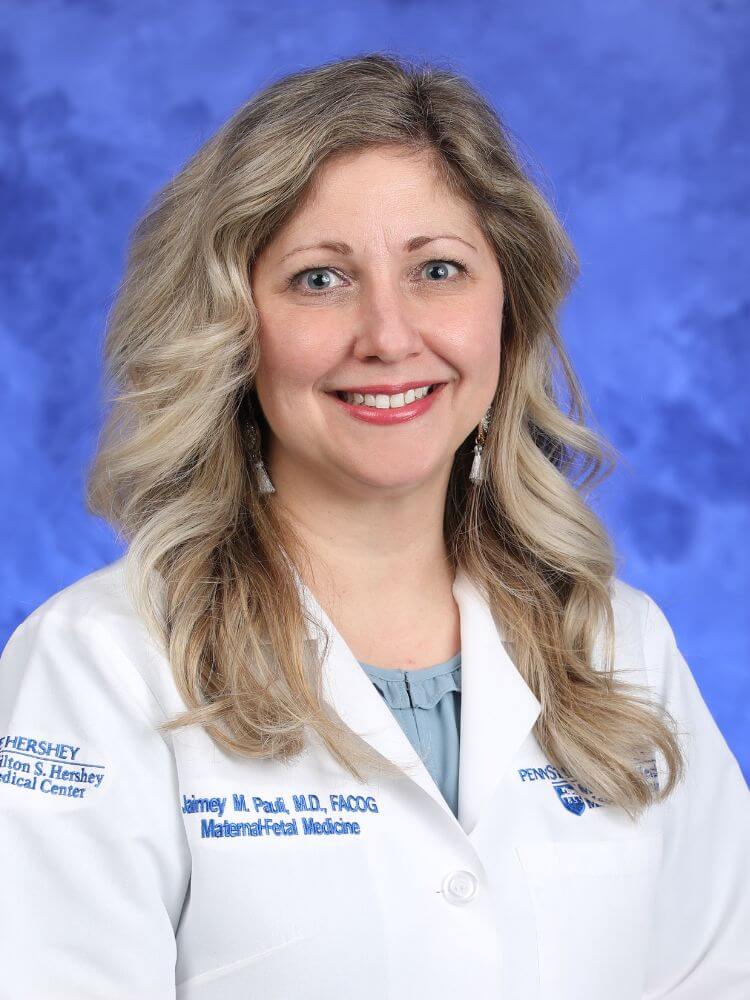
Jaimey M. Pauli, MD
Dr. Pauli is the Division Chief of Maternal-Fetal Medicine at Penn State Health Milton S. Hershey Medical Center and a Professor in the Department of Obstetrics and Gynecology at Penn State College of Medicine. She earned her medical degree and completed her obstetrics and gynecology residency, as well as her maternal-fetal medicine fellowship, at Penn State College of Medicine. With more than 20 years of clinical experience, Dr. Pauli is dedicated to providing expert, compassionate care for expectant and new mothers, supporting them through every stage of pregnancy and the postpartum journey.
The Best States to Have a Baby: What Does “Good” Look Like?
The best states to have a baby minimize costs while providing top-notch healthcare to mom and baby. Of course, raising a baby goes beyond childbirth, so the analysis also looked at over 30 relevant metrics to evaluate factors like access to childcare, parental leave policies, quality pediatric care, support groups for moms, economic factors, and more to determine a “baby-friendliness” and “family-friendliness” score for each state.
Keep reading for a detailed analysis of the top 10 states to have a baby.
1. Massachusetts
Massachusetts is the number one state to have a baby largely because it’s home to some of the best neonatal hospitals in the world, and boasts the third-lowest maternal mortality rate in the country. Additionally, Massachusetts has the sixth-lowest share of households with babies or toddlers experiencing food insecurity, and the sixth-highest share of kids with all seven recommended vaccines. When it comes to healthcare, they’re the example to follow.
Another thing that sets Massachusetts apart? Parents in this state will benefit from some of the most generous leave policies, as well as additional parenting programs that are covered by Medicaid. And to top it all off, Massachusetts ranks number one for the best state to raise a family, according to WalletHub’s analysis.
2. Minnesota
Minnesota’s number-two spot is largely thanks to its affordable health insurance premiums—the third-lowest in the nation! It’s also known for high-quality medical care, with the second-lowest maternal mortality rate in the country and the 10th-lowest infant mortality rate. And when it comes to skilled medical professionals, Minnesota isn’t lacking: The state has the fifth-most nurse midwives, fourth-most obstetricians and gynecologists, and 14th-most pediatricians per capita.
Working parents will also be happy to raise their children in Minnesota. The state has the fourth-highest share of nationally accredited childcare centers. Unsurprisingly, it also ranks highly for the best states to raise a family.
3. North Dakota
North Dakota’s high ranking is almost entirely due to its low cost for medical care. In some states, a conventional delivery can cost up to $32,000. In North Dakota, average costs sit at only around $9,700. The state also has the second-lowest costs for a conventional birth with complications, and the third-lowest C-section costs.
The best part? Saving money doesn’t stop after childbirth. In a world where babysitters are becoming a luxury service, North Dakota has the third-lowest average hourly rate for a babysitter in the country, at just $17.76. This makes date nights and time away from the kids far more accessible to lower-income families. There’s also plenty of other options for childcare support, with the ninth-most child care centers per capita and fifth-most mom groups per capita.
4. Rhode Island
While Rhode Island may rank lower for healthcare costs, what sets this state apart is its highly ranked medical care systems and access to maternal care providers—they have the fourth-most midwives & OB-GYNs per capita! They also rank highly in paid parental leave, offering robust state-sponsored programs for new parents who need to take time off after birth.
We also can’t ignore their high baby-friendliness ranking—fifth in the nation! This metric looks at infrastructure and public spaces that are geared toward mothers and children, and with such a high ranking, mothers in Rhode Island are sure to feel comfortable and cared for wherever they go.
5. New Hampshire
New Hampshire is highly ranked largely because it boasts the lowest infant mortality rate in the nation. Their exceptionally prepared hospitals and healthcare systems frequently rank highly for maternal health outcomes. While there are definitely negatives that can’t be overlooked—high cost of living and limited paid family leave—New Hampshire also frequently ranks highly for child well-being, family stability, and education. It’s a great place to raise a family!

6. Maine
Maine’s high ranking is partially due to its exceptional healthcare system, which offers specialized prenatal and postpartum care for both mom and baby, as well as pediatric care. However, what really sets Maine apart is its baby and child-friendliness scores! The state has the second-most child-care centers per capita in the country, meaning that working parents have plenty of access to reliable childcare when they need it. They also offer flexible, state-sponsored parental leave and generous thresholds for subsidized childcare.
7. Connecticut
While Connecticut’s high healthcare costs may deter some families, there are plenty of positives for new parents in this state. They offer the fifth-most child-care centers per capita and score strongly for generous parental leave policies and early childhood resources. They also have a large number of accredited, highly-ranked OB/GYNs, midwives, doulas, and pediatric care providers.
8. Vermont
Vermont ranks number one for maternal and pediatric healthcare! They have the second-most midwives & OB-GYNs per capita and the fourth-most pediatricians and family medicine physicians per capita, meaning that families who need specialized prenatal or postpartum care won’t have trouble finding a qualified provider. While the general cost of living falls on the higher end—as does much of the New England area—Vermont also ranks fifth for lowest costs for a C-section delivery.
Luckily, family-friendliness doesn’t stop after childbirth. Vermont has the most childcare centers per capita in the country!
9. Washington
Despite its high cost of living, Washington’s robust paid family leave program lands the state high up on the list, as well as its highly ranked maternal and pediatric healthcare system—though rural areas may have less access to these resources.
Washington also ranks highly for baby and family-friendliness. The state boasts high-achieving school districts and strong scores for family stability and economic prosperity.
10. District of Columbia
The number 10 spot belongs to none other than our nation’s capital! The District of Columbia has numerous highly ranked maternal and pediatric care facilities, and ranks number one for baby friendliness, with generous parental leave policies. That being said, the cost of living is very high, with DC having the highest average annual cost for infant care.
Full Ranking: The Best (and Worst) States to Have a Baby
To find the best state to have a baby, WalletHub compared all 50 states and the District of Columbia across 31 key metrics. This includes affordability, health care accessibility, and baby-and family-friendliness. The analysis also accounts for hospital conventional-delivery charges, annual average infant-care costs, and the number of pediatricians per capita (click for the full methodology).
| Overall Rank | State | Total | Cost Rank | Healthcare Rank | Baby-Friendly Rank | Family-Friendly Rank |
|---|---|---|---|---|---|---|
| 1 | MA | 74.96 | 39 | 2 | 2 | 1 |
| 2 | MN | 69.66 | 21 | 4 | 7 | 2 |
| 3 | ND | 65.53 | 3 | 16 | 28 | 3 |
| 4 | RI | 63.68 | 35 | 3 | 5 | 16 |
| 5 | NH | 63.34 | 8 | 5 | 44 | 8 |
| 6 | ME | 63.11 | 36 | 14 | 3 | 10 |
| 7 | CT | 61.75 | 40 | 11 | 10 | 7 |
| 8 | VT | 61.74 | 37 | 1 | 25 | 17 |
| 9 | WA | 60.20 | 46 | 10 | 4 | 13 |
| 10 | D.C. | 59.82 | 26 | 29 | 1 | N/A |
| 11 | IA | 58.96 | 5 | 6 | 32 | 19 |
| 12 | WI | 58.03 | 42 | 27 | 17 | 4 |
| 13 | UT | 57.95 | 12 | 21 | 15 | 18 |
| 14 | HI | 57.67 | 24 | 9 | 6 | 23 |
| 15 | NE | 57.52 | 22 | 37 | 29 | 5 |
| 16 | NY | 57.00 | 50 | 22 | 8 | 6 |
| 17 | OR | 56.80 | 31 | 8 | 9 | 22 |
| 18 | PA | 56.48 | 7 | 19 | 43 | 12 |
| 19 | ID | 56.31 | 2 | 12 | 11 | 30 |
| 20 | CO | 55.70 | 41 | 18 | 12 | 15 |
| 21 | IL | 55.46 | 28 | 23 | 37 | 9 |
| 22 | SD | 54.96 | 9 | 35 | 41 | 11 |
| 23 | MD | 54.41 | 6 | 25 | 33 | 20 |
| 24 | NJ | 54.33 | 45 | 20 | 16 | 14 |
| 25 | OH | 53.34 | 4 | 26 | 35 | 21 |
| 26 | DE | 52.22 | 14 | 13 | 22 | 32 |
| 27 | VA | 51.92 | 18 | 32 | 13 | 26 |
| 28 | MT | 50.46 | 20 | 15 | 48 | 25 |
| 29 | MI | 49.11 | 10 | 17 | 30 | 35 |
| 30 | CA | 47.14 | 51 | 7 | 23 | 29 |
| 31 | AZ | 44.58 | 30 | 28 | 19 | 39 |
| 32 | MO | 44.33 | 13 | 43 | 46 | 27 |
| 33 | IN | 43.53 | 19 | 46 | 31 | 31 |
| 34 | KY | 43.25 | 17 | 44 | 18 | 38 |
| 35 | NC | 43.24 | 15 | 34 | 42 | 36 |
| 36 | WY | 42.20 | 43 | 41 | 40 | 24 |
| 37 | AK | 41.49 | 48 | 24 | 20 | 37 |
| 38 | TN | 41.34 | 44 | 39 | 26 | 33 |
| 39 | OK | 40.86 | 11 | 38 | 39 | 43 |
| 40 | KS | 40.61 | 38 | 47 | 38 | 28 |
| 41 | LA | 39.49 | 1 | 48 | 21 | 45 |
| 42 | WV | 38.81 | 23 | 36 | 27 | 49 |
| 43 | AR | 38.25 | 16 | 50 | 14 | 44 |
| 44 | GA | 38.21 | 29 | 31 | 47 | 41 |
| 45 | TX | 37.97 | 47 | 42 | 34 | 34 |
| 46 | SC | 37.12 | 34 | 33 | 50 | 42 |
| 47 | NV | 36.06 | 33 | 30 | 49 | 47 |
| 48 | NM | 35.64 | 25 | 40 | 36 | 50 |
| 49 | FL | 35.52 | 49 | 45 | 24 | 40 |
| 50 | AL | 30.75 | 27 | 49 | 51 | 46 |
| 51 | MS | 29.23 | 32 | 51 | 45 | 48 |
What to Do If Your State Ranks Low
If your state falls on the lower end of this ranking, don’t despair—a low ranking measures systems and averages, not your ability to have a healthy baby or be a good parent. Regardless, we’ve gathered some actionable, expert-backed advice for new moms who may reside in these areas.
If cost is the issue
According to Dr. Pauli, planning and asking lots of questions is key to preparing for the financial burden of childbirth. “One of the biggest hurdles for families is just not knowing the system,” She explains. The first step is often just to inquire about what resources your care provider can offer—caseworkers, community care centers, social workers. By advocating for yourself, patients may reveal financial support programs they didn’t know about, even in underserved states.
“We also don’t utilize our hospital’s financial department nearly enough,” she adds. “It behooves us as providers to encourage people to do it … to give them the phone number, to hand them the website.” While labor and delivery costs can feel overwhelming, Dr. Pauli says it doesn’t have to be impossible. Healthcare providers are there to help, so long as patients know where to find the necessary resources.
“By advocating for yourself, patients may reveal financial support programs they didn’t know about, even in underserved states.”
If your family is lower-income, also be sure to check your Medicaid Expansion Status, which—under the Affordable Care Act (ACA)—allows states to widen health coverage to adults under the age of 65. You can also look into community-funded programs like WIC (Women, Infants & Children) that provide food and breastfeeding support to families in need. Easing costs outside of the delivery room is equally important.
Wondering how to budget for baby? See this Baby Financial Checklist.
If health care access is the issue
Living in a maternal care desert can be a huge source of stress for expectant parents, and—according to Dr. Pauli—more and more rural care facilities have continued to close. Many of them didn’t have labor and delivery units to begin with, since they require so much advanced staffing and often house high-risk patients. While nothing can truly replace seeing a provider in-person, Dr. Pauli says that moms who have a thin provider network can lean into telehealth resources for extra support across larger distances.
“It’s a great adjunct for prenatal care,” she explains. “We do [telehealth] to make sure the patient is seen at their home center … we help their provider make a care plan and decide if they are safe to deliver there or need to be transferred to a tertiary care center.”

If baby-friendliness is the issue
Parental leave can vary widely state-to-state and—when it’s lackluster—put a huge burden on working parents who can’t afford to take unpaid time off. While federal law doesn’t guarantee paid maternity and paternity leave, the Family and Medical Leave Act (FMLA) provides eligible workers with up to 12 weeks of unpaid, job-protected leave. By planning ahead, expectant parents can stack this leave with Short-Term Disability (STD), which provides partial wage replacement for temporary medical disabilities.
Dr. Pauli also adds that low-cost, postpartum support services like doulas and mom support groups (virtual or in-person!) can make a huge difference for moms who feel isolated after birth. “Having somebody to identify ‘hey, this person may need help,’ is huge in the postpartum period,” she says. “The hardest thing is to take the first step to engage with it … being aware as providers [about] what your local moms are doing is something we try to do for our patients.”
If long-term family friendliness is the issue
Of course, raising a child is far more than just the cost of childbirth or maternity leave. These days, even as a middle-class family, it can feel difficult to stay afloat amongst daycare bills, grocery costs, and all the other little things that come up when you’re raising a family. Luckily, even while living in lower-ranked states, there’s plenty you can do to ease the burden.
Be sure to take advantage of tax-advantaged family accounts, like Dependent Care FSAs, to help pay for daycare and other childcare expenses. Plan weekly menus ahead of time to lower your food bill, and trade childcare with trusted family and neighbors to avoid emptying your pockets to hire a babysitter. You can also lean into community centers and programs that offer subsidized childcare and summer camps.
More Expert Tips for Expectant Parents
Advocating for yourself and your baby
With over 20 years of clinical experience, Dr. Pauli has watched patient and care provider relationships shift and evolve over and over. That being said, she says that patients who advocate for themselves and ask the tough questions tend to feel the most prepared. “Really getting the lay of the land and understanding the facilities that are available to you is so important,” she explains. “Patients should challenge us as providers and ask, ‘What are you going to do if this happens?’”
“Some of the best resources are friends and families who have recently gone through the birthing experience,” she adds. Simply having someone else in the room can help new moms—especially first-time moms—gather as much information as possible, particularly if they live in an underserved area.
“Simply having someone else in the room can help new moms—especially first time moms—gather as much information as possible, particularly if they live in an underserved area.”
Public postpartum resources for new moms
Dr. Pauli also encourages new moms to take advantage of additional resources in the postpartum phase. “The first thing that comes to mind is Postpartum Support International (PSI),” she says—an organization set up to match patients (new moms, fathers, and other family members) with the support resources they need. “[They] aim to provide immediate mental health care, and then get those patients to the [providers] they need to be seen by.” Dr. Pauli says there are countless providers trained by PSI all over the country, and that she refers her patients there often.
Another public resource Dr. Pauli recommends is Nurse-Family Partnership, a national organization that matches first-time moms with in-home nurses. These nurses stay with the family until that child’s second birthday. “Maybe that patient isn’t seeing a provider,” Dr. Pauli adds. “But a nurse is in their home … They help them learn to navigate postpartum depression, postpartum anxiety, and taking care of a newborn.”
FAQs About the Ranking
According to WalletHub’s analysis, Massachusetts ranks as the best state to have a baby, largely because it has the third-lowest infant mortality rate in the country and the eighth-lowest maternal mortality rate. The state also had strong performance in food security and childhood vaccination rates, as well as what WalletHub called the nation’s best parental leave policies. Minnesota and North Dakota round out the top three.
WalletHub compared the 50 states and the District of Columbia across four key dimensions: Cost, Health Care, Baby-Friendliness, and Family-Friendliness, using 31 relevant metrics. These include factors like childbirth costs, quality of health care, infant and maternal health, child care access, pediatric care, and paid parental leave.
Mississippi ranked last among all states based on WalletHub’s criteria. Alabama and Florida also ranked among the worst states overall to have a baby.

Rebecca Smith, Editorial Assistant
As an Editorial Assistant, Rebecca works with The Everymom team on updating existing content, photo sourcing, pitching original articles, and more. She’s passionate about creating authentic and diverse online content and is thrilled to help women of all ages feel represented.
