


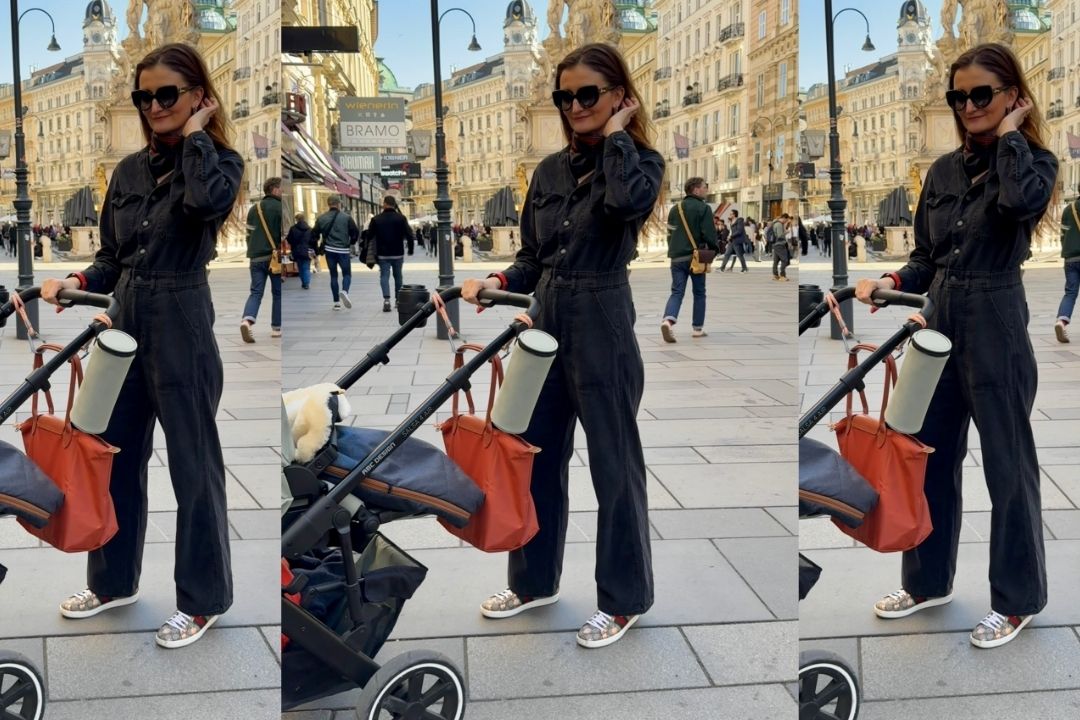
Finding out I was pregnant while living abroad, I had no idea what maternity leave would look like in a country I was still learning to call home. Like any expecting mom, I turned to a Google search. Suddenly, my feed was filled with stories about maternity leave in the U.S.—the politics, the pros and cons, and the endless comparisons. As an American currently living in Austria, I couldn’t help but wonder… how would my experience differ? What would it be like to have a baby in Europe? And what could I learn from a system that seemed to prioritize slowing down? One where it’s completely normal for expecting mothers to step back from work weeks before birth and ease into the final stretch?
What being pregnant in Europe is like
I was in Vienna with a new employer when I found out I was pregnant. At that time, I felt secure enough to start picturing life with a baby. After doing some research and listening to personal anecdotes from family and friends, I realized that the European approach to motherhood is less about logistics and more about honoring the transition into parenthood. Yes, there are routine doctor visits every other month through a Mutter-Kind-Pass, which translates to “Mother-Child Passport.” But beyond these structured check-ins, there’s a cultural emphasis on easing into pregnancy. This was a shock compared to the hustle culture in the United States. I remembered friends back home squeezing in late-night emails or running to meetings well into their third trimester, simply because slowing down was not always an option.
“I realized that the European approach to motherhood is less about logistics and more about honoring the transition into parenthood.”
I felt more prepared leading up to my birth
A couple of friends in Vienna shared with me that getting ready for motherhood often included courses with Hebammen, which are midwives who guide much of the pregnancy and delivery process here. Once you choose a hospital, midwives encourage parents to tour the facility, ask questions, and get comfortable early on. Many moms also attend optional classes on breastfeeding, breathing techniques, and newborn care.
Some also reduce their 40-hour workweeks to 30 hours (part-time), with a doctor’s approval, giving them more space to focus on their well-being. While similar resources exist in the U.S., they often depend on cost, insurance, and employer support. In Austria, these services are mostly funded by the government or the employer, helping moms to feel calmer and more prepared.

I was able to focus on myself during this time
Vienna is also famous for its coffee culture. With charming cafes spread across the city, many expecting moms gravitate towards the kinderfreundlich, or kid-friendly spots, to get a small preview of life with little ones. It’s common to see strollers parked by the entrance and staff who are accommodating.
In my own pregnancy, I knew staying active and grounded during my newfound spare time would be important. I embraced prenatal yoga, breathing, and sound courses, and even spent more time cooking healthier meals at home, which often felt impossible during a full-time workweek. Those quieter routines became some of the impressions I will carry with me for a long time.
Childbirth and recovery in Austria vs. the U.S.
Going into labor is one of the hardest and most stressful moments in life, no matter how prepared you are. Similar to many couples in the U.S., we selected a hospital in nearby proximity to our home. Driving to the hospital was not an option for us in Vienna, where my husband and I rely mainly on the public transportation system. But hopping on a metro while in labor seemed like a nightmare. We decided to call an ambulance, which was entirely cost-free. An ambulance ride in the U.S. can cost up to $1,300 on average, so not worrying about this step was a nice bonus.
The birthing process in Austria
Shifting to the birthing process in Austria, I was surprised to see that most of my interactions would take place with a midwife instead of a doctor. In the U.S., women can opt for a doctor vs. a midwife for the delivery process.
Such procedures as the epidural are conducted by a physician in Austria, while the delivery is handled mainly by a team of midwives. Many women also opt for a private midwife who is specifically hired for the delivery of the baby. This ensures a level of trust and eases some worries.
There may be a language barrier
One of the obstacles for women who are not native speakers can be that their level of understanding of the German language may not be on par with midwives working in any given hospital within Vienna, Austria’s capital city. This can make for some more difficult moments during the delivery process if language is an obstacle. In my case, most of the midwives in the delivery room spoke fluent English, and I was able to use some of my German skill set.
The cost of giving birth in Austria
While the average cost of giving birth in the U.S. without health insurance is $19,000, our new family of three left the hospital with a bill of less than $300. The cost we paid was only for my husband’s portion of the stay. My husband was able to stay in the room with me for the three days post-delivery, and his cost for meals and the extra bed in my room was approximately €80 (approximately $92) a day. My experience from the ambulance to the delivery and a three-day stay in a private room after delivery was completely covered by Austria’s government-run healthcare.
There are available resources for maternal mental health postpartum
In addition to the standard postpartum check-ups weeks after delivery, all new moms have access to a hospital psychologist for five visits on a complimentary basis. This gives moms an objective outlet to connect to a medical professional and speak about any concerns, frustrations, and general support for their well-being after giving birth.

Four key takeaways from my European maternity leave
Four key lessons during my maternity leave in Europe changed how I think about slowing down, working, and what it means to feel supported.
1. I didn’t realize how much I needed to slow down
One of my first surprises about maternity leave in Austria was that it begins before the baby arrives—exactly two months prior to the due date. In the United States, maternity leave can begin up to a month before delivery. However, it usually counts against the total leave time and is rarely guaranteed or paid. In Austria, those eight weeks are required by law, giving mothers a true, protected rest period before birth.
At first, this felt excessive to me. After a decade of working in the very busy luxury hospitality industry in New York City, I was no stranger to pushing through long hours and enjoying constant movement. But once my leave began, I quickly saw the beauty in that two-month pause. I found a perfect local baby shop to set up the nursery, stayed active with fitness classes, and took cooking courses for myself and my baby. Nesting naturally took over, too. I decluttered our home, donated old clothes, and refreshed the living room with a new couch.
My husband and I even took a babymoon to the Turkish Riviera. This offered the ultimate combination of sunshine, beach relaxation, and healthy Mediterranean food. Looking back, I am grateful I was not working right up until the final days—something some of my U.S. friends experienced, often out of necessity rather than choice.
As my due date approached, I loved having days where I simply rested. I enjoyed comfort foods and caught up on The Real Housewives whenever I was not running errands or staying active. It helped me to feel calmer and more in tune with what my body was about to accomplish.
2. My pregnancy was welcomed in the workplace
Telling your boss you’re pregnant can be nerve-wracking regardless of where you live. In my case, I was still relatively new in my position. I remember rehearsing the meeting with my management in my head and bracing for possibly awkward pauses in our conversation.
But when I finally did share the news, the response was exactly the opposite. The entire team was very considerate, organizing baby showers and offering understanding of my new travel limitations on regional business trips. Additionally, the Betriebsrat, or works council in German, reached out to congratulate me. And they ensured that my position would be waiting for me as soon as I was ready to return to work.
Compared to the U.S., where job security can depend on company policy and whether someone qualifies for FMLA, Austria’s clear protections lifted a huge weight off my shoulders. I could actually enjoy preparing for motherhood without worrying about my career.
3. The maternity leave can last up to two years
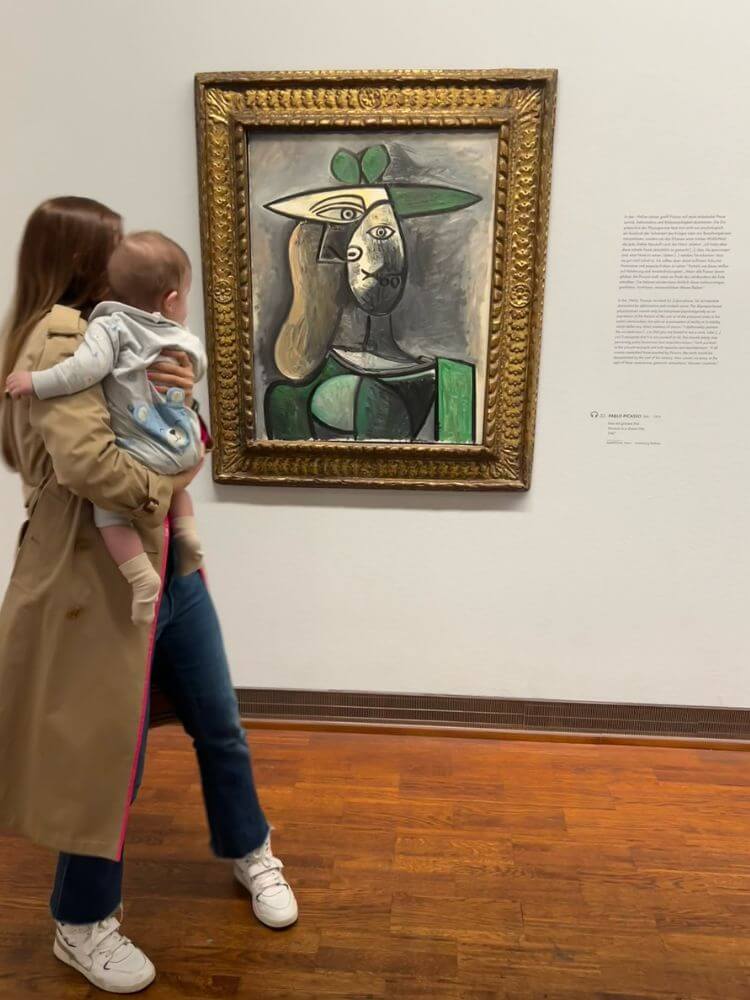
Living in Europe, I was struck by just how much choice mothers have when it comes to maternity leave. While policies vary across the EU, Austria allows moms to take up to two years off with strong job protection. Compared to the U.S., where most women receive only 12 weeks of unpaid leave under FMLA (and some do not qualify), the flexibility felt surreal.
Once I notified my employer of my pregnancy, it was my decision how long I wanted to stay at home. After conversations with my husband, as well as honest reflection, I decided that one year off felt right for our family. I also reflected on discussions with colleagues who suggested that the postpartum phase was tough for them. My midwife and friends also emphasized how my priorities would shift from myself to my baby. I would have to actively choose to prioritize the things that would benefit my recovery and new identity.
That year became a collection of quiet mornings, long stroller walks, and all the small firsts I never wanted to miss. I was there for my son’s first “mama,” his first laughs, and his joy in trying new foods. At the same time, after months of baby babble, I eventually craved adult conversation and creative work again. For me, one year was the perfect amount of time. I was able to soak in those fleeting baby days while still feeling ready to return to work.
“I was there for my son’s first ‘mama,’ his first laughs, and his joy in trying new foods. At the same time, after months of baby babble, I eventually craved adult conversation and creative work again.”
4. I was able to ease back into work, and daycare is free
What I did not expect when enrolling my son in daycare—or “Kindergarten” in German—was how slowly he would ease in. In Austria, it is normal for children to attend only a few hours a day for several weeks before attending full-time. I was fortunate to get a spot at the company Kindergarten. Although the commute from another district made mornings and evenings a bit hectic. On especially hectic days, I do consider how beneficial it is for my friends in Michigan to drive their kids around in a comfy car, while I navigate bustling metro stops in Vienna.
A big benefit of Kindergarten in Vienna is that everyone has the privilege of sending their children to day care cost-free. For those who opt for private Kindergartens like my son’s, the fees may vary. In our case, the cost is approximately €200, or $232 a month. This cost is for a full-time schedule and includes meals. To compare, the average cost of daycare in America is between $400 and $1,500 per month, depending on the state.
Reflecting on my maternity leave while living abroad
It has been a little over two months since I returned to work. Looking back, what made my maternity leave so meaningful was not just the time off. It was the chance to truly slow down and enjoy those early moments with my son. I actually feel more present and more efficient with work, knowing how much I need to juggle each day.
It also gave me the chance to travel to my family and friends in Michigan, with my husband joining us for short visits. The support, paired with being surrounded by loved ones, made a vulnerable phase feel grounded and full of connection. Of course, I also loved having a good bagel and American iced coffee while spending time in Metro-Detroit.
I know not every mother has the same support or opportunities. I truly feel privileged to experience this most important period of my life with a clear headspace. Maternity leave is still hard. After all, taking care of children is the hardest job in the world. Wherever you are in the world, I hope that you find the space to recover, rest, and feel supported.

Vildana Kurtovic, Contributing Writer
Vildana is a marketing and communications professional currently working and living in Vienna, Austria. When she’s not crafting marketing campaigns, she enjoys writing, traveling the globe, and spending quality time with her family—especially with her very active 1-year-old son. Originally from Bosnia, she grew up in metro Detroit, Michigan, and has since called Atlanta, New York City, and now Europe home.
