


Kindergarten can feel like as big a milestone for parents as it does for kids. Everyone is starting a new chapter, and there are likely feelings of excitement, nervousness, and maybe a few tears (for mom, too!) As a two-time kindergarten parent, let me assure you that you and your child have so much to look forward to this year. Kindergarten is this magical, middle year of childhood when they’re still little but learn and change so much. And, as parents, we can help them feel ready for their first year of school.
Most teachers will say kids don’t need to really learn anything to prepare for kindergarten when it comes to academic skills, outside of recognizing their name, letters, and numbers. Instead, kindergarten readiness means a child has developed skills like building independence, being social with peers, listening, and following directions. Caitlin Montouri, an NJ-based kindergarten teacher, shared, “Don’t worry so much about prepping for academics, but make sure your child knows how to open their lunch containers.”
Before their first day of school, here is a quick kindergarten readiness checklist and a few things you can do to support your future kindergartener as they get ready for this special milestone.
You May Also Like:
- 30 Fun Things To Do With Your Child Before They Start Kindergarten
- 20+ Unexpected Back-to-School Supplies Parents Need for a Smoother School Year
Quick Kindergarten Readiness Checklist
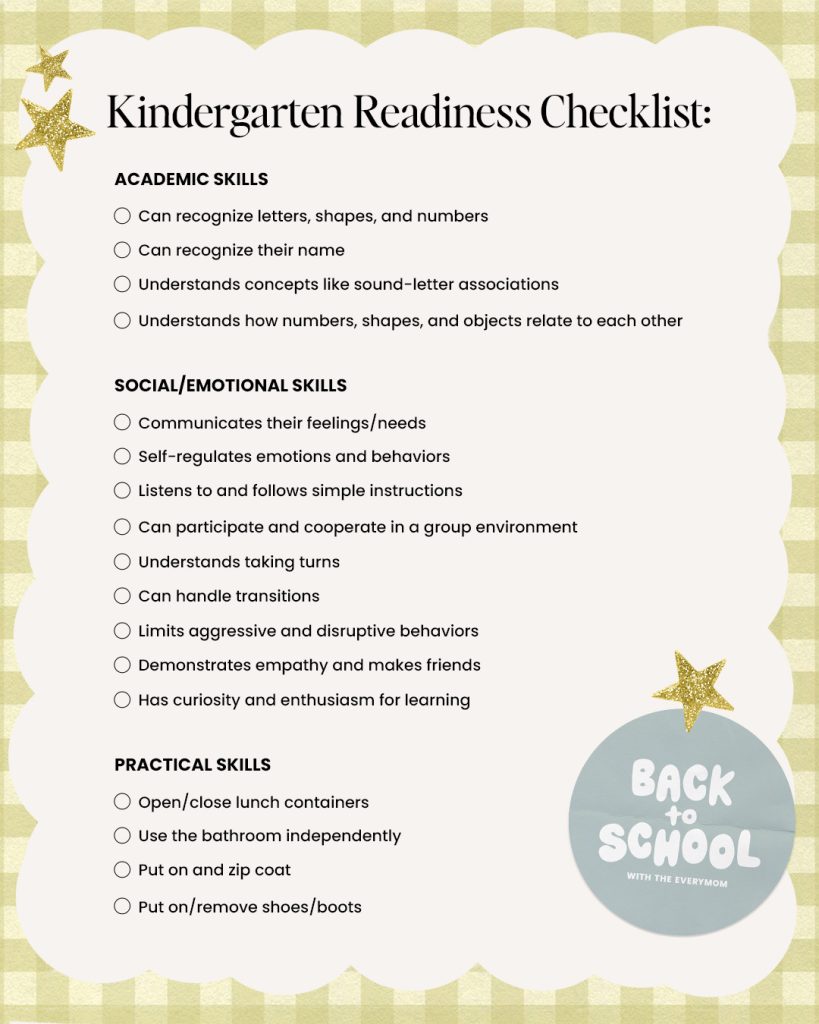
Using guidelines from the American Academy of Pediatrics (AAP), teachers, and experts, here is a general kindergarten readiness skills checklist for parents and caregivers. Of course, you know your child’s individual needs best, and the AAP recommends talking to your child’s pediatrician, preschool teacher, or childcare providers about any kindergarten readiness concerns.
Academic Kindergarten Readiness Checklist
- Can recognize letters, shapes, and numbers
- Can recognize their name
- Understands concepts like sound-letter associations
- Understands how numbers, shapes, and objects relate to each other
Social/Emotional Kindergarten Readiness Checklist
- Communicates their feelings/needs
- Self-regulates emotions and behaviors
- Listens to and follows simple instructions
- Can participate and cooperate in a group environment
- Understands taking turns
- Can handle transitions
- Limits aggressive and disruptive behaviors
- Demonstrates empathy and makes friends
- Has curiosity and enthusiasm for learning
Practical Kindergarten Readiness Checklist
- Open/close lunch containers
- Use the bathroom independently
- Put on and zip coat
- Put on/remove shoes/boots
Skills to Work on Before Kindergarten
If your child is still working on some of these kindergarten readiness skills, here are ways to support their learning at home.
Practice Letters and Number Recognition
Help your little ones learn the alphabet (and sing the alphabet) and count. Toys, kid-friendly board games, and books are a great way to support their learning. Parents can also use AI prompts to generate a printable tracing page to practice writing their name. The Everymom’s school coloring pages can help, too!
Learn Important Names and Phone Numbers
Not only should your kiddo be able to recite their first and last name, but it’s helpful for them to know how to spell and read their name, too. Their first name will likely be included in many places within their classroom (think cubbies, on bulletin boards, etc.), so it’s important for them to be able to recognize it. And if your child goes by a nickname, make sure they know their full first name and last name.
On a related note, it can also be helpful for your kindergartener to know the full names of their parents (not just “Mommy” and “Daddy”!) or guardians and memorize their home address and home phone number (or a parent’s cell phone number). If they’re still working on this skill, you can put a Post-It note with this information in their backpack.

Work on Fine Motor Skills
Doing summer art projects with safety scissors, crayons, markers, paintbrushes, and more can help kids develop their fine motor skills while using their imaginations.
Encourage Independence at Home
Kindergarten teachers will appreciate parents who work on their child’s independence skills in advance. Your little one should be able to use their lunch container without help, put on and zip their own coat, hang up their backpack, and get their shoes on and off. I’ll never forget one important reminder from kindergarten orientation: “Velcro shoes are a teacher’s best friend.”
“Velcro shoes are a teacher’s best friend.”
Practice Basic Hygiene
In addition to the at-home independence skills mentioned above, it’s helpful for your kindergartener to be able to handle basic hygiene practices—like washing their hands and going to the bathroom (and wiping properly!)—on their own. While it’s expected by most school districts that kindergarten students are potty trained before their first day, it’s not required. However, teaching your kiddo these basic hygiene tasks can be great at-home prep. Montouri emphasized the importance of making sure kids can easily get out of and back into clothing after using the restroom.
Build Social Skills
Summer offers plenty of opportunities for get-togethers with peers, so kids can start learning to build social skills ahead of kindergarten, like appropriately participating in a group, communicating their needs, and taking turns. Here are some ideas to get kids ready for the social aspect of school:
- Sign up for a summer camp, music class, dance class, storytime, or other opportunity for them to interact with children their age.
- Seek out local mom groups for summer get-togethers at parks or libraries.
- Once class lists are announced, set up playground playdates with other kids from class so your little one can meet some of their classmates ahead of time.
- If your little one is taking the bus to school, find other kids on their bus route to meet so they’ll have a buddy to recognize on the first bus pick-up day.
You can also “encourage your children to observe and talk about their experiences,” shared Alessandra DeMeo-Feinstein, a kindergarten teacher in New York. Social-emotional learning is so important, and “Conversations with adults who care enrich a child’s vocabulary and understanding of the world,” she shared.
“Conversations with adults who care enrich a child’s vocabulary and understanding of the world.”
Get Comfortable With a New Routine
Summer is a time when routines loosen a bit, but as the school year gets closer, they should practice getting ready in the morning. A morning routine chart can be a great way to set expectations for the day. Little ones can see the tasks for the day and see what’s coming next, which can help lessen anxious feelings. A consistent after-school routine can also help mitigate the after-school restraint collapse that often happens in those first few weeks.

Get Ready for Growth in Kindergarten
This one is for the kindergarten parents. Not only will your child likely lose their first tooth and learn to read this school year, but they’ll also gain independence, make new friendships, and likely grow a few inches. But before you get too emotional on the first day, former teacher and education expert Emily DeFabio has a tip: “If you’re worried about them starting school, don’t let your child see you worry. Put on a brave face; if you’re nervous, they will be, too.”
I had to save my tears for after drop-off, too. But when I picked up my youngest on her last day of kindergarten, I asked how she was feeling. “Not good,” she responded, with tears in her eyes. She had loved kindergarten and was going to miss her amazing teacher, seeing her friends every day, and sharing all her newfound knowledge with her family. Naturally, I started crying too, which is to say kindergarten is a magical year. Enjoy it!
FAQs About Kindergarten Readiness
What is the best age to start kindergarten?
Many school districts use a September 1 kindergarten cutoff, requiring children to be 5 by that date. Education experts suggest talking to your child’s daycare provider or preschool teachers to help determine their child’s kindergarten readiness.
Should I redshirt my summer birthday child?
Kindergarten redshirting—postponing a child’s entrance into preschool or kindergarten—could be the right choice for your child if they still need some social, emotional, cognitive, or physical growth before entering school. According to NWEA, a K-12 assessment and research organization, about five percent of kindergarteners are redshirted each school year.

Kathy Sisson, Senior Editor
Kathy Sisson has been a key contributor in the editorial parenting space for eight years, not only as a full-time editor at The Everymom but previously as a freelance writer for top parenting sites, including Scary Mommy, Motherly, Parent Co., and more. As an editor at The Everymom, she has produced hundreds of articles on a range of parenting topics, reviewed dozens of family-focused products, interviewed leading experts in the children and parenting world, and created viral parenting social media content. A mom of two, she is committed to sharing the honest, helpful, and often humorous stories of motherhood.
