


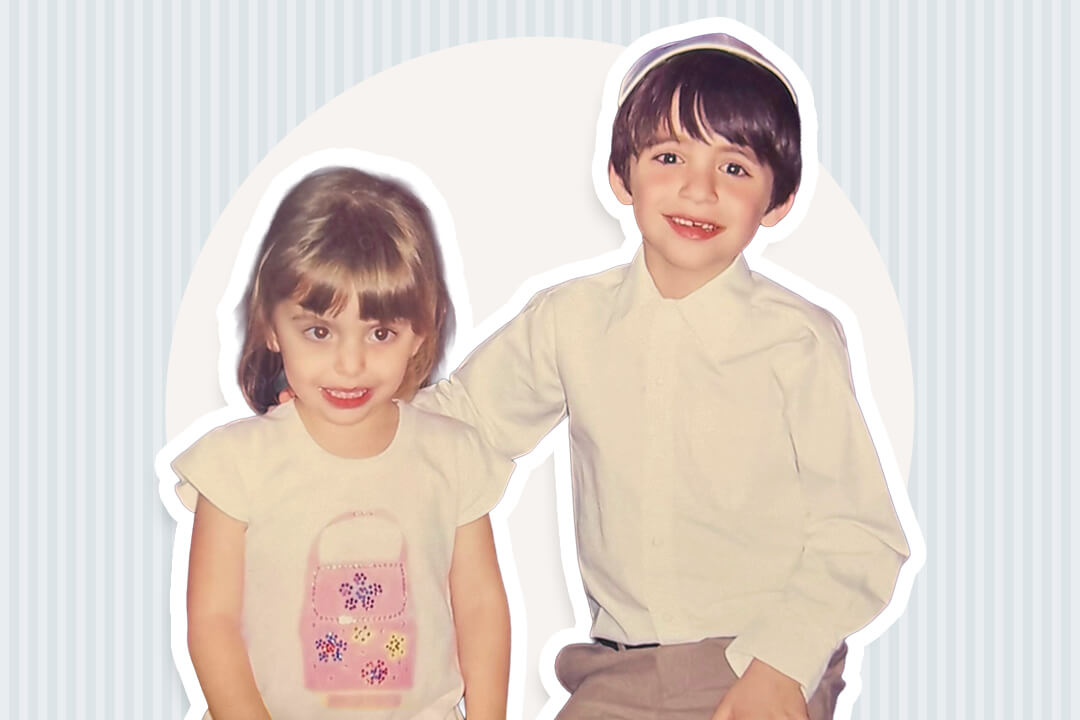
Growing up Jewish, I often had to explain the holidays I celebrated to my non-Jewish friends and classmates. “Yes, I don’t eat bread for a whole eight days over Passover,” and “No, my family doesn’t celebrate Christmas,” were common playground conversations when I would have to tell my friends I was missing school for an upcoming holiday. For a while, their confused faces caught me off guard. Being Jewish was such a core part of who I was—how could they not understand? But over time, I grew used to their puzzlement (though I still get some shocked glances when I tell people I never believed in Santa …)
However, there wasn’t a Jewish holiday that earned me more raised eyebrows than Yom Kippur. Marked the holiest day in the Jewish calendar, Yom Kippur is a day of atonement. As Jews, we are supposed to reflect on our wrongdoings as we enter the new year. Adults fast from sunrise to sunset, while also refraining from personal pleasures such as watching television or playing games. Many families also go to synagogue, with services ranging from one hour to many, many hours—not exactly a second grader’s dream.
Observing Yom Kippur looks different from family to family. On the surface level, it seems like a day that isn’t supposed to be enjoyed. Though children don’t fast, many are told to abstain from their favorite sugary foods or toys. It’s easy to understand how my non-Jewish friends would see this as something to be dreaded. For me, though, Yom Kippur was never about sulking in my house or overthinking every mistake I’ve ever made. Instead, it was a chance to reflect on the past year and prepare for the one ahead—and that was largely thanks to how my parents approached the holiday.
Talking about Yom Kippur in my household—from a kid’s perspective
I grew up practicing Reform Judaism, so I can’t speak for how all Jewish families observe Yom Kippur. For an Orthodox Jewish family, most of the day is spent at synagogue. But for me, the holiday was never just about praying for hours or abstaining from pleasures. In my household, the focus was always reflection and self-betterment, and that didn’t start on Yom Kippur.
What is Yom Kippur?
The ten days between Rosh Hashanah—the Jewish New Year—and Yom Kippur are called The Ten Days of Repentance. This year, Yom Kippur is October 1-2, 2025. As the new year celebrations draw to a close, this time period lends itself to serious family discussion.
Celebrating Yom Kippur as a child
Growing up, the focus in my household wasn’t, “Tell me everything you did wrong this year, and how you’re going to repent.” It was, “Let’s brainstorm some ways we’re going to approach the new year with a fresh perspective.” Yom Kippur wasn’t about looking down on myself and my shortcomings, but looking up at the year ahead. Most importantly, it was about getting excited about how it was going to be better than the one prior.
“Growing up, the focus wasn’t, ‘Tell me everything you did wrong this year, and how you’re going to repent.’ It was, ‘Let’s brainstorm some ways we’re going to approach the new year with a fresh perspective.'”
As a kid, this made all the difference. I treasured Yom Kippur not simply as a day of repentance, but as a day of reflection. While I still dreaded the long service at synagogue, I began to think of the holiday not just as a chance to skip school (though that certainly helped), but as a chance to start the new year with a clean slate. As I grew older and my problems and insecurities grew with me, I cherished this more and more. It was rare, after all, that the real world offered a window for reflection. As a kid, that was what Yom Kippur became for me—built-in self-care. (It definitely helped that I wasn’t fasting yet.)
How we reflected on the previous year in a positive (and kid-friendly) way
Making goals for the year ahead looks different depending on how old you are. As a young elementary schooler, it was hard for me to grasp what “reflection” even meant, let alone goal-setting. My world was still small, as were my aspirations, but my parents managed to bring the atonement elements of Yom Kippur down to earth for me and my brother. In fact, they made it a family activity.
Writing letters to ourselves
On the night before Yom Kippur, we would gather in the living room with paper and pencils. Then, we would write letters to ourselves (with the help of our parents). The focus of these letters was always “What am I going to do differently this year?” My parents would ask leading questions specific to us: What’s something you want to learn at school this year? How can you be a better friend in the months ahead?
This kid-friendly Yom Kippur activity focused on making the goals realistic for children, naturally helping us to confront our mistakes without making our shortcomings the center of the conversation. That night, we would sleep with the letters under our pillow, my parents spinning tales of the goals we wrote down, magically planting seeds of ambition in our heads. I would feel excited to wake up the next day and start checking off my list.
Creating our own Yom Kippur traditions
As a bonus, we would write a letter for our dog. This often left all of us in fits of giggles as we scribbled down goals like “Pee in the house less,” and “Stop chewing mom’s shoes.” We tucked it into his dog bed for the night, and even though it was all for fun, it filled this carved-out moment of family reflection with inside jokes and memories. I began to look forward to it, despite the prayers and boredom that lay ahead.
Making the day itself bearable, even if it’s not fun
Getting through services
Nothing can really make an elementary schooler look forward to hours spent at synagogue. I loved my Jewish community growing up—I joined Jewish youth groups, and volunteered at the preschool at my temple. Regardless, Yom Kippur services can be long, and cranky, food-deprived adults often lead to bickering amongst families.
Some of this is unavoidable, but not everything about Yom Kippur has to be dreaded. Often, the services feel inaccessible to kids, with prayers uttered in a language many don’t speak. My parents didn’t assume we’d be engaged in every prayer the Rabbi sang. They did, however, take the time to break down the portions of the service they knew we could understand—like Yizkor, the memorial service.
The Yom Kippur after my grandfather passed away, my parents prepared us for what it would be like to hear his name read aloud during this section of the service. We swapped stories about his life on the car ride over, and even though I would have rather been at home in my playroom, it felt satisfying to understand what the Rabbi was doing when he read my grandfather’s name, like I could finally parse some of that secret language. I still spent portions of the service hiding in the bathroom with my friends, watching the clock—it’s a right of passage, really, for Jewish youth—but that was no longer the whole picture. For once, I wanted to be in the room, at least at times.
Passing the rest of the day before break-fast
Once we got home, a new challenge unfolded: how to get through the day with two young kids, when their parents were hungry and tired. This will look different for families depending on how much they want their kids to experience on Yom Kippur. Some don’t allow them to watch television or withhold sugary foods. For my parents, the hours between synagogue and break-fast were about finding ways to pass the time that weren’t draining for them.
In the days leading up to the holiday, my parents made sure my brother and I had new toys that were suitable for independent play. This could be a craft we could do together, or a new Barbie for me, while my brother played on his Nintendo. We also broke up the day with family walks. They understood that depriving us of everything we loved would make us dread Yom Kippur—and they didn’t want that. Throughout the day, they also stuck to easy-to-prepare meals like chicken nuggets and mac & cheese. They certainly didn’t want to spend their day slaving away in the kitchen, smelling all the things they couldn’t consume until sunset. Plus, what kid isn’t happy with chicken nuggets?
By not making the entire day something to dread, Yom Kippur was bearable for both me and my parents. They were able to rest, and my brother and I were content to keep busy at home. The best of both worlds, on a holiday that is more solemn than joyous.
Breaking the fast with the whole family
Breaking the fast was, without a doubt, my favorite part of Yom Kippur. Though it was usually not my first time eating that day, having my whole family over to share a meal made the day feel like a true holiday. It’s Jewish tradition to eat challah and cake baked prior to the holiday, but my family did not limit ourselves to just these items. Sticking to non-meat dishes—far easier to digest, after a fast—we feasted on my mom’s famous noodle kugel, my grandma’s pudding, and pastries purchased from our favorite local Jewish bakery.
The family dinner was a reward. Partly for my parents, grandparents, aunts, and uncles, who had deprived themselves all day in preparation for this moment. And partly for me, my brother, and my cousins, who got to experience the magic of being Jewish through their eyes. Some of my earliest memories of Yom Kippur are of sitting around that table, listening to my parents crack jokes like, “Don’t stuff your face too fast, or you’ll end up in the bathroom for far longer than you’d like tonight.” Their shared moments of laughter and relief made being a full-fledged Jewish adult seem like a VIP club, one I desperately wanted to gain access to.
Despite the aches and pains that come with fasting, I found myself counting down the days to my Bat Mitzvah, even when it was years away. I wanted to fast. I yearned to unlock the entire Yom Kippur experience because my parents and the other adults in my family made it all seem so rewarding.
Celebrating Yom Kippur as an adult
Looking back, Yom Kippur wasn’t special because of the hours spent at synagogue. It wasn’t special because we deprived ourselves of our favorite foods. It was special because of the pride my parents instilled in me, simply because we got to celebrate the holiday loudly and proudly, despite centuries of antisemitism. We had the privilege of sitting around the break-fast table, cracking jokes about how we were going to be sick from the kugel. We got to feel prideful simply for being Jewish—for getting to experience these tiny, stolen moments of self-betterment, reflection, and Jewish joy.
That is what I’ve carried into adulthood. Heading to college, and then entering the real world, I don’t always make it to synagogue. I don’t always have a perfect fast. Maybe I don’t fast at all. But that’s okay, because for me, that isn’t what Yom Kippur is about. It’s about entering the new year with a clean slate, and remembering that, right now, I am lucky to get to observe Jewish holidays at all. It’s that pride I’ll pass down to my own kids one day (and the letter tradition, especially the dog part). Then, one day, they’ll pass it down to their children—because Jewish traditions only live on if we make them accessible and special for our youth.
This Yom Kippur, I hope to have an easy and painless fast. But I also hope to head into the new year with a clear head and fresh perspective. Most of all, I hope to capture even a tenth of the magic I felt as a child—because even so many years later, that was the real gift.

Rebecca Smith, Editorial Intern
As editorial intern, Rebecca works with The Everymom team on updating existing content, photo sourcing, pitching original articles, and more. She’s passionate about creating authentic and diverse online content, and is thrilled to help women of all ages feel represented by contributing to The Everymom.
