


Having a kid, I knew certain obstacles to expect. I was aware of the sleepless nights, the nap routine drama, and the process of going from milk to solids. But a few things have caused me parental stress quite as much as the topic of screen time. I wanted to ensure she had little screen time to avoid overstimulation and promote emotional well-being. Enter: low-stimulation shows for toddlers.
American Academy of Pediatrics (AAP) recommends no screen time until 18 months when toddlers can start to enjoy screen time with a caregiver as long as it’s high quality. For toddlers starting at age 2, they recommend limiting “non-educational screen time to about one hour per weekday and three hours on the weekend days.”
Typically, this is not a problem for us, as my daughter is in daycare and rarely hits that limit on a weekday. But, as she’s gotten older, I’ve also started focusing less on the timing and more on exactly what she’s watching. If given the choice, she will always gravitate towards a loud, colorful program like Blippi or other stimulating shows. But, I began to wonder if that was really the best use of her screen time. And that’s when I discovered low-stimulation shows for toddlers. Keep scrolling for 25 of the best shows for toddlers, organized by streaming service.
You May Also Like:
- 42 Best Movies for Toddlers That Parents Won’t Mind Watching on Repeat
- 111 of the Best Movies to Watch for Family Movie Night for Every Age
- I’m a ‘Sesame Street’ Mom—Where to Watch 33 of the Best PBS Kids Shows
What is Considered a Low-Stimulation Show?
As a parent, I’m a big fan of “low-stimulating” shows for toddlers. But what exactly does that mean? A low-stimulating show is typically considered one that is more soothing than the loud, colorful programming often associated with kid-oriented television.
A low-stimulating TV show is going to have slower pacing, less high color and loud sounds, and more calming storylines and visuals. Along with a simpler storyline, this type of programming also often has an educational aspect with a focus on learning—both for intellectual and emotional development. An educational series, for example, combines entertaining narratives with meaningful lessons, teaching values such as empathy, compassion, and problem-solving through engaging adventures and relatable characters.
How to Choose the Right Low-Stimulation Shows
When selecting shows for toddlers, it’s crucial to consider their individual needs and sensitivity levels. Some children may be more prone to overstimulation, while others may thrive in more fast-paced environments. Parents should look for shows with slower pacing, minimal loud sounds, and vibrant animation that promotes learning and imagination. Animated series like Tumble Leaf and Wonder Pets! are great options, as they provide fun storylines and valuable lessons without being too overwhelming. Additionally, shows like Mister Rogers’ Neighborhood and Sesame Street offer a mix of educational aspects and entertaining storylines that cater to young viewers. By choosing the right shows, parents can ensure their children enjoy screen time that is both enjoyable and beneficial.
The Benefits of Low-Stimulation Shows for Toddlers
With dozens of streaming services and kids’ programming options to choose from, what are the actual benefits of picking a low-stimulating TV series? Well, there are a few to consider.
- Avoiding Overstimulation: Perhaps the biggest effort is to reduce overstimulation. Any toddler parent can tell you that it’s easy for a kid to get overstimulated, and the bright colors and quick scene changes of most programming can certainly cause a quick meltdown. By contrast, a low-stimulation series can be a gentler experience that balances education with a calmer screen time.
- Encouraging Creativity: With low-stimulation shows, the programming often leaves more “room” for toddlers to focus, process the information, and learn at their own pace. Instead of falling into a trance looking at bright colors and listening to loud sounds, kids will have a space to interact, whether that’s singing along, reacting to the characters in the show, or using their imagination.
- Educational Aspect: While not all low-stimulation TV shows for toddlers will teach the ABCs and 123s, the shows often come with an educational element in some form. Often, that could be educating kids on emotions, whether it’s through a character learning something new or going through a process they may be able to relate to.
While not necessarily a toddler benefit, this toddler parent would also like to share that a low-stimulation show benefits the parents! My world is in constant chaos taking care of a rambunctious kid, so when it comes to screen time, I love to sit with her and watch a show that is less stimulating for both of us and also provides opportunities for me to help learn along with her.
Low-Stimulation Shows on Netflix
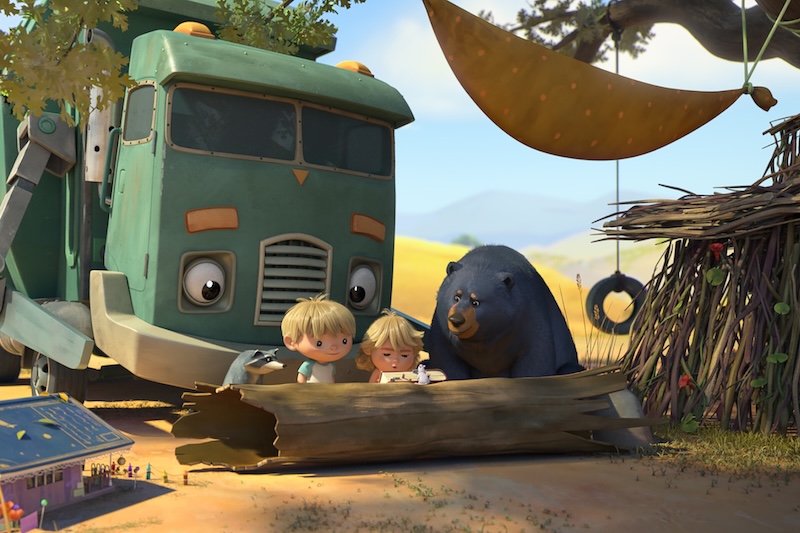
Trash Truck
- Best for: imagination, friendship, creative problem solving
- Age: 2+
- Stimulation level: very low
If your toddler is obsessed with standing outside to say “hello” to the trash man on trash day, you don’t want to miss out on watching Netflix’s toddler favorite show called Trash Truck. 6-year-old Hank and his best friend—a trash truck—bring their audience along with them on fun adventures.
Ms. Rachel
- Best for: language development, speech, songs, imitation
- Age: 1+
- Stimulation level: moderate
Ms. Rachel is a hit with toddlers and first became popular through her YouTube channel. It’s now a Netflix series! If you haven’t heard of the toddler-favorite figure yet, Ms. Rachel is an early childhood educator creating videos featuring nursery rhymes and educational aspects, such as learning animal sounds, numbers, letters, and counting. Each episode is made up of a compilation of songs and lessons with a heavy focus on speech and learning to say certain words.
Puffin Rock
- Best for: nature, calm storytelling, curiosity, animals
- Age: 2+
- Stimulation level: very low
Puffin Rock is an animated Irish children’s TV series that Americans can find streaming on Netflix. The series follows a young puffin named Oona and her baby brother Baba as they explore their world on Puffin Island, located off the Irish coast. The show emphasizes environmental awareness and nature through simple storytelling.
Lucas the Spider
- Best for: gentle humor, social-emotional learning, imagination
- Age: 2+
- Stimulation level: low
Explore with the cutest jumping spider and his friends: Findley the housefly, Bodhi the chameleon, and Avocado the French bulldog. This show is perfect for a little one who is so curious!
Low-Stimulation Shows on PBS Kids
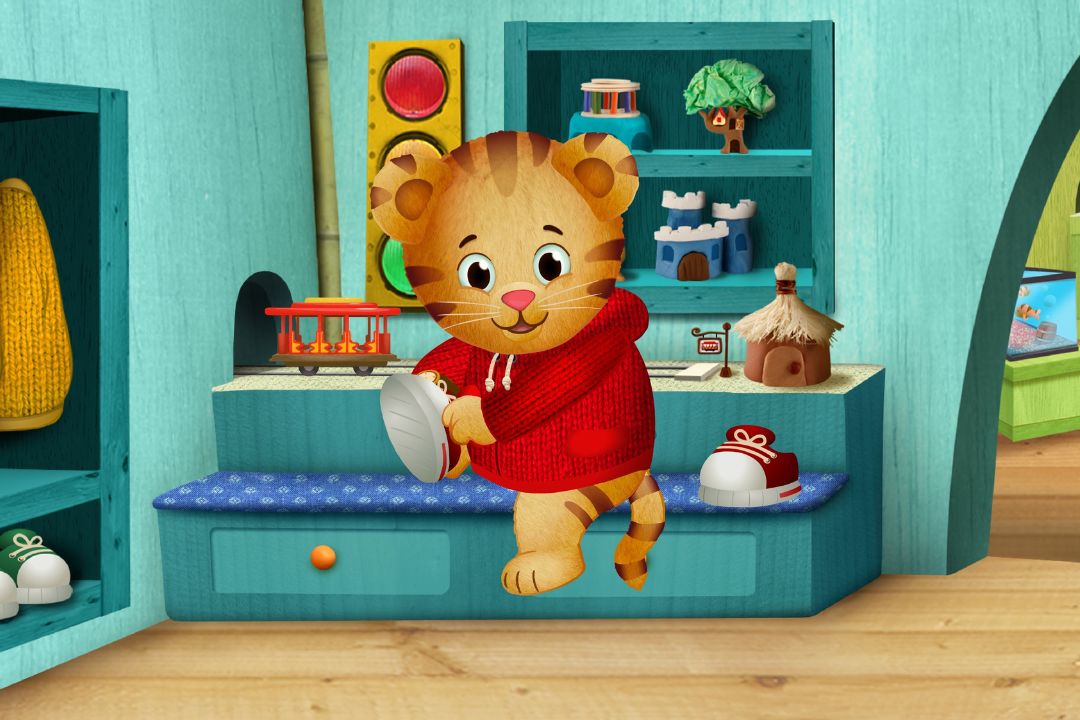
Daniel Tiger’s Neighborhood
- Best for: emotional regulation, everyday routines, social skills, navigating new experiences
- Age: 2+
- Stimulation level: low
This animated show is beloved among toddlers, and it’s easy to see why. Inspired by Mister Rogers’ Neighborhood, Daniel Tiger’s Neighborhood follows Daniel and his family and friends through relatable everyday experiences in the Land of Make-Believe. For little ones navigating new experiences and everyday “firsts,” Daniel offers simple, age-appropriate strategies for handling everything from getting ready in the morning to managing big feelings and practicing social skills.
One of the show’s biggest strengths is its memorable strategy songs, which give kids simple tools they can use beyond the screen. Whether they’re learning a new routine, working through a tricky social situation, or preparing for a new milestone, Daniel helps make those big toddler moments feel a little more manageable. With new episodes now streaming on PBS KIDS, it’s also a timely pick for little ones settling into a new school year and all the new experiences that come with it.

Curious George
- Best for: curiosity, problem solving, exploration
- Age: 3+
- Stimulation level: moderate
The show follows the misadventures of a curious monkey named George, as well as his owner, the Man with the Yellow Hat. Based on the popular children’s book series, each episode focuses on George’s curiosity, exploration of the world, and problem-solving.
Sesame Street
- Best for: early education, language, numbers, social skills
- Age: 2+
- Stimulation level: moderate
Sesame Street is a classic low-stimulation show for toddlers for a reason, with episodes (and fans) spanning decades. The show has a diverse cast of puppets and characters who teach fundamental skills and lessons through songs, stories, and sketches. More episodes and spin-offs are also available on Netflix.
Mister Rogers’ Neighborhood
- Best for: emotional development, empathy, real-world understanding
- Age: 2+
- Stimulation level: very low
Since 1968, Fred Rogers has made a long-lasting and positive impact on his viewers. This cherished show explores the themes of kindness, love, what it means to be a good neighbor, and so much more. Rogers takes you to the Neighborhood of Make-Believe on his iconic red trolley, where you get to meet his puppet friends, like King Friday XIII and Lady Elaine.
Elinor Wonders Why
- Best for: science, nature, curiosity, asking questions
- Age: 3+
- Stimulation level: low
Being curious is a wonderful thing, and a curious bunny rabbit named Elinor encourages little observers to ask the question “Why?” This show is perfect for little ones aged 3 and up.
Clifford the Big Red Dog
- Best for: friendship, social-emotional learning, problem solving
- Age: 3+
- Stimulation level: low
Emily Elizabeth and her Big Red Dog, Clifford, are always off to new adventures filled with laughter and kindness. Introduce your little one to this kid-favorite children’s television series.
Low-Stimulation Shows on Disney+
The New Adventures of Winnie the Pooh
- Best for: imagination, storytelling, friendship
- Age: 2+
- Stimulation level: low
There have been quite a few iterations of Winnie the Pooh. This one from the ’90s is a particularly great series to look at for toddlers. The episodes follow Winnie the Pooh and his friends, with the show highlighting themes of friendship, kindness, and problem-solving.
Bear in the Big Blue House
- Best for: social-emotional learning, routines, music
- Age: 2+
- Stimulation level: low
Sing along, move, and explore with Bear and all of his friends in the Big Blue House. In this toddler—and parent—favorite show, kids learn about teamwork, friendship, and so much more. Don’t be surprised if you find yourself singing along with the Big Blue House crew.
Low-Stimulation Shows on Amazon Prime Video
Tumble Leaf
- Best for: science, discovery, imagination, problem solving
- Age: 3+
- Stimulation level: low
Available as a Prime Original, Tumble Leaf follows Fig the fox and his best friend Stick in the world of Tumble Leaf. Taking place in a whimsical world, the show encourages imaginative thinking in young kids.
The Big Comfy Couch
- Best for: imagination, movement, emotional expression, routines
- Age: 2+
- Stimulation level: moderate
Loonette the clown and her cute clown doll, Molly, get creative making crafts, telling stories, and dancing on the big, comfy couch. If you’re looking for a low-stimulation show for toddlers, add this classic kids’ show to your list.
Wonder Pets
- Best for: teamwork, empathy, helping others
- Age: 2+
- Stimulation level: moderate
When you need to get a job done and save the day, you can’t always count on the Wonder Pets crew. Join Linny the guinea pig, Ming-Ming the duckling, and Turtle Tuck as they travel the world to help everyone they encounter. This show is all about teamwork, and the music is great, too!
Guess How Much I Love You
- Best for: gentle storytelling, nature, parent-child relationships
- Age: 2+
- Stimulation level: very low
Toddlers who love the book Guess How Much I Love You will surely love the show. Enjoy the stories of Little Nutbrown Hare in the watercolor world of sunny meadows and mossy trees. The stories, music, and visuals are so calming for toddlers.
Kipper
- Best for: calm storytelling, everyday adventures, friendship
- Age: 2+
- Stimulation level: very low
Episodes of Kipper are right under 10 minutes! A curious pup named Kipper explores the world with his friends, learning about life along the way.
Low-Stimulation Shows on Paramount+
Little Bear
- Best for: calm storytelling, imagination, nature, friendship
- Age: 2+
- Stimulation level: very low
Follow along with Little Bear, a curious and kind young bear. Each episode of the show focuses on themes like friendship and family, encouraging creativity and empathy for younger viewers.
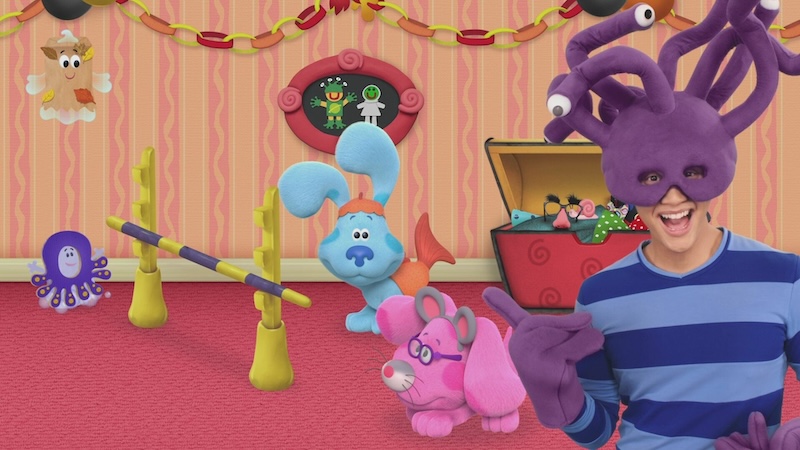
Blue’s Clues & You!
- Best for: interactive learning, problem solving, language, pre-reading
- Age: 2+
- Stimulation level: moderate
Blue’s Clues is a ’90s classic and has stood the test of time. Its newer series, titled Blue’s Clues & You! is just as good as the original. A pup named Blue solves mysteries along with her owner, her household pals, and her most trusted Blue’s Clues advisors—the audience, of course! Not only is this show adorable, but it’s interactive, too, getting little ones to problem-solve at an early age.
Low-Stimulation Shows on Apple TV
Franklin
- Best for: friendship, independence, social-emotional lessons
- Age: 3+
- Stimulation level: low
Franklin originally premiered in the ’90s, which means it has been beloved by a handful of generations. The story follows 6-year-old Franklin, a turtle, as well as his friends living in the village of Woodland. The show features frequent appearances by Franklin’s parents, who are often there to lend a helping hand.
Sarah & Duck
- Best for: imagination, curiosity, whimsical storytelling
- Age: 2+
- Stimulation level: very low
This British animated show follows Sarah, a 7-year-old girl, and her best friend, a duck appropriately named Duck. The episodes help kids to learn about friendship and problem-solving, with an emphasis on creative and imaginative thinking.
Stillwater
- Best for: mindfulness, emotional regulation, perspective-taking
- Age: 3+
- Stimulation level: very low
Karl, Addy, and Michael have a neighbor named Stillwater. And he’s not just any ordinary neighbor: he’s a panda! This wise panda teaches the three siblings about the world and each other.
Frog and Toad
- Best for: friendship, emotional literacy, gentle storytelling
- Age: 3+
- Stimulation level: very low
Based on the literary classic by Arnold Lobel, Frog and Toad are the bestest of friends—even with their differences. Frog likes adventures, and Toad is quite a homebody, but the pair are always there for each other.
Maisy
- Best for: early learning, language, everyday experiences
- Age: 1+
- Stimulation level: low
This animated series is based on the beloved books written by Lucy Cousins. Maisy is an adventurous mouse and has a knack for making everything into an adventure.
Low-Stimulation Shows on Peacock
Barney & Friends
- Best for: songs, social skills, early learning, routines
- Age: 2+
- Stimulation level: moderate
Millennials remember Barney well. The friendly purple dinosaur sings, dances, and goes on adventures along with friends Baby Bop, BJ, Riff, and a cast of kids (which includes current stars like Selena Gomez). The series is targeted at ages 2 to 5.
Is ‘Bluey’ a Low-Stimulation Show?
You may have noticed one big-name TV show missing from the list of low-stimulation shows for toddlers: Bluey. The popular Australian series follows the life of Bluey, a Blue Heeler puppy living with her mom, dad, and sister. The show has become a worldwide hit for its heartwarming stories, short episodes, and content that appeals to both kids and adults.
As far as the criteria for low-stimulating television, Bluey tends to ride the line a bit. It’s certainly calmer programming. It does have some of the louder sounds and quicker scene changes that would place it outside of being considered a fully low-stimulating show for toddlers.
Just because it’s technically not a “low-stimulating” show for toddlers doesn’t mean there aren’t other benefits that make Bluey a good show to consider for younger kids. It features shorter episodes, relatable storylines, and an emphasis on themes of kindness. Making Bluey a show that the entire family can enjoy. If you are looking to keep stimuli to a minimum with screen time, you may want to consider just allowing a short episode or two of the show at a time.
FAQs
What are the calmest shows for toddlers?
The calmest shows on this list are Stillwater, Mister Rogers’ Neighborhood, Puffin Rock, Little Bear, Kipper, Guess How Much I Love You, Frog and Toad, and Sarah & Duck.
Is Bluey low stimulation?
No. Bluey has some louder sounds and quicker scene changes that would place it outside of being considered a fully low-stimulation show.
Is Ms. Rachel low stimulation?
Ms. Rachel is considered a low-stimulation show (more on the moderate side). It has aspects of slow pacing, predictability, and repetition, giving it a thumbs-up as a low-stimulation show.
Is Cocomelon a low-stimulation show?
No. Cocomelon is not a low-stimulation show because it has faster pacing and quick scene changes.
Is Daniel Tiger low stimulation?
Yes. Daniel Tiger is a low-stimulation show for toddlers.
What are the best low-stimulation shows for a 2-year-old?
The best low-stimulation shows for a 2-year-old are Trash Truck, Daniel Tiger’s Neighborhood, Sesame Street, The New Adventures of Winnie the Pooh, Wonder Pets, and Little Bear.
What are the best low-stimulation shows on Netflix?
The best low-stimulation shows on Netflix include Trash Truck, Ms. Rachel, Puffin Rock, and Lucas the Spider.

Morgan Flaherty, Contributing Writer
Morgan is a full-time writer, editor, and mom. Along with her work as a contributing writer for The Everymom on all things Disney World, beauty products, and the latest fashion trends, her writing has appeared in Well + Good, InStyle, Scary Mommy, Byrdie, and Baby Chick.

Patty Schepel, Associate Editor
As the Associate Editor, Patty works with The Everymom’s team on pitches, creating original articles, updating existing content, photo sourcing, writing shopping product descriptions, editing freelance articles, and more. With Patty’s passion for writing, experience as a mother of two, and expertise as a pediatric nurse, she brings a thoughtful and informative perspective to The Everymom.
