


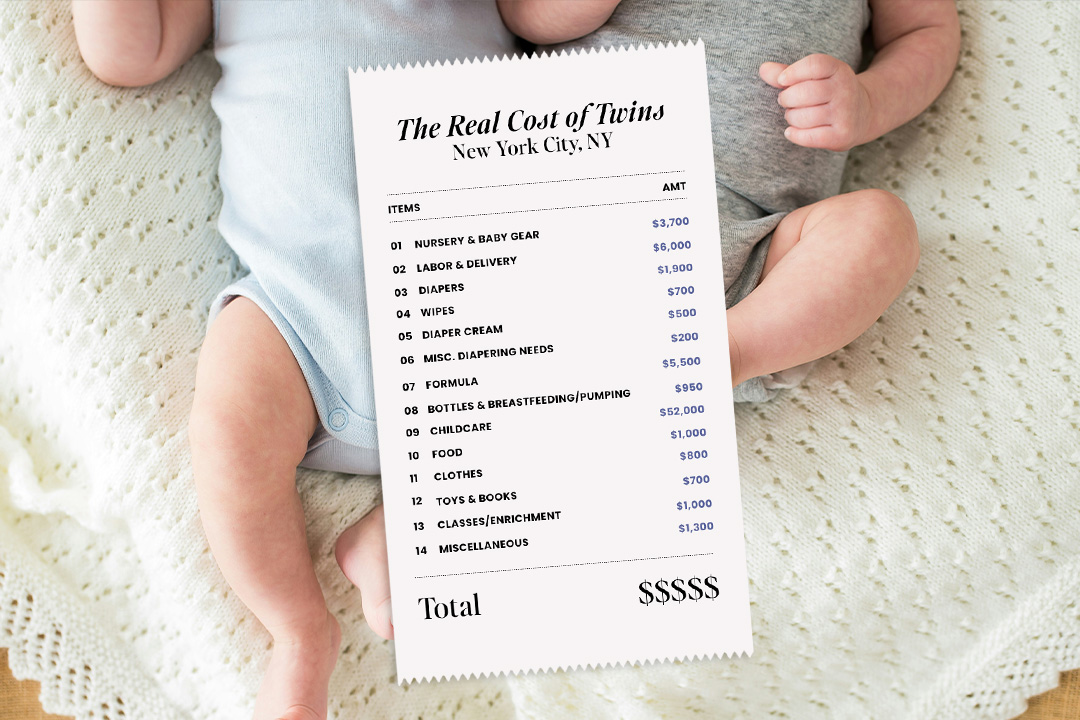
Having twins was completely unexpected. Despite preparing as well as I could during my pregnancy, I think it’s one of those unique experiences in life you cannot fully prepare for. Becoming a mother changed everything about my identity—what I value, how I relate to people, and how I move in the world. And it significantly changed my and my partner’s finances. Now that I’ve made it through a year with twins, you might be wondering: how expensive is it really to have twins? From childcare to baby gear to diapering needs, and feeding, I calculated the cost of raising my twins in their first year of life.
Needless to say, the sticker shock was real. I’ve read that the cost of twins is more than double the cost of having a single child. According to Cost Check USA, it can be $20,000 to $40,000 per year in New York City. Here, I’m breaking down the cost of having twins in 2026 during the first year of my twins’ lives. Plus, I’m sharing money-saving tips and what I wish I had done differently.
You May Also Like:
- Why Are We Barely Staying Afloat as a Middle-Class Family?
- You Can Have ‘The Village’—You Just Have to Pay for It
Was I financially prepared for twins?
My husband and I knew we wanted children and had savings for when the time came. However, being prepared financially wasn’t exactly how we had pictured it once we knew we were having twins. When we began to do some research, we realized how quickly costs would balloon. A crib? The dollar signs flashed before my eyes when it set in that we needed two. For families with one child, it makes sense to buy one crib and eventually transition the older child to a toddler bed when the next child is born. Plus, by having one child at a time, parents can use hand-me-downs for much of the other gear and clothing.
But in our case, we needed to buy two of everything right off the bat. After having a general understanding of the costs, we looked into purchases that would last for years to help control future costs. That included being mindful of buying convertible car seats (not just infant ones), convertible cribs, and buying dressers instead of changing tables. Items like these could continue to be used as they got older.
Tips on budgeting for twins
My top tip for the first year is to be savvy about finding deals: buying items on sale, using baby registry discounts where we can, using credit card benefits strategically, and buying items that would last us through a few years.
Take advantage of sales and discounts
For the most part, when it came to preparing for twins, we took advantage of discounts and sales. Many retailers offer 15% off items parents purchase from their registry, so we made sure we were stacking discounts where possible. Finally, our credit cards offered cash back on certain purchases, and we strategically used them to maximize those benefits.
Accept gifts and be thoughtful about your registry
Second, if you have one, rely on your village to help support some of the purchases. Think carefully about your registry and focus on the “big ticket” items vs. things like clothing and blankets. For the more expensive items, on most registries, you can allow for multiple people to contribute. Parents can also opt for contributions to things like “Diaper Funds,” which we definitely would have used in a matter of months.
Find twin parenting groups for used gear
I also highly recommend finding parenting groups nearby (often there are twin-specific ones!). There, you can get hand-me-down gear, furniture, and clothing for free or at a lower price. I certainly wish I’d known about these beforehand. As the girls have outgrown gear, we’ve posted items for sale or to donate, and they are quickly picked up.
Take advantage of low-cost and free activities
In terms of activities and enrichment, during the first year, the babies don’t need a lot of toys. It’s also possible to find free or low-cost options through public libraries or city programs, so you can manage those expenses based on what works for your family. The reality is that the biggest expense is often childcare, and it’s harder to find ways around it. It is well documented that rising childcare costs are a crisis in this country, forcing families to make tough choices about how to spend their income and where to live.
There are creative solutions that can lower costs. I’ve certainly heard of new parents who move or are lucky to live near family and get help from grandparents or other family members. Others try small family co-op arrangements. I’ve also seen that daycare costs are lower outside major cities and know of parents who go well out of their way during their commutes to find more affordable daycare options. It is still likely to be a major expense (double with twins!) and continues to be a systemic problem that requires real solutions.
The cost of the nursery and baby gear
The expenses for prepping the twins’ nursery and stocking up on baby gear came up before the babies were born. We were fortunate that our family and friends gifted us so much of the gear we would need throughout the first year, including cribs, car seats, and high chairs. Some parents keep twins in the same crib, but generally, you need two of everything! Purchases we made included a recliner, a dresser, mattresses, and a double stroller that could handle city sidewalks.
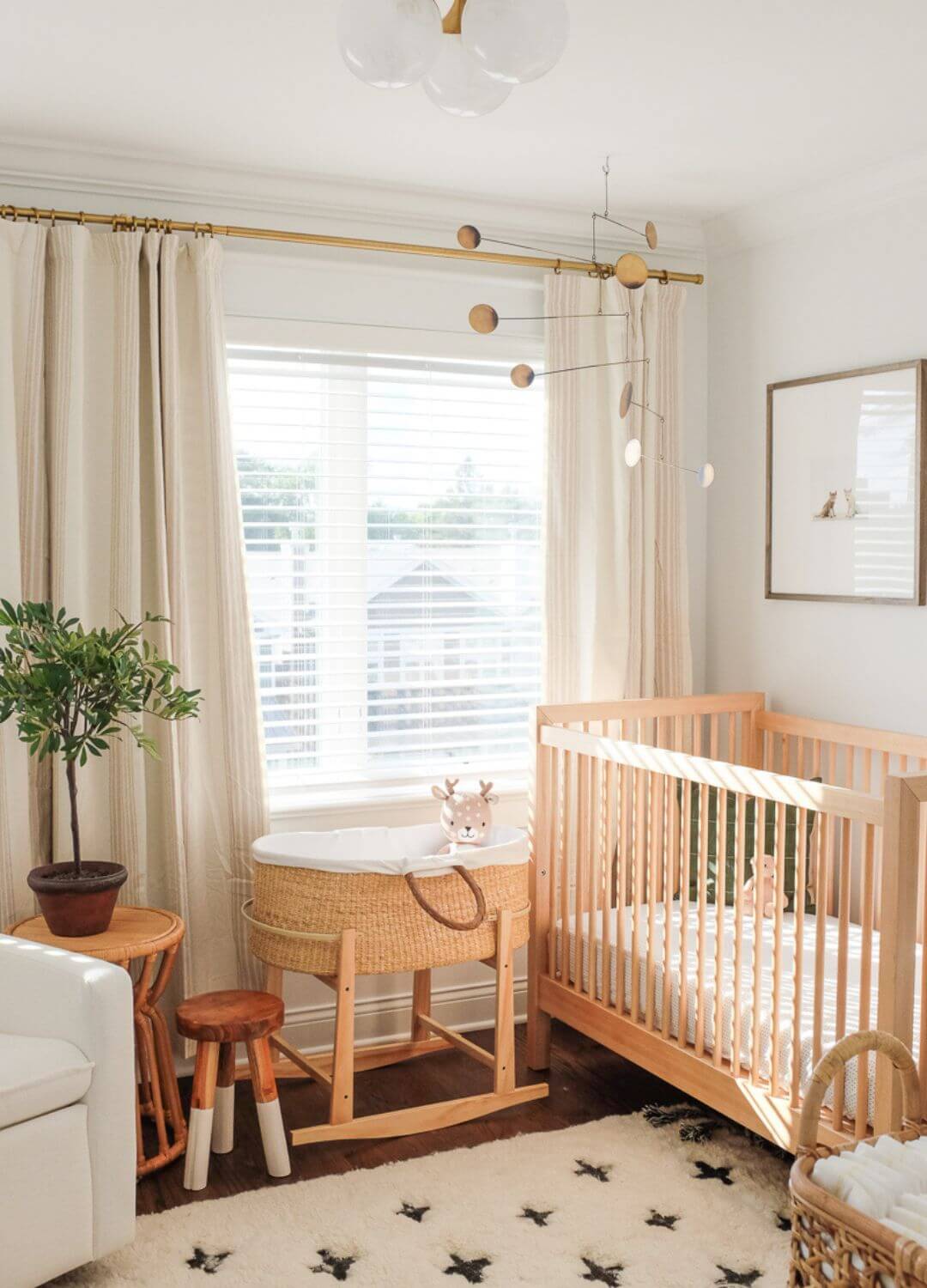
Outside of these pretty essential items, we kept the nursery as a simple setup since we had limited space and live in a rental. We chose convertible cribs that had bassinet-to-toddler bed configurations. Even though it was more expensive upfront, we’ll be able to use these same cribs for years.
If we’d had to purchase all of the items ourselves, this bucket would have been closer to $5,500. My most important recommendation to expecting parents is to start a registry early. This allows for multiple people to contribute to gifts and share them with anyone who asks about how they can help.
Nursery and Baby Gear: $3,700
The hospital cost
My twins were born at the start of the year, so even though I have health insurance, we had to cover our entire in-network deductible with the delivery and neonatal care for the girls, which was around $6,000. Without insurance, these costs could have exceeded $40,000.
On average, women delivering twins are more likely (75%) to have C-sections than those having one child (32%), according to the NIH. C-sections are more expensive and may require longer hospital stays after delivery. Thankfully, my girls did not have a NICU stay—which can be a common experience when having twins. If this were the case, it would have increased our hospital expenses. Even with health insurance and a relatively low-impact hospital stay, this is not an insignificant sum. It’s important to acknowledge that the expense of childbirth can be economically crippling for parents.
Labor and Delivery: $6,000

The cost of diapering needs
I will admit the total cost of a year’s worth of diapers is lower than I anticipated, given how many times we ordered them. Luckily, we were gifted a few boxes of diapers and had a few passed down from friends whose babies had outgrown them. So, this is another line item that could have been higher on average. Our $1,900 diaper expense comes out to almost 5,000 diapers, which is roughly 6.8 diapers per child per day. Our Aquaphor and diaper cream tally (included under diapering needs) was about $500.
Diapers: $1,900
Wipes: $700
Diaper Cream: $500
Other Diapering Needs: $200
The cost of feeding twins
I desperately wanted to breastfeed and to do it for as long as possible. But breastfeeding twins was a tough and complicated experience, both physically and emotionally. Tandem feeding was near-impossible, so I breastfed one at a time and pumped in between feeds so the other could take a bottle at the same time. I could never build a “breast milk bank” since we needed so much milk every day. Early on I had to supplement with formula.
By week 12, my supply was not even close to what they needed in a day. Eventually, we made a switch to formula-only. My experience is not unique. According to the NIH, only 4% to 22% of twins globally are exclusively breastfed, compared to 48% of singletons. This means that twin families also contend with the additional expenses of formula and bottles throughout the first year at higher rates.
Formula: $5,500
Bottles, Breastfeeding, and Pumping expenses: $950
“Only 4% to 22% of twins globally are exclusively breastfed…This means that twin families also contend with the additional expenses of formula and bottles.”
The cost of childcare
By far, our largest child-related expense during the first year was childcare. My husband and I were both employed full-time, so we needed around 45 hours of childcare a week. In Brooklyn, daycares can range from $2,500 to $3,500 a month, per child.
After doing the math, the cost of having a nanny was just slightly higher than a daycare, given that we were paying for two kids. Luckily, I had the ability to work from home after maternity leave. Since my overwhelming preference was to be near the girls throughout the day, I ultimately decided to hire a nanny. Our nanny started working for us after the girls were 3 months old. My aunt also had moved in with us for the first few months (truly the most lifesaving gift we received).
We also went on the occasional date night (less frequent than we would have liked going into parenthood—sleep deprivation is tough!), so the cost of babysitters was included in our childcare expenses.
Childcare: $52,000
The cost of food
I estimate that our weekly grocery bill went up about $40 once the girls started eating solids at 6 months. That is probably higher now that they are toddlers (not to mention they have developed an insatiable appetite for berries) and generally eat more and drink a lot of milk. For the twins alone, the cost of their food over the year was roughly $1,000.
Food: $1,000
The cost of baby clothes
This is another line item that can add up fast with twins, especially as babies grow so quickly. Those first few months, outgrowing outfits in what felt like a matter of weeks. We were fortunate that my mother, aunt, and sisters are avid shoppers. Between them and gifts from friends, we barely spent money on clothing during the first year. We also got hand-me-downs from friends, including some still with tags on! What we spent on were pajamas, shoes, and sleep sacks, though I couldn’t refuse a few adorable dresses.
I’ve learned that baby clothes often go on sale, and discounts can be up to 50% off. For items like pajamas, I typically wait for sales when the girls are about to size up. There are also resale stores around our neighborhood that we’ve both purchased from and sold clothes to. During the first year, babies grow so fast that they barely use some of their garments. So more often than not, the clothes have barely been worn.
Baby Clothes: $800
The cost of toys and books
We got multiple shelves of hand-me-down books from my niece and nephew. Plus, a friend got us a year-long subscription to Lovevery boxes, among other toys that were gifted to us. Even with the generosity of our village, it was very hard not to want to buy a few toys for them. Some of the toys that got the most usage were very simple developmental toys, like stackable cups and rings.
My recommendation on toys would be to keep it simple. You might find that grandparents and other family members want to gift the babies toys, too. When it comes to gifting baby toys, it’s OK to give friends and family direction. It helped to share a wish list.
Toys and Books: $700
What I spent on baby classes
We signed the girls up for music class and classes at a children’s play gym to vary their experiences and provide enrichment opportunities. I can’t say for sure if I did this for them or for me. But I loved seeing them sway to the beat in music class and gather the courage to climb steps and go down a slide. I recognize this is more of an added expense and may not be possible or necessary for other families. In fact, now that the weather is nicer, we’re foregoing the children’s play gym and visiting public playgrounds. This has been great for the girls since they learn so much from observing older kids.
There are also a lot of free children’s activities and mommy-and-me classes offered through the public library or the city. Bookstores and children’s stores also have free events like story time, so there are certainly opportunities for enrichment that do not come at an added cost.
Classes and Enrichment: $1,000
Even with the generosity of our friends and family, which certainly helped make this year more manageable, this new reality has forced us to rethink everything about how we budget and spend our money. For example, our social lives took a significant hit. Since we’re in the midst of bedtime during most social activities, we are often just too tired to go out. It’s also an expensive line item we’re trying to manage. Meals with friends, nights out, theater tickets, movie tickets, and travel expenses were significantly down last year.
We now think twice about buying clothing items or household items that are not necessities. Where before we would have easily gone through with the transactions. Other miscellaneous costs for the twins included pacifiers, probiotics drops, vitamin D drops, iron supplements, first aid kits, bathing supplies, and baby proofing expenses.
Miscellaneous: $1,300
The grand total of having twins
In the first year of my twins’ life, I estimated that we spent around $76,500 on things like childcare, gear for twins, diapering, feeding, and other related expenses. The first year is often the most expensive (at least according to New York Life, though presumably this is all pre-college tuition). It’s easy to see all the dollar signs when looking at the cost of raising twins. Because, yes, twins are expensive.
But that just means my partner and I have to prioritize where a bulk of our expenses should go. In fact, this fall, I’ll try to get the girls in a part-time early education program to cut down on our childcare costs. And luckily, the twins have weaned off their formula. One day, we will be bold enough to attempt potty training and rid ourselves of diapers. At that point, I’ll be looking forward to swapping those dollars for other expenses: soccer and/or ballet, school materials, Elsa costumes, and, we can’t forget, more food. The reality is that having children, especially twins, is always going to be a significant expense. For me, I try to remember that a lot of these big expenses are temporary.

Shana Mendez, Contributing Writer
Shana is a marketer with over 13 years of experience working across consumer products and tech. She is an avid reader, a frequent theatergoer, and a TV connoisseur. She writes about marketing, motherhood, work culture, and pop culture. She lives in Brooklyn with her husband, twin toddlers, and Lola the pup.
Feature graphic image credited to: Arabella Futcher | Unsplash
